UFC Betting Strategy for Beginners: How to Read Fight Odds, Find Value and Size Your Bets (Canada Guide)
Welcome bonus for new players + fast crypto payouts. Just helping a brother out.
19+ (18+ in AB, MB, QC). Crypto deposits. Cloudbet is licensed in Curaçao, not by any Canadian province. Not for Ontario or Alberta residents. Ad: we may earn a commission. Bet only what you can afford to lose.
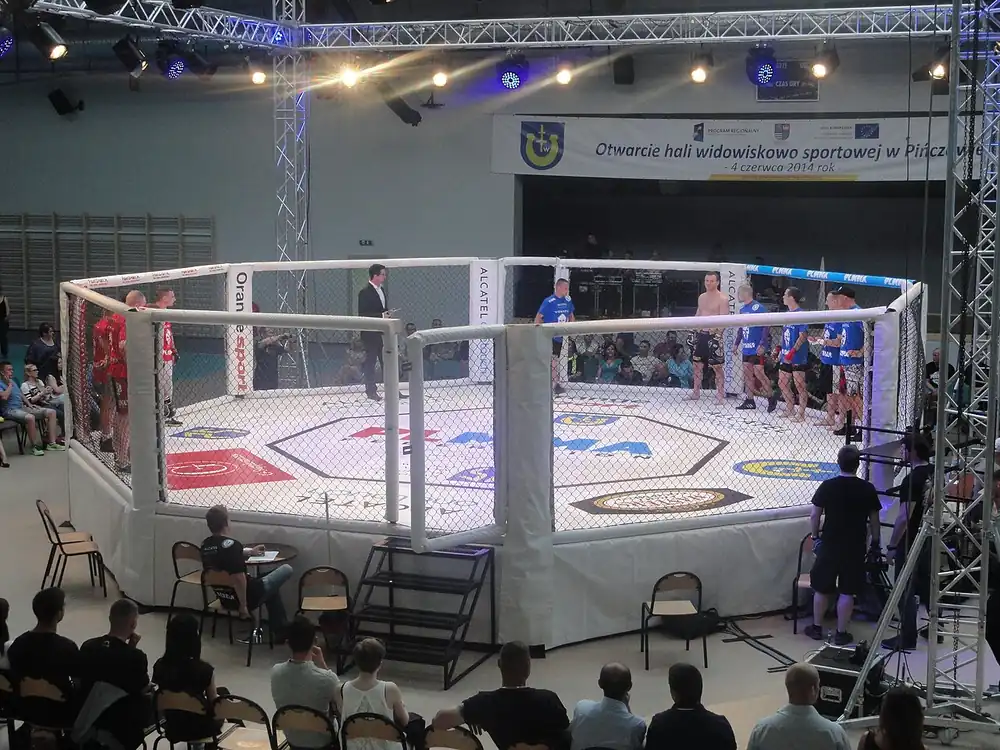
UFC is a blast to bet on. Two fighters, one cage, and a card that can flip from boring to wild in a single punch or scramble. That's also why so many new bettors burn through their money on it. They back the guy with the scariest highlight reel, stack five favourites into a parlay, and wonder why the account is empty by the main event. If you're just getting started, I want to save you some of the tuition I paid. This is the strategy I'd walk a buddy through before his first fight night: how the odds actually work, how to form your own opinion of a fight, which markets make sense for a beginner, and how to size bets so one bad card doesn't wreck you.
Quick ground rules first. The legal betting age is 19 in most provinces and 18 in Manitoba and Quebec, and this site isn't for residents of Ontario or Alberta. Cloudbet, the book linked on this page, holds a Curaçao licence and is not authorized by any Canadian province. For the legal background, read is online betting legal in Canada. Every price, fighter and stake on this page is an illustrative example to show the method. None of it is a real line or a pick.
The one-minute version
If you only read one section, make it this one. A solid beginner UFC strategy comes down to seven habits:
- Convert every price to a percentage so you know what the book thinks will happen.
- Form your own percentage before you look at the odds, then compare the two.
- Only bet when your number beats the book's number by a clear margin.
- Be careful with heavy favourites. The break-even rate climbs fast.
- Use method and rounds markets to express a specific view, not to chase big payouts.
- Bet a fixed unit, around 1% to 2% of your bankroll, and don't increase it to chase losses.
- Keep a record of every bet so you learn what you're actually good at.
The rest of this guide explains each habit in detail, with worked numbers.
How a UFC fight is decided
You can't bet on fights well if you don't know how they end. Most UFC bouts are three rounds of five minutes. Main events and title fights are usually five rounds of five minutes. A fight can end in a few ways:
- KO/TKO: a fighter is knocked out, or the referee stops the fight because one fighter can no longer defend himself. Doctor stoppages and corner stoppages usually land in this bucket too.
- Submission: a fighter taps out to a choke or joint lock, or is choked unconscious.
- Decision: the fight goes the full distance and three judges score it with the 10-point must system. A clear round is usually 10–9; a dominant round can be 10–8.
- Draw, no contest or disqualification: rare, but they happen. A no contest often follows an accidental foul early in a fight or an overturned result.
Why does this matter? Because most of the markets you'll see are just different slices of these outcomes. "Fighter A by submission" is one slice. "Fight goes the distance" is another. "Over 2.5 rounds" is about the clock. Once you see the fight as a set of possible endings, the betting menu stops looking like a wall of random numbers.
Step 1: Turn odds into percentages
Every price is really a percentage in disguise. In decimal odds, divide 100 by the price to get the implied chance. Say a fight looks like this (example prices only):
| Fighter | Decimal | American | Implied chance |
|---|---|---|---|
| Fighter A (favourite) | 1.40 | −250 | 71.4% |
| Fighter B (underdog) | 3.00 | +200 | 33.3% |
Add 71.4% and 33.3% and you get 104.8%. That extra 4.8% is the book's margin, the built-in edge that pays for the house. To see the book's "fair" view, divide each implied chance by the total: Fighter A comes out at about 68.2% and Fighter B at about 31.8%. That's the number you'll be comparing your own opinion against.
If you're used to American odds, the conversion is a little clunkier, which is exactly why I use decimal for everything. Our decimal vs American odds guide walks through both, and the odds calculator does the maths for you in one click.
Step 2: Break-even rates and the favourite trap
Here's the table I wish someone had shown me on day one. It tells you how often a bet has to win just to break even at a given price:
| Decimal price | Win $ on a $100 stake | Must win this often to break even |
|---|---|---|
| 1.20 | $20 | 83.3% |
| 1.25 | $25 | 80.0% |
| 1.33 | $33 | 75.2% |
| 1.50 | $50 | 66.7% |
| 1.80 | $80 | 55.6% |
| 2.00 | $100 | 50.0% |
| 2.50 | $150 | 40.0% |
| 3.00 | $200 | 33.3% |
| 4.00 | $300 | 25.0% |
Look at the top rows. At 1.20 you need your fighter to win more than five times out of six just to tread water. MMA is a sport where one clean shot, one scramble or one bad weight cut can flip a fight. Big favourites do lose, and when they do, the damage is ugly.
Quick example: you put $50 on five favourites at 1.25 over a couple of cards. Four win and one loses. The four winners make $12.50 each, so $50 in profit. The one loser costs $50. You hit 80% of your bets and you made exactly nothing. That's the favourite trap. Winning lots of bets feels great, but it isn't the same as making money.
None of this means you should never back a favourite. It means a short price needs a very confident reason, not just "he's the better fighter." The book already knows he's the better fighter. That's why he's 1.25.
Step 3: Build your own number before you look
This is the heart of any real betting strategy. Before you look at the odds, write down your own estimate of how often each fighter wins. Then compare it to the book's fair number.
Back to our example. The book's fair view is Fighter A 68.2%, Fighter B 31.8%. Suppose after your research you think Fighter B wins this fight about 38% of the time. At 3.00, the expected value of a $100 bet is:
0.38 × $300 return − $100 stake = +$14
That's a positive expected value. You won't win this bet most of the time, but if your 38% estimate is right, you come out ahead over many similar bets. Now suppose your honest number is only 30%. Then it's 0.30 × $300 − $100 = −$10. Same fighter, same price, but now it's a bet to skip.
A few tips for making your number honest:
- Write it down first. If you look at the odds before forming an opinion, the price anchors you. Everyone does it.
- Use ranges at first. "Somewhere between 35% and 40%" is fine for a beginner. Only bet when even the low end of your range beats the book.
- Demand a cushion. If your number is 33% and the fair price says 31.8%, that's not an edge, it's noise. I want at least a few percentage points of daylight before I bet.
Our guide to value bets explained goes deeper into this idea for every sport.
Step 4: What to research before a fight
You don't need to watch every fight on every card. You need a short, repeatable checklist for the fights you do bet. Here's mine:
| Factor | What to look for | Why it matters |
|---|---|---|
| Style matchup | Striker vs wrestler, grappler vs striker, pressure vs counter | The single biggest driver of how a fight plays out |
| Takedown offence and defence | Can one fighter put the other on the mat and keep him there? | Wrestlers can neutralize big strikers for whole rounds |
| Cardio and pace | How did each fighter look in round 3, or rounds 4 and 5? | Five-round fights punish poor gas tanks |
| Durability | Recent knockdowns or stoppage losses | Chins often fade with age and hard fights |
| Reach and size | Height, reach and frame for the division | Helps at distance, less useful once it's a grappling fight |
| Weight cut | Missed weight, tough cuts, moving up or down a class | A bad cut can drain a fighter before the bell |
| Layoff and activity | Long time off, injuries, ring rust | Timing and sharpness can suffer |
| Short notice | Replacement fighter who took the bout with little prep | Less time to train for this opponent and cut weight |
| Quality of opposition | Who did the record come against? | A gaudy record against weak opposition is easy to overrate |
Watch full fights, not highlight clips. Highlights show the best 20 seconds of a 15-minute fight and hide the two rounds where your guy got taken down and held there.
Step 5: Pick the right market for your view
The moneyline is the simplest UFC bet: pick the winner by any method. It's where beginners should spend most of their time. Once you've got a specific view of how a fight will go, other markets let you express it more precisely.
Method of victory
Here's a typical method menu (example prices):
| Outcome | Decimal | Implied |
|---|---|---|
| Fighter A by KO/TKO | 2.40 | 41.7% |
| Fighter A by submission | 6.00 | 16.7% |
| Fighter A by decision | 3.20 | 31.2% |
| Fighter B by KO/TKO | 7.00 | 14.3% |
| Fighter B by submission | 15.00 | 6.7% |
| Fighter B by decision | 6.50 | 15.4% |
Add the implied column and you get roughly 126%, compared with about 105% on the moneyline. That's the lesson: prop markets usually carry a much bigger margin. You pay more for the extra precision, so you need a stronger reason to bet them.
When does method betting make sense? When you have a specific, well-researched view. For example, a big-power striker facing an opponent who's been stopped several times recently, and who doesn't have the wrestling to drag the fight to the mat. That's a story that points to a KO/TKO. "He's the favourite and he looks scary" isn't a story.
Total rounds and the half-round rule
Totals in UFC are about how long the fight lasts. A three-round fight often has a line of 2.5 rounds. Since rounds are five minutes, the halfway point of a round is the 2:30 mark. "Over 2.5 rounds" usually means the fight must last past 2:30 of round 3. "Over 1.5 rounds" means it has to get past 2:30 of round 2. If the fight is stopped at 2:10 of round 3, under 2.5 wins. Most books use this convention, but check the house rules.
Fight goes the distance
"Goes the distance: yes/no" is the cleanest way to bet on how long a fight lasts. Yes wins on any decision (and usually a draw). No wins on any finish. It's a good beginner market for fights between two durable, defensive fighters, or between two big punchers with questionable chins.
If you're curious how this compares with boxing, where fights are longer and the half-round mark is 1:30, see how to bet on boxing in Canada. For more on props across sports, read what is a prop bet.
Step 6: Bet sizing with units
Most people who blow up their betting accounts don't do it with bad picks. They do it with bad sizing. A unit is a fixed slice of your bankroll, the money you've set aside for betting and can afford to lose. For beginners, I like 1% to 2% per bet.
| Bankroll | 1% unit | 2% unit |
|---|---|---|
| $250 | $2.50 | $5 |
| $500 | $5 | $10 |
| $1,000 | $10 | $20 |
| $2,000 | $20 | $40 |
Small units feel boring. That's the point. MMA is high-variance. Even a good bettor can lose six or seven bets in a row, and with 1% to 2% units that losing streak costs you less than 15% of your bankroll instead of wiping you out.
Rules I stick to:
- One unit per bet by default. Two units only for your rare strongest opinions.
- Never more than a few units on a single card. A 13-fight card doesn't mean 13 bets.
- Recalculate your unit monthly, not after every win or loss.
- Never "win it back" on the main event. Chasing is the fastest way to turn a bad night into a bad month.
Step 7: Why big parlays hurt beginners
Parlays are fun. Three favourites at 1.40 each multiply to 1.40 × 1.40 × 1.40 = 2.74. That looks like a nice price for "safe" picks. Let's check it.
Say each of those fighters truly wins 68% of the time, roughly what the book thinks. The chance all three win is 0.68 × 0.68 × 0.68 = about 31.4%. The fair price for that is about 3.18, but you're only getting 2.74. The expected value works out to about −13.7% of your stake. The same fighters bet as singles at 1.40 would each be about −4.8%. The margin compounds with every leg you add.
That doesn't mean never parlay. A small parlay of two fighters you've each priced as genuine value is fine as a bit of fun. But a five-leg favourite parlay isn't a strategy, it's a lottery ticket with extra steps. Our parlay calculator shows you the true combined price, and our parlay guide explains when combining legs can make sense.
19+ (18+ in AB, MB, QC). Crypto deposits. Cloudbet is licensed in Curaçao, not by any Canadian province. Not for Ontario or Alberta residents. Ad: we may earn a commission. Bet only what you can afford to lose.
Step 8: Timing your bets and beating the closing line
UFC odds move a lot between the day a fight is announced and the opening bell. Money comes in, injury rumours spread, and weigh-ins happen. The final price just before the fight is called the closing line.
Here's a simple way to judge yourself: compare the price you got to the closing price. If you bet Fighter B at 2.80 (+180) and he closes at 2.50 (+150), the market moved toward your view. Your price implied a 35.7% chance, and the close implied 40.0%. Beating the closing line regularly is one of the best signs you're making good decisions, even before results catch up.
Some timing tips:
- Underdogs you like: early prices are sometimes better before the public piles in on the favourite.
- Weigh-in day: if a fighter misses weight or looks drained, prices can shift. Waiting has value if your bet depends on how the cut goes.
- Late replacements: most books void bets if a fighter is replaced, but rules vary. Read them, and re-research the new matchup from scratch.
Step 9: Live betting between rounds
Live betting lets you bet during the fight, usually in the break between rounds. It can be useful when something becomes obvious that the pre-fight price didn't account for, like a fighter who's clearly exhausted after one round or a striker who can't stop a single takedown.
A few warnings, though. The margin on live markets is often wider. Prices are suspended during action, so you're usually betting in a one-minute window. And if you're watching on a stream, it may be delayed behind the live feed. My rule: only bet live on a fighter I already researched before the card, and only when what I'm seeing confirms or clearly breaks my pre-fight read. Never bet live just because you're bored or behind.
A worked example: one fight, start to finish
Let's run the whole process on a made-up three-round welterweight fight.
- The matchup: Fighter A is a big striker with heavy hands. Fighter B is a wrestler with excellent takedown numbers and solid cardio, but he's been dropped twice in his last four fights.
- Odds (example): A 1.60, B 2.40. Implied 62.5% + 41.7% = 104.2%, so the fair view is about 60.0% A and 40.0% B.
- Your read: you think B gets the fight to the mat most rounds. A's takedown defence looked poor against the last two wrestlers he faced. You land on B at around 46% to 48%.
- The value check: at 2.40, B needs to win more than 41.7% to break even. Your range is comfortably above that. At 46%, the expected value on $10 is 0.46 × $24 − $10 = +$1.04.
- The market choice: B by decision is tempting, since a wrestler grinding out three rounds is the likely path. But B has been dropped twice recently, so you stick with the moneyline for the main bet.
- The stake: one unit, $10 on a $1,000 bankroll.
- The record: you log the fight, your 46% estimate, the 2.40 price and, later, the closing price.
Win or lose, that's a well-made bet. Over time, a stack of bets made this way is what produces results.
Keep a betting log
A simple spreadsheet is the most underrated betting tool there is. Track the date, event, fight, market, price, stake, your estimated chance, the closing price and the result. After 50 or 100 bets, patterns jump out. Maybe you're great at picking wrestlers to win and terrible at method props. Maybe your underdog bets beat the close and your favourite bets don't. You can't fix what you don't measure.
The mistakes I see most
- Betting on names. Popular fighters are often over-bet, so their prices get shorter than they should be.
- Betting every fight on the card. Pick the two or three you've actually researched.
- Trusting old results. A fighter's best win three years ago tells you little about him today.
- Ignoring five-round cardio. Main events are 25 minutes. Some fighters fade badly after 15.
- Chasing with the main event. If the prelims went badly, your stake on the main event shouldn't change.
- Not reading the rules. Replacements, no contests and the half-round rule all settle by house rules.
- Stacking favourites into parlays. See the maths above.
Funding your account with crypto
Cloudbet works with cryptocurrency. If you go that route, keep it simple. A stablecoin like USDT keeps your bankroll steady in dollar terms, so a crypto price swing doesn't change how much you can bet. Coins like bitcoin can rise or fall while your money sits in the account, which adds a second layer of risk on top of the fights. Always send a small test amount first, double-check the network, and note any fees. Our walkthrough on depositing USDT at Cloudbet from Canada covers the steps, and the Ethereum UFC betting guide covers paying in ETH.
Tax and the law
Single-event sports betting has been legal under federal law in Canada since 2021, and each province runs or licenses its own options. Recreational winnings are generally not taxed in Canada, though people betting as a business can be treated differently. Crypto adds its own tax questions, since disposing of a coin can trigger a capital gain or loss. Read does Canada tax sports betting winnings for more, and talk to a tax professional if you're unsure. None of this is legal or tax advice.
Keep it fun
Fight night should be entertainment. Set your budget before the first prelim, stick to your units, and walk away when the budget's done. If betting stops feeling fun or starts costing more than you can afford, free and confidential help is available 24/7: Gambling Support BC at 1-888-795-6111, Jeu : aide et référence in Quebec at 1-800-461-0140, and 211 elsewhere to find your provincial service. More options are on our responsible gambling page.
My take
A good UFC betting strategy for beginners isn't about secret picks. It's about turning odds into percentages, forming your own number before you look, betting only when you've got a real edge, choosing the market that fits your read, and sizing every bet so you can survive the bad nights. Do that consistently, keep a log, and you'll enjoy fight night more and give the book a lot less of your money.
Questions players ask
What is the best UFC betting strategy for beginners?
Turn odds into implied percentages, write down your own estimate for each fighter before looking at prices, and bet only when your number clearly beats the book's. Keep stakes to 1% to 2% of your bankroll and track every bet.
Should beginners bet on UFC favourites?
Only with a strong reason. At 1.25 a fighter must win 80% of the time just to break even, and upsets are common in MMA, so heavy favourites can lose you money even when you win most bets.
What does over 2.5 rounds mean in UFC betting?
It usually means the fight must last past 2:30 of round 3, the halfway point of a five-minute round. If the fight ends before that, the under wins. Check your book's rules.
Are UFC parlays a good idea?
Big parlays usually aren't. The book's margin compounds on every leg, so three favourites at 1.40 each can carry an expected loss of around 14% versus about 5% on each single.
How much should I bet per UFC fight?
Many bettors use a unit of 1% to 2% of their bankroll per bet. On a $500 bankroll that's $5 to $10 a fight.
Is Cloudbet legal in Canada?
Cloudbet holds a Curaçao licence and is not authorized by any Canadian province. This site is not for residents of Ontario or Alberta.
19+ (18+ in AB, MB, QC). Crypto deposits. Cloudbet is licensed in Curaçao, not by any Canadian province. Not for Ontario or Alberta residents. Ad: we may earn a commission. Bet only what you can afford to lose.
If betting is costing you more than money, free 24/7 help is a phone call away. British Columbia: Gambling Support BC 1-888-795-6111. Alberta: Addiction & Mental Health Helpline 1-866-332-2322. Manitoba: Problem Gambling Helpline 1-800-463-1554. Saskatchewan: Problem Gambling Helpline 1-800-306-6789. Quebec: Jeu : aide et référence 1-800-461-0140. Elsewhere, call 211 to find your provincial service.