How to Bet on Boxing in Canada: Moneylines, the Draw, Method of Victory, Round Betting and Over/Under Rounds Explained
Welcome bonus for new players + fast crypto payouts. Just helping a brother out.
19+ (18+ in AB, MB, QC). Crypto deposits. Cloudbet is licensed in Curaçao, not by any Canadian province. Not for Ontario or Alberta residents. Ad: we may earn a commission. Bet only what you can afford to lose.
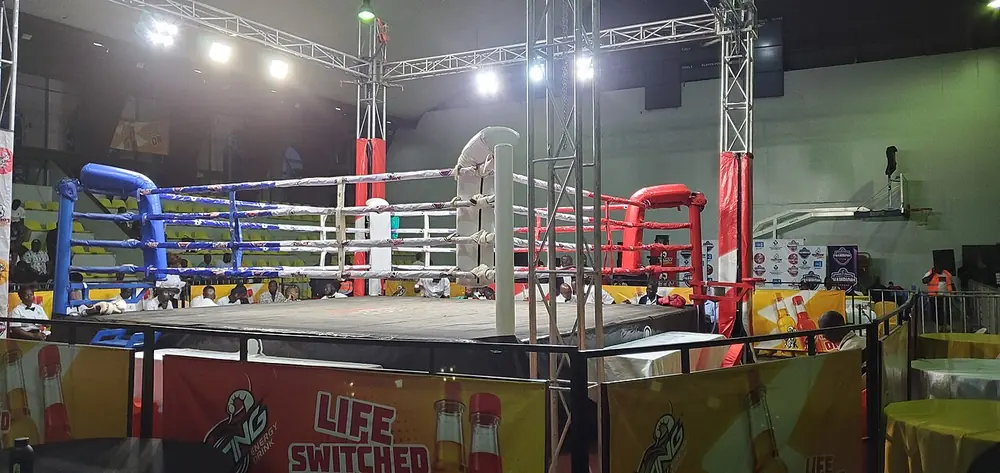
Boxing is one of the oldest sports people bet on, and it's also one of the easiest to get wrong. There are only two fighters, so it looks simple. Pick the guy who wins, collect. Then you open the betting menu and find method of victory, round groups, "fight goes the distance," over 9.5 rounds, draw at 25.00, and suddenly it's not so simple anymore. I've lost money on boxing for the dumbest reasons, like not reading how my book settled a draw, so let's walk through how boxing betting actually works, the way I'd explain it to a buddy before a big pay-per-view night.
Quick ground rules first. The legal betting age is 19 in most provinces and 18 in Manitoba and Quebec, and this site isn't for residents of Ontario or Alberta. Cloudbet, the book linked on this page, holds a Curaçao licence and is not authorized by any Canadian province. For the legal picture, read is online betting legal in Canada. Every price and stake on this page is an illustrative example to show the method. Nothing here is a real line or a pick.
How a boxing fight is decided
Before you bet a single dollar, you need to know how the result is decided, because almost every boxing market is built on it. A professional fight ends in one of a few ways:
- Knockout (KO): a fighter goes down and can't get up before the referee's count of ten.
- Technical knockout (TKO): the referee, the ringside doctor or a fighter's corner stops the fight because one fighter can't safely continue. Most books group KO and TKO together, often adding disqualification too.
- Disqualification (DQ): a fighter is thrown out for repeated or serious fouls.
- Decision: the fight goes the scheduled distance and three judges score it.
- Technical decision: an accidental foul (usually a head clash) stops the fight after a set number of rounds, and the judges' cards up to that point decide it.
- Draw or no contest: the cards come out even, or the fight is stopped early in a way that produces no result.
Judges use the 10-point must system. The winner of each round gets 10 points and the loser usually gets 9. A knockdown typically makes it 10–8. Add up the rounds and you get each judge's card. If all three judges pick the same fighter, it's a unanimous decision. If two pick one fighter and the third picks the other, it's a split decision. If two pick one fighter and the third scores it even, it's a majority decision.
Championship fights are usually scheduled for 12 rounds of three minutes. Undercard fights are often 4, 6, 8 or 10 rounds. The scheduled length matters a lot for round markets, so always check it before you bet.
The moneyline: picking the winner
The moneyline is the bread-and-butter boxing bet. You pick who wins, by any method. In decimal odds, a fight might look like this (example prices only):
| Fighter | Decimal | American | Implied probability |
|---|---|---|---|
| Fighter A (favourite) | 1.30 | −333 | 76.9% |
| Fighter B (underdog) | 3.60 | +260 | 27.8% |
| Draw | 21.00 | +2000 | 4.8% |
Add those up and you get 109.5%. The extra 9.5% above 100 is roughly the book's margin across the three outcomes. Boxing margins are often wider than in big team sports, partly because there are fewer bettors and less information on lesser-known fighters. If you want the conversions done for you, our odds calculator turns decimal, American and fractional odds into implied probability in a click.
Big favourites are a trap for a lot of new boxing bettors. At 1.20 you risk $100 to make $20. You need that fighter to win more than 83.3% of the time just to break even. Favourites do lose in boxing, sometimes to one punch, and one upset can wipe out five or six small wins. If you love a heavy favourite, there are often better ways to express that opinion, like method of victory, which we'll get to.
The draw: the rule that catches everyone
This is the single most important thing to check at your book. A draw is rare in boxing, but it happens, and how your moneyline bet settles depends on the market:
- Three-way moneyline (Fighter A / Draw / Fighter B): if the fight is a draw, bets on both fighters lose. Only the draw bet wins.
- Two-way market, often labelled "draw no bet" or "draw refund": if it's a draw, your stake comes back. The prices are a little shorter than in the three-way market because you're getting that protection.
Books label and settle these differently, and some offer both. Read the market name and the house rules before you place the bet. I learned this the hard way on a fight I was sure I'd "won" because my guy wasn't beaten. I'd taken the three-way price, the cards came back even, and my bet was a loser.
What about betting the draw itself? At 21.00 the implied chance is about 4.8%. Draws are uncommon, so the price is usually short of what it "should" be once you account for the margin. Treat it as a long shot for fun money, not a strategy.
Method of victory
Method of victory asks how the winner gets it done. A typical menu (example prices):
| Outcome | Decimal | Implied |
|---|---|---|
| Fighter A by KO/TKO/DQ | 1.85 | 54.1% |
| Fighter A by decision or technical decision | 3.75 | 26.7% |
| Fighter B by KO/TKO/DQ | 6.50 | 15.4% |
| Fighter B by decision or technical decision | 8.00 | 12.5% |
| Draw | 21.00 | 4.8% |
Notice how the favourite's moneyline price of 1.30 splits into two much bigger prices. If you think Fighter A wins and you have a real reason to believe it ends early, A by stoppage at 1.85 pays a lot more than the plain moneyline. The catch is obvious: if A wins on the cards, your bet loses even though you picked the right fighter.
Questions that actually help you here:
- Knockout rate: how many of each fighter's wins came by stoppage, and against what level of opponent? A 20–0 record with 18 KOs against weak opposition tells you less than a 15–2 record against real contenders.
- Durability: has the opponent ever been stopped or dropped? Chins sometimes fade with age and wars.
- Weight class: stoppages tend to be more common in heavier divisions, though there are plenty of exceptions.
- Style: a slick, defensive boxer is more likely to go to the cards. A pressure fighter facing a hittable opponent is more likely to end it.
Round betting and round groups
Round betting is about exactly when and how a fight ends. "Fighter A to win in round 6" is a single bet with a big price. Because there are so many possible rounds, individual round prices often run from 10.00 up to 50.00 and beyond.
Round groups make this more manageable. Instead of one round, you back a range, like Fighter A to win in rounds 1–3, 4–6, 7–9 or 10–12. The price is lower than a single round, but you've got three rounds of coverage.
A simple example with made-up prices:
- A to win in rounds 1–3 at 6.00
- A to win in rounds 4–6 at 5.00
- A to win in rounds 7–9 at 6.50
- A to win in rounds 10–12 at 11.00
If you split $20 into $10 on rounds 4–6 and $10 on rounds 7–9, a win in round 5 returns $50, for a $30 profit after the losing $10. A win in round 8 returns $65, for a $45 profit. A decision or an early stoppage in round 2 loses the whole $20. This kind of split is a way to bet on "A stops him in the middle rounds," which is often how fans actually think about a fight.
Over/under rounds and the half-round rule
Totals in boxing aren't about points. They're about how long the fight lasts. A line like "over/under 9.5 rounds" is a bet on whether the fight goes past the midpoint of the tenth round.
Here's the rule that trips people up. For a three-minute round, the halfway point is usually the 1:30 mark. So "over 9.5 rounds" generally means the fight must last past 1:30 of round 10. If it's stopped at 1:10 of round 10, under 9.5 wins. If it's stopped at 1:45 of round 10, over wins. Most books follow that convention, but always check the house rules, since settlement details vary.
A few points worth knowing:
- If the fight goes the full distance, over wins on any line below the scheduled number of rounds.
- A fight that ends between rounds, such as a corner retiring their fighter during the break, is normally counted as ending at the end of the previous round. Again, the house rules decide.
- "Fight to go the distance: yes/no" is basically the cleanest version of this market. Yes wins on any decision (and usually a draw). No wins on any stoppage.
Over/under rounds is a great market when you have a view on the fight's shape but not on the winner. Two defensive, light-punching fighters who rarely get stopped? The over or "goes the distance" might interest you. Two heavy hitters with shaky chins? The under might.
Reading a fight like a bettor, not a fan
Most of us watch boxing as fans, and fans fall in love with fighters. Bettors need to be colder about it. Here's what I look at before I bet:
- Quality of opposition. Records can be padded. Look at who each fighter actually beat, not just the win column.
- Activity. A fighter coming off 18 months out of the ring, or a long injury, is harder to predict.
- Age and wear. Fighters can decline quickly, especially after tough wars. Recent performances matter more than the highlight reel from five years ago.
- Weight changes. A fighter moving up a division may lose some power. One struggling to make weight may be drained on fight night. Weigh-in news is worth checking.
- Reach, height and stance. These matter in some matchups more than others. A southpaw versus an orthodox fighter can create awkward fights.
- Home advantage and judging. Many fans believe close fights tend to lean toward the house fighter or the fighter with home support. It's a common belief, not a proven rule, but it's one more reason to avoid betting on razor-close decisions.
One habit that helped me: before looking at the odds, write down your own rough chance for each fighter. Then compare it to the implied probability. If you think B wins 35% of the time and the price is 3.60 (27.8%), that's a bet worth considering. If you think 25%, pass. That idea is the heart of value betting, and it works the same in boxing as anywhere else.
Late changes, cancellations and pulled fights
Boxing cards change all the time. A fighter gets hurt in camp, misses weight, gets sick or fails a medical, and a replacement steps in on short notice. How does that affect your bet?
- Opponent changes: most books void bets on a fight if either fighter is replaced, because it's no longer the same matchup. Your stake comes back. Some books may settle differently, so check.
- Postponements: rules vary. Some books keep bets live if the fight happens within a set window. Others void.
- Scheduled rounds change: if a fight is cut from 12 to 10 rounds, round markets may be voided.
- Weight misses: the fight often goes ahead with a penalty, and bets usually stand.
The short version: when something unusual happens, the book's written rules decide. Five minutes reading them before a big fight night saves a lot of arguing with support later.
19+ (18+ in AB, MB, QC). Crypto deposits. Cloudbet is licensed in Curaçao, not by any Canadian province. Not for Ontario or Alberta residents. Ad: we may earn a commission. Bet only what you can afford to lose.
Live betting during a fight
Many books offer live prices between rounds. This can be useful when your read of the fight is better than the market's. For example, a fighter who's clearly winning rounds but hasn't hurt anyone might still be priced as if a stoppage is likely, while the decision price drifts.
Two warnings. First, streams are often delayed by many seconds, so the book may already know what you're about to "see." Second, the excitement of a knockdown makes people overreact. A fighter who gets dropped in round 3 and recovers well isn't automatically finished. Stick to small stakes in-play until you've tested your read over several fights.
Staking: how much to put on a fight night
Big fight nights tempt people to bet the whole card. That's how a $100 budget becomes a $0 budget by the main event. A simple approach:
| Bankroll | Standard bet (1–2%) | Long-shot bets (round, method) |
|---|---|---|
| $200 | $2–$4 | $1–$2 |
| $500 | $5–$10 | $2–$5 |
| $1,000 | $10–$20 | $5–$10 |
Treat round bets and draws as small fun positions. They lose most of the time even when your read is decent. If you build parlays across a card, remember that each leg multiplies the risk as well as the price. Three favourites at 1.40 each make 2.74, which sounds nice until one upset sinks the whole thing. You can check combined prices in our parlay calculator.
A worked example
Let's put it together with an invented fight. Fighter A is a big-punching favourite at 1.30. Fighter B is a slick, durable boxer at 3.60 who's only been stopped once. The fight is 12 rounds. Over/under is 9.5 rounds, with over at 1.80 and under at 2.00.
Your read: A is the better fighter, but B's defence and chin make an early stoppage less likely than the price suggests. You think there's a decent chance B survives and A wins on points.
- A by decision at 3.75: $10 bet returns $37.50 if A wins on the cards.
- Over 9.5 rounds at 1.80: $10 bet returns $18 if the fight passes halfway through round 10.
Outcomes: A by decision, both bets win, $55.50 back on $20 staked. B by decision, the over wins, $18 back, a $2 loss. A by stoppage in round 11, the over wins, $18 back, a $2 loss. A by stoppage in round 4, both lose, minus $20. Notice how the two bets fit the same story about the fight's shape. That's the idea: build bets around one clear opinion, not a scattergun of everything on the menu.
Common boxing betting mistakes
- Betting a heavy favourite blindly because "he's never lost."
- Not checking whether the moneyline is two-way or three-way, and losing on a draw.
- Ignoring the half-round rule on over/under rounds.
- Judging fighters on highlight reels instead of recent full fights.
- Betting every fight on the card instead of the one or two you know well.
- Chasing a loss from the undercard with a bigger bet on the main event.
Boxing versus MMA bets
If you also follow MMA, a lot carries over: moneylines, method of victory, round betting and totals all exist. The differences matter, though. MMA fights are usually three or five rounds of five minutes, so totals sit around 1.5 or 2.5 rounds rather than 9.5. Submissions add another way to win. And draws are rarer in MMA scoring. If you want to cross over, our guide to betting on UFC with Ethereum covers the octagon side. For general prop ideas, see what is a prop bet.
Tax and the law
Single-event sports betting has been legal under federal law in Canada since 2021, with each province running or licensing its own betting. Recreational betting winnings are generally not taxed in Canada, though professional bettors can be in a different position. Our page on whether Canada taxes betting winnings has more detail. None of this is legal or tax advice.
Keep it fun
Boxing is exciting to bet on precisely because one punch can change everything. That same fact makes it easy to lose more than you planned. Set your fight-night budget before the first bell and stick to it. If betting stops feeling like entertainment, free and confidential help is available: Gambling Support BC at 1-888-795-6111, and Jeu : aide et référence in Quebec at 1-800-461-0140. You'll find more options on our responsible gambling page.
My take
Betting on boxing well comes down to a few habits. Know how fights are decided and how your book settles a draw. Use method of victory and round markets to express a specific view instead of laying huge prices on favourites. Respect the half-round rule on totals. Read the rules on replacements and postponements. And keep your stakes small and steady across a card. Do that, and you'll enjoy fight night a lot more, win or lose.
Questions players ask
How do you bet on boxing in Canada?
Pick a market such as the moneyline (who wins), method of victory, round betting or over/under rounds, enter your stake and confirm. Check whether the moneyline is two-way or three-way, since that decides what happens on a draw.
What happens to a boxing bet if the fight is a draw?
On a three-way moneyline, bets on both fighters lose and only the draw wins. On a two-way or draw-no-bet market, stakes are usually refunded. Always check your book's rules.
What does over 9.5 rounds mean in boxing?
It usually means the fight must last past the midpoint of round 10, which is the 1:30 mark of a three-minute round. If the fight ends before that, the under wins.
What is method of victory in boxing betting?
It's a bet on how the winner wins, usually split into KO/TKO/DQ or decision for each fighter, plus the draw. The prices are higher than the plain moneyline because you must get both the winner and the method right.
What happens if a boxer is replaced before the fight?
Most books void bets when either fighter is replaced, returning your stake, but rules vary by book, so read them before you bet.
Is Cloudbet legal in Canada?
Cloudbet holds a Curaçao licence and is not authorized by any Canadian province. This site is not for residents of Ontario or Alberta.
19+ (18+ in AB, MB, QC). Crypto deposits. Cloudbet is licensed in Curaçao, not by any Canadian province. Not for Ontario or Alberta residents. Ad: we may earn a commission. Bet only what you can afford to lose.
If betting is costing you more than money, free 24/7 help is a phone call away. British Columbia: Gambling Support BC 1-888-795-6111. Alberta: Addiction & Mental Health Helpline 1-866-332-2322. Manitoba: Problem Gambling Helpline 1-800-463-1554. Saskatchewan: Problem Gambling Helpline 1-800-306-6789. Quebec: Jeu : aide et référence 1-800-461-0140. Elsewhere, call 211 to find your provincial service.