How to Bet on Tennis in Canada: Match Winners, Game Totals, Handicaps, Set Betting, Live Odds and a Season-Long Plan
Welcome bonus for new players + fast crypto payouts. Just helping a brother out.
19+ (18+ in AB, MB, QC). Crypto deposits. Cloudbet is licensed in Curaçao, not by any Canadian province. Not for Ontario or Alberta residents. Ad: we may earn a commission. Bet only what you can afford to lose.
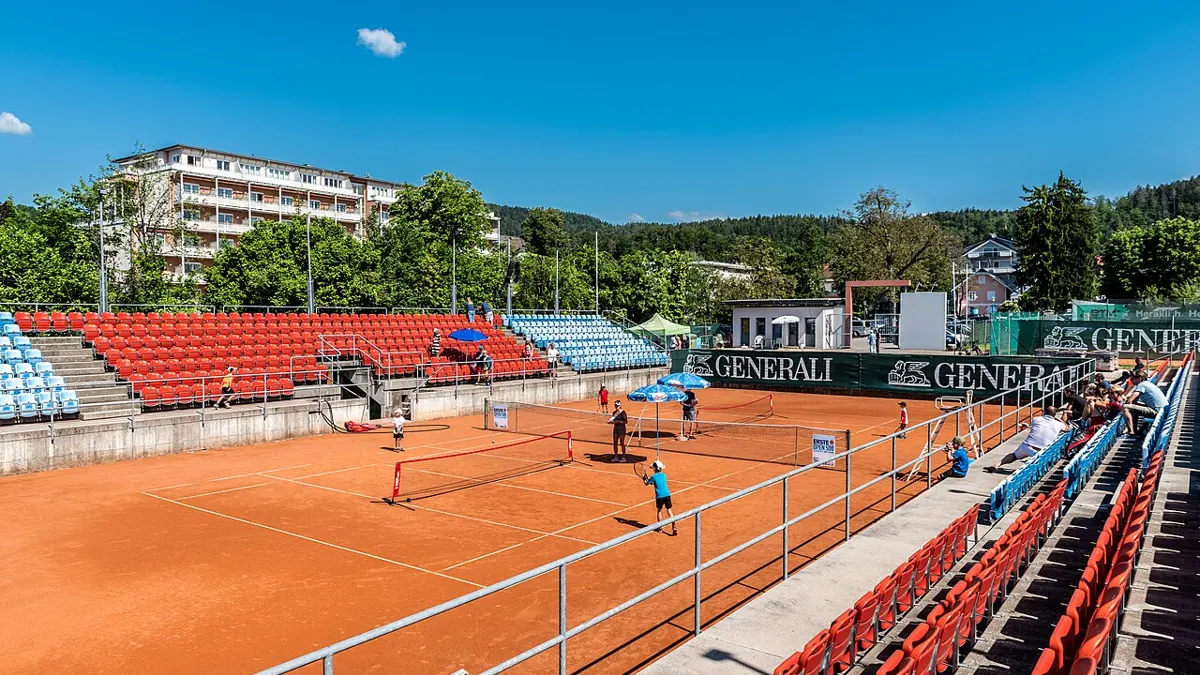
Tennis is the sport that never really goes to sleep. There's a tournament somewhere almost every week from the first days of January to late November, the four big Slams happen at hours that range from supper time to the crack of dawn in Canada, and every single match is a one-on-one fight where you can actually reason your way to a price. That makes tennis one of the most interesting sports to bet. It also makes it one of the easiest to overdo, because there's always another match starting in twenty minutes. This guide walks through how tennis betting works from a Canadian point of view: how the tours are set up, how to read the odds, why serve is everything, which markets make sense, how live prices move, and how to pace yourself across a long season. Consider it the chat I'd have with a buddy who just asked, "Okay, so how do you actually bet on tennis?"
First, the ground rules. You need to be 19 or older in most provinces, and 18 in Manitoba and Quebec. This site does not serve Ontario or Alberta residents. Cloudbet, the sportsbook linked on this page, holds a Curaçao licence and is not licensed or authorized by any Canadian province, and it isn't authorized in Quebec either. Every player, price, score and result below is a made-up example to show the maths. There are no picks, no real odds and no predictions on this page, and we don't name players.
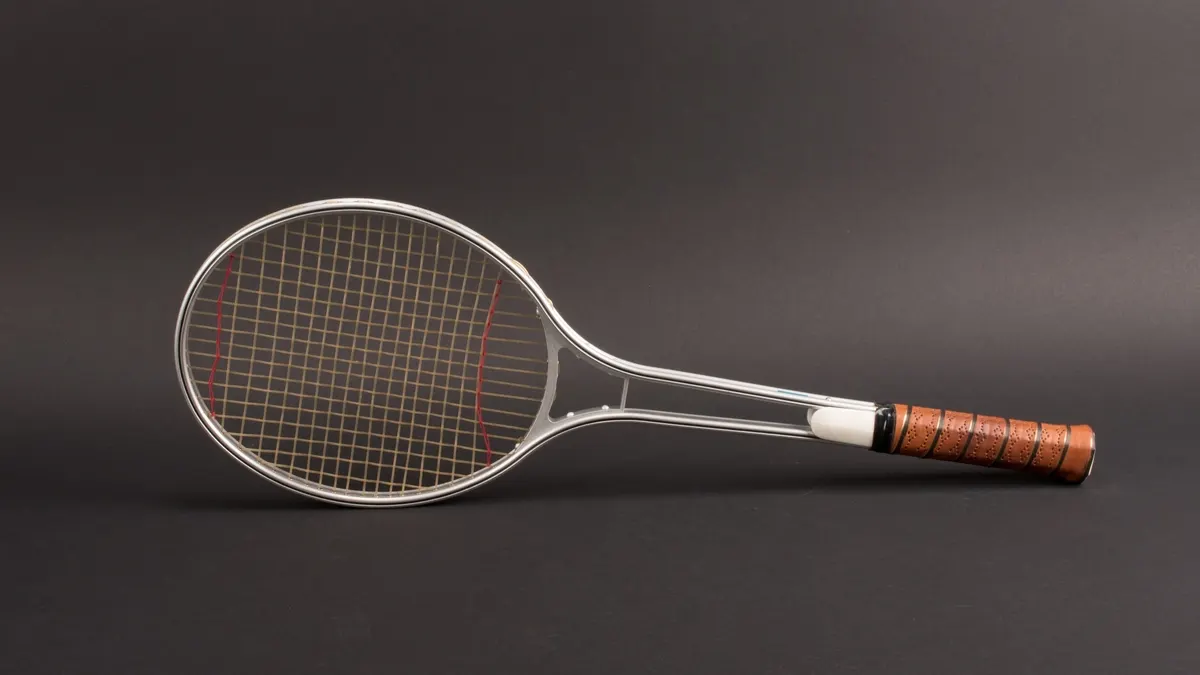
The short version
- Tennis prices are usually shown in American odds in Canada, with decimal as an option. Learn the break-even for each price and any board becomes easy to read.
- The match winner (moneyline) is the main market. Total games, game handicaps and set betting are the next big three.
- Serve drives almost everything. Small changes in how often a player wins points on serve make big changes in the match price.
- Best-of-three and best-of-five matches behave very differently. The longer format makes upsets rarer.
- Retirements happen. Each book has its own rule for settling bets when a player quits mid-match, so read it before you bet.
- With a match on almost every hour, the real skill is saying no. Stake small, keep a weekly cap and keep a record.
How pro tennis is set up, in two minutes
Men's pro tennis runs on the ATP Tour and women's on the WTA Tour. Under them sit smaller circuits: the ATP Challenger Tour, the WTA 125 events and the ITF events, where players climb the rankings before they reach the main tour. Most books offer prices on all of these, but the further down you go, the less information is out there and the wider the margins tend to be.
At the top are the four Grand Slams, which are run outside the ATP and WTA but count for both rankings:
- Australian Open in Melbourne, on hard courts, in January.
- Roland Garros (the French Open) in Paris, on red clay, from late May into June.
- Wimbledon in London, on grass, from late June into July.
- US Open in New York, on hard courts, from late August into September.
Men play best of five sets at the Slams. Women play best of three everywhere, and men play best of three at nearly every other event. Since 2022 all four Slams finish a deciding set that reaches 6–6 with a first-to-10 tiebreak, so the endless final sets of the past are gone.
Below the Slams come the big tour events. On the men's side those are the Masters 1000s, then the 500s and the 250s, with the number showing the ranking points the winner gets. The women's tour uses a matching ladder: WTA 1000, 500 and 250. Draw sizes run from 128 players at a Slam down to 28 or 32 at a typical 250, which matters a lot for outright bets, because more rounds means more chances for a favourite to slip. The season ends in November with the tour finals for the top eight singles players on each tour, which use a round-robin group stage before the knockouts.
There's also team tennis: the Davis Cup for men and the Billie Jean King Cup for women, where countries play each other. Canada has won both in recent years, so you'll see plenty of interest in those ties here. Team ties have their own quirks, like captains choosing who plays and matches being dropped once a tie is decided, so treat them as a separate thing from tour events.
The Canadian Open in a nutshell
Canada's big tournament is the Canadian Open, sponsored as the National Bank Open. It's a combined men's Masters 1000 and women's WTA 1000 played on outdoor hard courts each summer, split between Montreal and Toronto, with the men's and women's events historically swapping cities from year to year. It falls in the North American hard-court swing that leads into the US Open, which means a lot of players treat it as both a big title and a warm-up.
From a betting point of view, a home event changes three things. First, there's much more local coverage, so team news and practice reports are easy to find. Second, Canadian players draw a lot of home money, and prices on them can get shorter than the tennis alone justifies (more on that "partisan tax" below). Third, the start times are easy: sessions run in Eastern time, so it's an afternoon or evening event for most of the country. Formats, draw sizes and dates have been changed in recent years, so check the official tournament site for this year's schedule before you plan anything.
When tennis is on, in Canadian time
Tennis follows the sun around the world, so a Canadian bettor's tennis day moves with the calendar. Here's a rough guide based on an 11 AM local start for the first matches on the outside courts. Real schedules shift by tournament and by day, and the big night sessions start later, so treat these as ballpark times only.
| Event (local 11 AM start) | Newfoundland | Atlantic | Eastern | Central | Mountain | Pacific |
|---|---|---|---|---|---|---|
| Australian Open (January) | 8:30 PM* | 8 PM* | 7 PM* | 6 PM* | 5 PM* | 4 PM* |
| Roland Garros (late May to June) | 6:30 AM | 6 AM | 5 AM | 4 AM | 3 AM | 2 AM |
| Wimbledon (late June to July) | 7:30 AM | 7 AM | 6 AM | 5 AM | 4 AM | 3 AM |
| US Open (late August to September) | 12:30 PM | 12 PM | 11 AM | 10 AM | 9 AM | 8 AM |
*The evening before, Canadian time. Melbourne is so far ahead that its morning is our previous evening. Saskatchewan doesn't change its clocks, so in summer it lines up with Mountain time and in winter with Central time.
Why does this matter for betting? Because tired betting is bad betting. If you're in Vancouver, the first Wimbledon matches start at 3 AM. If you're placing bets half-asleep, you're not checking the line, the conditions or the latest news. It's often smarter to bet only the matches you're awake for, or to place your pre-match bets the night before and leave live betting out of it completely.
Reading tennis odds: American, decimal and break-even
Most Canadian books show American odds by default and let you switch to decimal. A minus number is the favourite and shows how much you stake to win $100. A plus number is the underdog and shows what $100 wins. Decimal odds show your total return per dollar, stake included. If you want the full run-through, our guide to decimal vs American odds covers it, and the odds calculator does the conversions for you.
The number that matters most is the break-even: how often the bet must win just to not lose money over time. Here's the table:
| American | Decimal | Break-even win rate |
|---|---|---|
| -400 | 1.25 | 80.00% |
| -300 | 1.333 | 75.00% |
| -200 | 1.50 | 66.67% |
| -150 | 1.667 | 60.00% |
| -120 | 1.833 | 54.55% |
| -110 | 1.909 | 52.38% |
| +100 | 2.00 | 50.00% |
| +120 | 2.20 | 45.45% |
| +150 | 2.50 | 40.00% |
| +200 | 3.00 | 33.33% |
| +300 | 4.00 | 25.00% |
| +500 | 6.00 | 16.67% |
So if you back a -200 favourite, it has to win two out of three times just to break even. If you think it wins 70% of the time, you have a small edge. If you think it wins 62%, you're paying too much, even though it's still the favourite. That's the whole game in one sentence: you're not betting on who wins, you're betting on whether the price is right.
The margin: what the book keeps
Add up the break-even percentages of both players and you'll get more than 100%. The extra is the bookmaker's margin, sometimes called the vig or the juice. Here are some made-up two-way tennis lines and what they tell you:
| Player A | Player B | Total | Margin | Fair chances (A / B) |
|---|---|---|---|---|
| -110 | -110 | 104.76% | 4.76% | 50.00% / 50.00% |
| -120 | +100 | 104.55% | 4.55% | 52.17% / 47.83% |
| -150 | +125 | 104.44% | 4.44% | 57.45% / 42.55% |
| -200 | +165 | 104.40% | 4.40% | 63.86% / 36.14% |
| -400 | +300 | 105.00% | 5.00% | 76.19% / 23.81% |
To get the "fair" chances, divide each break-even by the total. It's a rough method, since books don't always spread the margin evenly, but it's good enough to compare. Margins on the big tour events are usually tighter than on Challenger or ITF matches, and tighter on the match winner than on props. If you see a margin well above 6% or 7% on a two-way market, that book isn't giving you much of a shot on that line. Shopping around is free money, and it's one of the few things in betting that is.
Match winner: the main market
The match winner is simple: you pick who wins the match. There's no draw in tennis, so it's always a two-way price. The trick is turning "how good is each player" into a number.
A clean way to think about it is through sets. If you think a player wins any given set a certain share of the time, you can work out the match. In best of three, the player has to win two sets before the other does. In best of five, three. Here's what happens:
| Chance to win a set | Best of three (match) | Best of five (match) |
|---|---|---|
| 50% | 50.0% | 50.0% |
| 55% | 57.5% | 59.3% |
| 60% | 64.8% | 68.3% |
| 65% | 71.8% | 76.5% |
| 70% | 78.4% | 83.7% |
| 75% | 84.4% | 89.6% |
| 80% | 89.6% | 94.2% |
See how the longer format stretches the gap? A player who wins 65% of sets is a 71.8% favourite in best of three but a 76.5% favourite in best of five. That's why big upsets are less common in the men's Slam draws than at a regular tour event, and why underdog prices in best-of-five matches tend to be longer. It also means that if you know a price for one format, you can't just copy it to the other.
Serve and hold: the engine of every tennis price
Tennis scoring magnifies small edges. The player serving wins most points, so most games are "holds" (the server wins the game). A "break" is when the returner wins the game, and one break is often enough to win a set. So the most useful number in tennis isn't who's ranked higher; it's how often each player wins points when serving, and how often they win points when returning.
Here's how the chance of winning a point on serve turns into the chance of holding a game, from our own simulation:
| Points won on serve | Chance to hold the game |
|---|---|
| 58% | 69.4% |
| 62% | 77.5% |
| 65% | 83.1% |
| 68% | 88.0% |
| 72% | 92.4% |
A four-point jump in serve points won, from 58% to 62%, adds about eight points to the hold rate. That's the magnifying glass in action: points become games, games become sets, and sets become the match. Small things that nudge serve points, like a faster court, thin air, a heavy breeze or a nagging shoulder, ripple all the way up to the match price.
Here's what our model gives for whole best-of-three matches, using made-up players A and B and the share of points each wins on their own serve. A standard tiebreak decides each set at 6–6.
| A serve pts / B serve pts | A wins a set | A wins the match | Average total games |
|---|---|---|---|
| 64% / 64% | 49.7% | 50.0% | 25.7 |
| 65% / 62% | 59.2% | 64.3% | 25.3 |
| 68% / 62% | 68.6% | 77.0% | 24.8 |
| 72% / 66% | 67.8% | 76.8% | 25.9 |
| 70% / 60% | 79.8% | 89.3% | 23.2 |
Look at the second and third rows. A three-point gap on serve (65% against 62%) makes A about a 64% favourite. A six-point gap makes A about 77%. And look at the fourth row: two big servers with the same six-point gap give almost the same match price as the third row, but more games, because both players hold more often and sets go deeper. That's the key insight for totals, which we'll get to next.
You don't need to build a simulator to use this. The takeaway is that serve and return numbers on the right surface and over a decent sample are the backbone of any tennis opinion. Rankings tell you who's been winning, but serve and return numbers tell you how.
Total games: over/under
The total games market asks whether the match will have more or fewer games than a line, like 22.5. Every game counts, including a tiebreak, which counts as one game. Totals are a great tennis market because they depend less on who wins and more on how the match is played.
Two forces push totals around:
- How close the players are. Even matches go longer. Mismatches end 6–2, 6–3 quickly.
- How well both players serve. Big servers hold a lot, which means more 7–6 and 7–5 sets and more games. Weak servers trade breaks, which can shorten sets but also produce some wild scores.
Here's what our model says about the chance of going over common lines in best of three:
| A / B serve pts | Over 20.5 | Over 21.5 | Over 22.5 | Over 23.5 |
|---|---|---|---|---|
| 64% / 64% | 74.8% | 69.9% | 61.4% | 54.6% |
| 65% / 62% | 71.6% | 66.8% | 58.7% | 52.6% |
| 68% / 62% | 68.8% | 63.4% | 54.9% | 48.3% |
| 72% / 66% | 76.1% | 71.4% | 61.1% | 51.5% |
| 70% / 60% | 57.4% | 51.4% | 42.9% | 36.8% |
The thing to notice is that tennis totals don't sit on a nice bell curve. A best-of-three match either ends in two sets or goes to three, so the total games have two humps: one around 18 to 22 games for straight-sets matches and another around 28 to 32 for three-setters, with a gap in between. That means a line sitting in the "valley" between the humps can swing hard on one question: does this go three sets? If you think a match is more likely to go the distance than the market does, the over can be the cleaner bet than the underdog.
It's also why the average and the line can disagree. In our 65% / 62% row the average is 25.3 games, but the chance of going over 23.5 is only 52.6%, because many matches end in straight sets well under the average. Don't just compare a line to an average; think in terms of the two humps.
Game handicaps
A game handicap gives one player a head start or a deficit in games across the whole match. If you take a favourite at -3.5 games, they need to win at least four more games than their opponent. If you take an underdog at +3.5, they can lose by up to three games and still cover.
From our model, here's how often player A covers different game handicaps:
| A / B serve pts | A -1.5 | A -2.5 | A -3.5 | A -4.5 | A -5.5 |
|---|---|---|---|---|---|
| 68% / 62% (A about 77% to win) | 71.1% | 62.7% | 49.9% | 33.7% | 19.8% |
| 70% / 60% (A about 89% to win) | 85.1% | 78.9% | 67.5% | 49.7% | 32.2% |
In the first row, A is a solid favourite but covers -3.5 games only about half the time. That's the classic trap with heavy favourites: you take the handicap to get a better price, but tennis has lots of close sets even when the better player wins. A favourite who wins 7–6, 6–4 has only won by three games. A favourite who drops a set and wins 6–3, 4–6, 6–4 is up just three games too.
Handicaps can make sense when you think a favourite is a strong returner who'll break often, which piles up game margins. They make less sense for big servers who win lots of tight sets, where the margin stays small even in a win.
Set betting and set handicaps
Set betting means picking the exact score in sets: 2–0, 2–1, 1–2 or 0–2 in best of three, and six options in best of five. The prices are longer, so the payouts look tempting, but you're splitting the same match into smaller pieces, each with its own margin.
Here's what our model gives for exact set scores in best of three (A's sets first):
| A / B serve pts | A 2–0 | A 2–1 | B 2–1 | B 2–0 |
|---|---|---|---|---|
| 64% / 64% | 25.1% | 24.9% | 24.8% | 25.2% |
| 65% / 62% | 35.7% | 28.6% | 19.3% | 16.4% |
| 68% / 62% | 47.2% | 29.7% | 13.5% | 9.6% |
| 70% / 60% | 63.0% | 26.3% | 6.6% | 4.1% |
Two things jump out. First, in an even match every exact score is roughly a 25% shot, so 2–1 isn't "likely" just because it's close. Second, as the favourite gets stronger, the 2–0 score grows quickly while the 2–1 score barely moves. That's why "favourite in straight sets" is a popular bet when one player is far stronger, and why it gets poor value when the gap is small.
A set handicap is the simpler cousin: the underdog at +1.5 sets wins if they take at least one set. In the 68% / 62% row, B wins at least one set 52.8% of the time (29.7% + 13.5% + 9.6%), even though B wins the match only 23% of the time. Whether that's a good bet depends entirely on the price, but it's a useful way to back an underdog you think will be competitive without needing a full upset.
First set bets
First set markets settle on the first set alone. They're popular because they're quick and because the first set is where an underdog is often most dangerous, before fitness and depth come into play. In our 65% / 62% example, A wins a set about 59% to 60% of the time, compared to about 64% for the whole match. So the favourite's first set price should be a little longer than their match price, and the underdog's a little shorter. If a book prices the first set winner almost the same as the match winner, one of the two is probably off.
The flip side is variance. One set is a small sample, often settled by a single break or a tiebreak. Keep stakes on first set bets small, and don't chase them across a slate of matches.
Best of five at the Slams
Men's Grand Slam matches are best of five, which changes several markets at once. The favourite's match price goes up, the total line moves up into the high 30s, and the range of possible outcomes gets much wider. Here's what our model gives:
| A / B serve pts | A wins match | Average games | Over 36.5 | Over 38.5 |
|---|---|---|---|---|
| 65% / 62% | 68.3% | 41.5 | 67.8% | 61.6% |
| 68% / 62% | 82.2% | 40.0 | 60.4% | 54.2% |
The same 65% / 62% matchup that was a 64.3% shot in best of three becomes a 68.3% shot in best of five. With the bigger gap, A goes from about 77% to about 82%. If you've been betting a tour event and then the Slam starts, don't carry your gut feel over. Re-think the price for the new format.
For exact set scores in best of five at 68% / 62%, our model gives A 3–0 32.9%, A 3–1 30.2%, A 3–2 19.0%, B 3–2 8.6%, B 3–1 6.2% and B 3–0 3.0%. Notice how even a strong favourite drops at least one set about two times in three (67.1% in total, adding A 3–1, A 3–2 and every B win). That's why "favourite to win but drop a set" bets exist, and why they can be fair when a match looks tight early.
Surfaces: hard, clay, grass and indoor
Surface is the biggest tennis variable after the players themselves. Without getting into specific numbers for any player, the general pattern is well known:
- Hard courts are the middle ground and make up most of the calendar, including the Australian Open, the US Open and the Canadian Open.
- Clay slows the ball and gives it a higher bounce. Servers win fewer free points, rallies get longer, breaks are more common and fitness matters more. Specialists who grew up on clay often do better than their overall ranking suggests.
- Grass is quick and low. Big servers hold more, tiebreaks come up more often and returners have a harder time. The grass season is short, so form on grass is based on small samples.
- Indoor hard courts take wind and sun out of the picture, which usually helps servers. The fall indoor swing leads into the tour finals.
Using the hold table above, you can see why surface matters so much: if a surface takes three or four points off a player's serve-point rate, it can drop their hold rate by several points, which reshapes both the match price and the total. The practical rule is simple: look at each player's results and serve/return numbers on the surface they're playing on this week, not their overall numbers. A player's last ten matches on clay tell you very little about a grass match next month.
Conditions matter within a surface too. Heat makes balls fly faster, cold and damp slow them down, altitude helps servers, and wind hurts big servers and rhythm players alike. Night sessions often play slower than hot afternoon sessions. None of this is a reason to bet by itself, but it's worth a glance before you lock in a total.
Form, scheduling and fatigue
Because tennis players travel every week and play as often as they like, a lot of value hides in the calendar:
- Long matches the day before. A player who just went three tiebreaks or five sets may be flat the next day, especially in heat.
- Surface switches. The first week on a new surface often produces strange results while players adjust.
- Travel and time zones. Going from Europe to North America, or from the Americas to Asia, takes a toll. Early rounds right after a big trip can be shaky.
- Back-to-back events. The week after a deep run or a title, players sometimes lose early, either because they're tired or because they're saving energy.
- Motivation. A player defending big points from last year, or chasing a spot in the tour finals, may care more than one who's already thinking about the next event. You can't measure this, so treat it as a tie-breaker, not a reason.
- Qualifiers. Players coming through qualifying have already won two or three matches that week. They're match-sharp and used to the conditions, which can make them dangerous early, but they've also played more tennis.
Here's a quick way to see how much fatigue can matter. In our model, if A's serve-point rate drops just from 65% to 63% because of a heavy previous day while B stays at 62%, A's edge on serve is cut by two thirds. In our model that drop takes A from a 64.3% favourite to 55.0%, much closer to a coin flip, and the market doesn't always catch it, especially in early rounds of smaller events.
Women's tennis: what's different
WTA matches are best of three everywhere, including the Slams. In general, breaks of serve are more common in women's tennis than in men's, so serve is a little less dominant and returning matters more. That has two effects worth knowing. First, a single break is less of a lock to win a set, so comebacks inside a set are more frequent. Second, total games can have a wider spread, because a set can swing from 6–2 one way to 6–4 the other way with breaks traded.
The same tools work: think about how often each player wins points on serve and on return, adjust for surface, and remember that a best-of-three match has two humps in its total games. Just don't assume a men's line or a men's intuition carries over directly.
Retirements, walkovers and settlement rules
This is the part of tennis betting that catches people out the most. Players sometimes retire mid-match through injury or illness, and sometimes withdraw before a match starts (a walkover). How your bet settles depends on your book's tennis rules, and those rules aren't the same everywhere. Common versions you'll see include:
- All bets void if the match isn't completed.
- Match winner bets stand once one full set is completed, and the player who advances is the winner.
- Match winner bets stand once the first ball is served.
- Markets already decided before the retirement (like the first set winner) stand, and markets not yet decided are voided.
Under the "first ball served" rule, if you back an underdog and the favourite retires a few games in, you win. Under the "void if not completed" rule, you get your stake back. Same match, different result. So read the tennis section of your book's rules, and if you bet in more than one place, know which rule each one uses. Rules can also cover rain delays, suspended matches, a change of venue or surface, and a switch from best of five to best of three, so it's worth five minutes once.
Retirements also matter for pricing. A player who has been carrying an injury, or who just played a marathon match, carries some retirement risk that the market may or may not price in. You can't know medical details, so this is mostly about avoiding betting heavily on someone who looked hurt last round.
19+ (18+ in AB, MB, QC). Crypto deposits. Cloudbet is licensed in Curaçao, not by any Canadian province. Not for Ontario or Alberta residents. Ad: we may earn a commission. Bet only what you can afford to lose.
Live betting on tennis
Tennis is built for live betting. Every point changes the price, the breaks give clear swing moments, and you can watch momentum shift. That's exactly why live tennis is where people lose the most track of their spending. Before anything else, set a live budget for the day and stop when it's gone.
The maths of live tennis is all about the current score. Using our 65% / 62% example (A wins a set about 60.5% of the time in this run of the model), here's how the match price moves with the first-set score:
| Situation in set one | A wins the set | A wins the match |
|---|---|---|
| Before the match | about 60.5% | about 65.5% |
| 2–2, A serving | 58.4% | 64.5% |
| 4–4, A serving | 56.7% | 63.7% |
| A up a break, 3–1, A serving | 88.1% | 78.7% |
| A leads 5–4, B serving | 66.2% | 68.2% |
| A down a break, 1–3, B serving | 22.8% | 47.5% |
| A won set one | - | 84.4% |
| A lost set one | - | 36.5% |
A few lessons from this:
- Games on serve don't change much. At 2–2 or 4–4 with serve held, the match price barely moves from where it started. If a book swings the price a lot after a few routine holds, that's noise, not news.
- Breaks are huge. One early break moves our favourite from about 65.5% to almost 79% for the match. One early break against moves them to below 50%.
- The first set matters, but it's not over. Losing set one drops A from about 65.5% to 36.5%. That's a big fall, but a better player still wins more than a third of those matches. Live prices on a favourite who lost a tight first set can be generous, especially when the set turned on a single tiebreak.
Some practical points for live tennis:
- Your stream is behind. TV and streaming feeds lag the real score, sometimes by many seconds. Books know this and suspend markets constantly. Don't think you can beat the live price by reacting to what you see.
- Bet between games, not between points. Changeovers and the start of a game are calmer moments. Betting during a rally is guessing.
- Margins are wider live. Add up both sides when you're betting live and you'll often see a bigger total than pre-match. That cost adds up fast if you bet a lot.
- Watch for injury signs, but don't overreact. A medical timeout can mean anything from a blister to a serious problem. Remember that retirements may settle differently from completed matches.
For more on live betting habits, our NHL live betting tips cover the same discipline from a hockey angle.
Hedging and cashing out
Sometimes a pre-match bet goes well and you want to lock in some profit. Here's a made-up example. You put $20 on underdog B at +250 (3.50) before the match, so a win returns $70. B wins the first set and the price on favourite A drifts to +130 (2.30). To guarantee the same profit whichever way it goes, you'd bet $70 / 2.30 = $30.43 on A. If B wins, you collect $70 from your first bet. If A wins, you collect $70 from the hedge. Either way you've staked $50.43 and you get back $70, a locked profit of $19.57.
Is that a good idea? It depends. If you still think B is underpriced, hedging gives away value. If you just want certainty, it's fine, as long as you understand you're paying the book's margin twice. A cash out button does something similar, but books usually build in a small haircut, so the cash out offer is often a bit worse than what you could get by hedging yourself. Our guide to hedging bets goes deeper.
Outrights: betting on who wins the tournament
Outright bets (or futures) are on who wins the whole event. They're fun, but the maths is harsh, because a player has to win every match. Here's the chance of winning a title if a player has the same chance in every match:
| Chance per match | 5 rounds (32 draw) | 6 rounds (64 draw) | 7 rounds (128 draw) |
|---|---|---|---|
| 70% | 16.8% | 11.8% | 8.2% |
| 80% | 32.8% | 26.2% | 21.0% |
| 85% | 44.4% | 37.7% | 32.1% |
| 90% | 59.0% | 53.1% | 47.8% |
Even a player who wins nine out of ten matches is less than a coin flip to win a 128-player Slam. That's why the outright favourite for a Slam is rarely shorter than even money, and why "they're unbeatable" talk is usually wrong. Real matches aren't all equal, of course: early rounds are easier and the later ones are harder, and byes at smaller events cut a round off for top seeds.
Outright markets also carry bigger margins than single matches. Add up the implied chances of every player in a tournament and you'll often find a total well over 100%, sometimes far above it. Each-way terms, where offered, change the maths again, so read them carefully. If you like outright bets, keep them small and treat them as entertainment that runs over a week or two.
Parlays with tennis
Tennis parlays are popular because the favourites look safe. Say you build a parlay of three favourites at -250 each (1.40 decimal). The parlay pays 1.40 × 1.40 × 1.40 = 2.744. If each one really wins 70% of the time, the parlay hits only 34.3% of the time, and its expected value is about -5.9%. A single bet at the same price and chance is about -2.0%. If each one truly wins 72%, the parlay edges to about +2.4%. The parlay multiplies whatever edge you have, good or bad, and stacks the margin on every leg. If you're not confident each leg beats its price, a parlay just loses money faster.
Our guide to parlays in Canada explains how they settle, and round robins spread the risk a bit; see what is a round robin bet.
Props: aces, double faults and tiebreaks
Tennis prop bets include total aces, double faults, whether there'll be a tiebreak, whether a player wins a set, and sometimes the score of the first set. They can be interesting, but they usually carry wider margins and lower limits. For background, see what a prop bet is.
The "will there be a tiebreak" prop is a nice example of how serve shapes things. From our best-of-three model, the chance of at least one tiebreak is:
| A / B serve pts | At least one tiebreak |
|---|---|
| 70% / 60% | 37.6% |
| 65% / 62% | 44.7% |
| 64% / 64% | 47.6% |
| 72% / 66% | 60.2% |
Two big servers push it past 60%. A mismatch with a weaker server pulls it down below 40%. So "yes" on a tiebreak isn't a coin flip; it depends heavily on how well both players hold.
Ace props depend on the surface, the conditions and the opponent's return as much as the server, and lines are usually set from recent averages. Small samples on grass or indoors can mislead you. Keep prop stakes small.
Doubles
Doubles matches are usually best of three, with no-advantage scoring at deuce on most tour events and a match tiebreak (first to 10) instead of a third set. That makes doubles shorter and more random than singles: a single deciding point at deuce, and a ten-point tiebreak decides many matches. Information is thinner too, and pairs change often. If you bet doubles, expect more variance and keep stakes smaller still.
The partisan tax: betting on Canadian players
It's natural to want to back the home player, especially at the Canadian Open or in a Davis Cup tie. The problem is that lots of other Canadians want to as well, and books know it. When a lot of one-sided money comes in, prices on the popular side can get shorter than the tennis justifies. That's what we call the partisan tax.
Here's a made-up example. Say a Canadian player's fair price for a match is 1.95, but because of home money the book offers 1.80. Each bet at 1.80 has an expected value of 1.80 / 1.95 − 1 = −7.69%. Over 20 bets of $25 ($500 staked), that's an expected loss of about $38.46 just from the price, before anything else. If the price is pushed to 1.70, it's −12.82% per bet, or about −$64.10 on the same $500. You can still cheer as loud as you like. You just don't have to pay extra for it. If you can't help betting on your favourites, keep those bets small and see whether the price is fair before you do.
Bankroll: how to survive a tennis season
Because tennis runs almost all year, you'll place a lot of bets. That's good for sample size and bad for discipline. Here's what our simulation shows for 300 bets of $10 each at 1.91 (about -110), starting with a $500 bankroll, run 20,000 times:
| True win rate | Average bankroll after 300 bets | Chance of being ahead | Bad case (1 in 10) | Good case (1 in 10) | Losing streak of 7+ at some point |
|---|---|---|---|---|---|
| 50% | $368 | 20.0% | $155 | $575 | 68.8% |
| 52.36% (break-even) | $499 | 47.7% | $289 | $709 | 58.5% |
| 55% | $653 | 80.8% | $441 | $862 | 45.5% |
Read that bottom row carefully. Even a bettor good enough to win 55% of bets at -110, which is very hard to do, is behind after 300 bets about one time in five, and has a losing streak of seven or more nearly half the time. A coin-flip bettor loses about $132 on average, which is the margin doing its work. Variance is real, and it's why staking small matters more than any single pick.
A few rules that help:
- Flat stakes. Bet the same amount, around 1% to 2% of your bankroll, on every match. Don't double up to chase.
- A weekly cap. Decide how many tennis bets you'll make in a week, and stop there even if there are fifty matches left on the board.
- Fractional Kelly, if you like formulas. The Kelly formula sizes bets by your edge. At 1.91, a 54% opinion gives a full Kelly of 3.45% of bankroll, 56% gives 7.65% and 58% gives 11.85%. Those are far too big for most people, because your opinion isn't as accurate as you think. A quarter Kelly (0.86%, 1.91% and 2.96%) is much safer, and plenty of bettors just use flat stakes.
For a full plan, see our French guide to bankroll management.
Keep records and watch the closing line
Tennis has so many matches that you can't remember them all. Keep a simple record: date, tournament, surface, round, market, price, stake, your estimated chance, the closing price and the result. After a few hundred bets you'll know which markets you're actually good at and which ones you just enjoy.
The closing price is the most useful column. If you took a player at +120 (2.20) and the line closed at +105 (2.05), the market moved your way: the implied chance went from 45.45% to 48.78%, a 3.33-point move. Beating the closing line consistently is the best sign you have a real edge, even over a stretch where results go against you. If you're always getting worse prices than the close, the results will catch up with you sooner or later. Our guide to value bets covers the idea in more detail.
A worked evening: US Open night in Vancouver
Here's how all of this fits together on a made-up evening. You live in Vancouver, and an evening session at the US Open starts at 7 PM in New York, which is 4 PM where you are. You've got a $500 tennis bankroll and you stake 1%, so $5 a bet, with a cap of three bets for the night.
- Look at the board. Player A is -150 (1.667) and player B is +125 (2.25) in a best-of-three women's match. Add the break-evens: 60.00% + 44.44% = 104.44%, a fair margin.
- Make your own number. From recent hard-court serve and return numbers, you rate the match roughly like our 65% / 62% example and land on A at about 62%. A's break-even is 60%, so the bet has an expected value of about +3.3%. That's a thin edge. You note it but don't rush.
- Check the total. The total is 22.5 games with the over at -125 (1.80). Your model says over 22.5 lands about 58.7% of the time, and the break-even at 1.80 is 55.56%, so the over has an expected value of about +5.7%. That's a better bet than the moneyline, because the market seems to be underrating the chance of a third set.
- Check conditions and news. It's a night session, a little cooler than the afternoon, nothing unusual. Neither player has a reported injury.
- Bet. $5 on the over 22.5 at 1.80. You skip the moneyline because the edge is too small to be sure of.
- Stay in your lane live. A breaks early and leads 3–1. The match price on A shortens hard. You don't chase it. You have two bets left in your cap, and you'd rather keep them than spend them on a feeling.
- Record it. Price, stake, your number, the closing price and the result go in the spreadsheet, win or lose.
The result of one match tells you almost nothing. The process, repeated over hundreds of matches, is what decides whether you come out ahead.
Betting with crypto from Canada
Some Canadians use crypto to bet at offshore books like Cloudbet. A few practical things to know, based on Cloudbet's own help pages when we checked:
- Withdrawals are usually processed within about 24 hours, the minimum depends on the coin, and the network fee is shown before you confirm.
- Identity checks kick in when cumulative deposits reach around US$2,200, so don't assume you'll never be asked for ID.
- Stablecoins like USDT keep your balance steady against the US dollar, which helps if you don't want your bankroll to swing with the price of bitcoin. Always pick the same network on both ends, or the coins can be lost.
- Cloudbet's tennis coverage changes with the calendar, so check which tournaments and markets are listed before you plan around them.
Our step-by-step USDT deposit guide walks through it.
Is betting on tennis legal in Canada?
Under the Criminal Code, gambling is run and regulated by the provinces. Single-event sports betting, including betting on one tennis match, has been allowed since Bill C-218 came into force in August 2021. Each province runs its own legal option, such as PlayNow in British Columbia, Manitoba and Saskatchewan, and Mise-o-jeu from Loto-Québec in Quebec, with Proline-branded products in other regions. Offshore sites like Cloudbet aren't licensed by any province, and this site doesn't serve Ontario or Alberta residents. The legal picture is different in each province, so our page on whether online betting is legal in Canada is worth a read.
On tax, recreational gambling winnings are generally not taxed in Canada, but people who bet as a business can be treated differently. If you're unsure, talk to an accountant or check with the CRA. Our guide on whether Canada taxes betting winnings has more.
Common mistakes
- Betting too many matches. There's always another one. Most bettors would do better with fewer, better bets.
- Using rankings instead of surface form. A player's overall ranking can hide very different results on clay and grass.
- Ignoring the format. Best of three and best of five need different prices. So do men's and women's matches.
- Not reading retirement rules. Two books can settle the same match two different ways.
- Chasing live. One bad first set is not a reason to double up on the next one.
- Parlaying heavy favourites. "Safe" favourites stacked together aren't safe, and the margin stacks too.
- Betting tired. Early-morning Wimbledon or Roland Garros bets on the West Coast are rarely your best work.
- Paying the partisan tax. Backing Canadian players because you love them, at prices you'd never take otherwise.
Myths that cost money
- "The favourite always wins in straight sets." In our 68% / 62% best-of-five example, a strong favourite drops at least one set about two times in three.
- "Close matches always go to three sets." In our even-match example, two sets and three sets came out about 50/50.
- "The live price is too slow." Your stream is usually the slow one.
- "Big servers mean low totals." It's usually the opposite: big servers hold a lot, which means more tiebreaks and more games.
- "Tennis is easy because it's one on one." It's easier to model, but the books model it too, and they have a margin on their side.
Glossary
- Hold: the server wins the game.
- Break: the returner wins the game.
- Tiebreak: the game played at 6–6 to decide a set, first to 7 points by two (first to 10 in the final set at the Slams).
- Game handicap: a head start or deficit in games over the whole match.
- Set betting: a bet on the exact score in sets.
- Walkover: a player withdraws before the match starts.
- Retirement: a player quits during the match.
- Qualifier: a player who won through qualifying rounds to get into the main draw.
- Lucky loser: a player who lost in qualifying but gets in when someone withdraws.
- Closing line: the final price before the match starts.
- Margin: how far the book's prices add up over 100%.
Before you bet: a checklist
- What surface and conditions is this match on, and how have both players done on it lately?
- Best of three or best of five?
- Did either player have a long match, a tough trip or a surface change this week?
- What's my own number, and does the book's price beat it?
- What does the market total to? Can I find a better line somewhere else?
- Do I know how this book settles a retirement?
- Is the stake 1% to 2% of my bankroll, and am I under my weekly cap?
- Am I awake and clear-headed, or betting because it's on?
When it stops being fun
Tennis is on almost every hour of the day somewhere in the world, and that's exactly why it's easy to lose track. If you notice you're chasing losses, betting matches you'd never watch, hiding it from people or betting through the night, take a break. Help is free and confidential: Jeu : aide et référence at 1-800-461-0140 (Montreal 514-527-0140), Gambling Support BC at 1-888-795-6111, the Manitoba Problem Gambling Helpline at 1-800-463-1554, the Saskatchewan Problem Gambling Helpline at 1-800-306-6789, or dial 211 anywhere in Canada. Our responsible gambling page has more options.
My take
Tennis rewards people who think in serves, holds and breaks instead of names and rankings. Learn the break-even for each price, add both sides up to see the margin, rate players on the surface they're actually playing, respect the gap between best of three and best of five, and read your book's retirement rules once. Use totals and handicaps when your opinion is about how a match will be played rather than who wins it, keep parlays and props small, and judge yourself on the closing line rather than last night's result. Most of all, pick your spots: there will always be another match. If you'd rather read this in French, our guide on comment parier sur le tennis covers the basics, and for a summer sport with a very different rhythm, see how to bet on MLB in Canada.
Questions players ask
How do I bet on tennis from Canada?
You can bet through your provincial site (PlayNow, Mise-o-jeu or Proline, depending on where you live) or through offshore books that accept Canadians, which aren't licensed by any province. This site doesn't serve Ontario or Alberta residents. You need to be 19+, or 18+ in Manitoba and Quebec.
What is the best tennis market for beginners?
The match winner is the simplest. Once you're comfortable with break-even percentages, total games is a good next step, because it depends on how a match is played rather than only on who wins.
What happens to my tennis bet if a player retires?
It depends on your book's rules. Some void bets if the match isn't completed, some settle once a set is finished, and some settle once the first ball is served. Markets already decided before the retirement often stand.
Why do tennis totals have two humps?
Because a best-of-three match ends in either two or three sets. Straight-sets matches cluster around 18 to 22 games and three-setters around 28 to 32, with fewer matches in between.
How does best of five change the odds?
It makes favourites more likely to win. In our model, a player who wins 65% of sets is a 71.8% favourite in best of three and a 76.5% favourite in best of five.
Is it smart to bet on Canadian players?
Only when the price is fair. Home money can push prices on Canadian players shorter than the tennis justifies. In our example, taking 1.80 on a fair 1.95 cost 7.69% per bet.
When are the Grand Slams on in Canadian time?
Roughly: the Australian Open runs in the evening before (about 7 PM Eastern), Roland Garros and Wimbledon start early in the morning (about 5 to 6 AM Eastern), and the US Open is on Eastern time. Subtract three hours for the Pacific coast.
19+ (18+ in AB, MB, QC). Crypto deposits. Cloudbet is licensed in Curaçao, not by any Canadian province. Not for Ontario or Alberta residents. Ad: we may earn a commission. Bet only what you can afford to lose.
If betting is costing you more than money, free 24/7 help is a phone call away. British Columbia: Gambling Support BC 1-888-795-6111. Alberta: Addiction & Mental Health Helpline 1-866-332-2322. Manitoba: Problem Gambling Helpline 1-800-463-1554. Saskatchewan: Problem Gambling Helpline 1-800-306-6789. Quebec: Jeu : aide et référence 1-800-461-0140. Elsewhere, call 211 to find your provincial service.