How to Bet on the Horse Races in Canada: Pari-Mutuel Basics, Bet Types, Reading a Program and Smart Staking
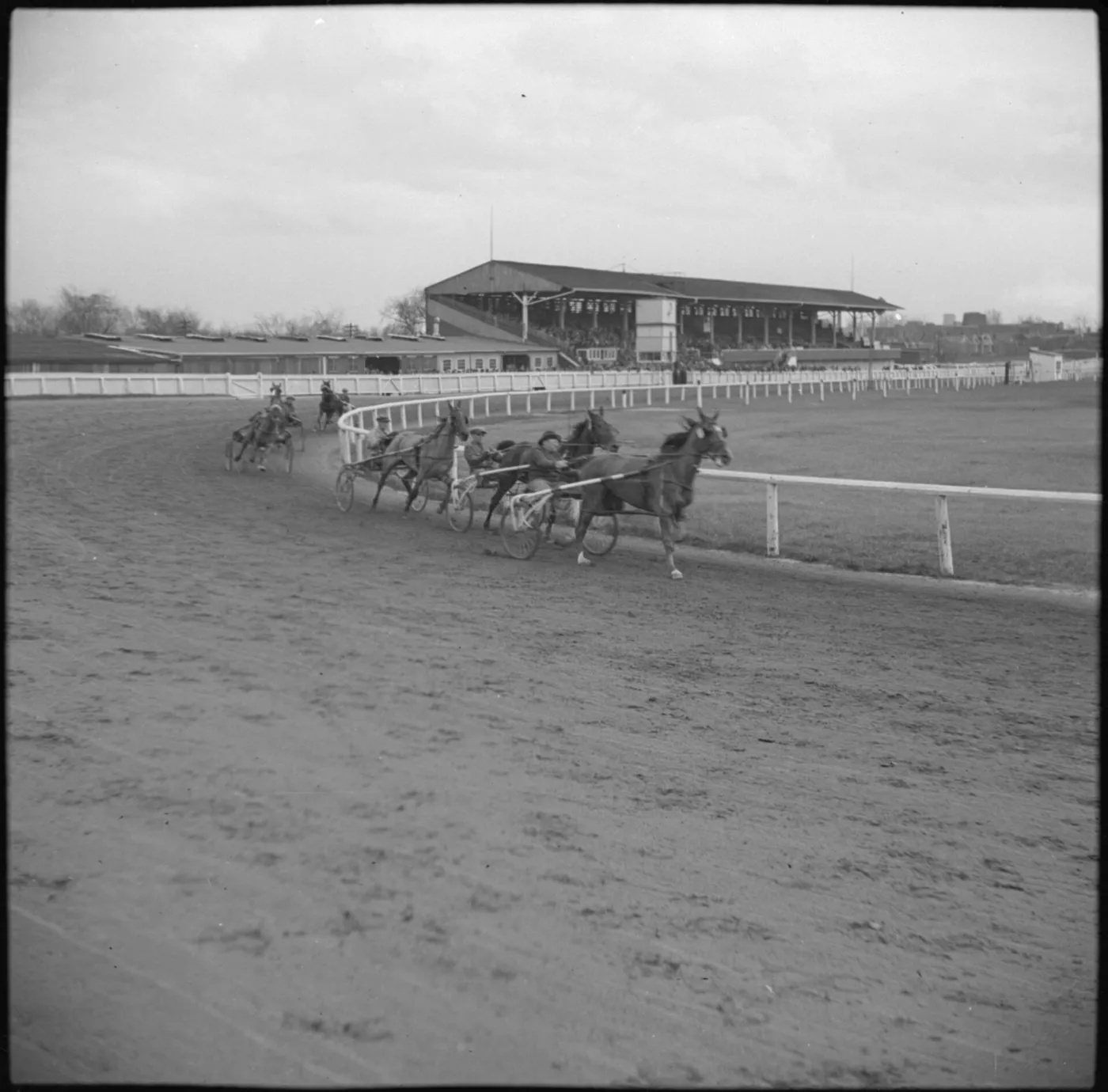
There's nothing quite like standing at the rail when the field turns for home. Horse racing is one of the oldest forms of betting in Canada, and it's still one of the most misunderstood. The good news: once you understand how the pools work and what each bet type does, it's a lot less intimidating than the wall of numbers on a program suggests. Here's how to bet on the horse races, explained the way I'd walk a friend through their first afternoon at the track.
19+ (18+ in AB, MB, QC). Crypto deposits. Cloudbet is licensed in Curaçao, not by any Canadian province. Not for Ontario or Alberta residents. Ad: we may earn a commission. Bet only what you can afford to lose.
Horse racing betting in Canada is different
Most sports betting in Canada falls under the provinces. Horse racing is the exception. Under section 204 of the Criminal Code, betting on horse races in Canada is done through a pari-mutuel system that is regulated federally by the Canadian Pari-Mutuel Agency (CPMA), part of Agriculture and Agri-Food Canada. The CPMA supervises the betting pools to make sure they're calculated and paid out correctly. The racing itself (licensing horses, jockeys and tracks) is overseen by provincial racing regulators.
What that means for you: when you bet on a Canadian race at the track, at a teletheatre, or through an authorized pari-mutuel account wagering service, you're betting into a pool with other players, not against a bookmaker.
How pari-mutuel betting works
Pari-mutuel is French for "betting among ourselves", which is a pretty good description. Here's the process:
- Everyone's bets on a race, for a given bet type (say, Win), go into one pool.
- Before paying out, the track deducts a percentage called the takeout. That covers purses, track operations and taxes or levies.
- What's left is shared among the winning tickets, in proportion to how much each bet.
Because the payout depends on how much everyone else bet, the odds keep changing until the race starts. The odds you see on the tote board ten minutes before post time are an estimate. Your actual payout is set when betting closes.
The takeout, in plain numbers
Takeout rates are set by each track and differ by bet type; exotic bets usually have higher takeout than Win, Place and Show. Here's an illustration with a made-up 17% takeout:
- The Win pool totals C$10,000.
- Takeout of 17% removes C$1,700, leaving C$8,300.
- If C$2,000 was bet on the winner, each C$1 on that horse returns C$8,300 / C$2,000 = C$4.15, so a C$2 ticket pays C$8.30.
Tracks also usually round payouts down to the nearest 10 cents (called breakage). Check your track's published takeout rates; they're the "price" you pay to play.
Reading tote-board odds
The board shows odds like 5-2 or 9-1. Those are odds to 1: a 9-1 horse would return C$9 profit per C$1, plus your C$1 stake back. Payouts in North America are usually quoted for a C$2 bet, so a 9-1 winner pays about C$20 for a C$2 ticket (before breakage).
| Board odds | Approx. C$2 Win payout | Implied chance (before takeout) |
|---|---|---|
| 1-1 (even money) | C$4.00 | 50% |
| 2-1 | C$6.00 | 33.3% |
| 5-2 | C$7.00 | 28.6% |
| 5-1 | C$12.00 | 16.7% |
| 9-1 | C$20.00 | 10% |
| 20-1 | C$42.00 | 4.8% |
The basic bets: Win, Place, Show
- Win: your horse must finish first.
- Place: your horse must finish first or second. You get paid from the Place pool, shared among the first two finishers.
- Show: your horse must finish first, second or third. Easier to hit, smaller payouts.
Place and Show pools are split among more winning horses, so payouts are lower and sometimes barely more than your stake if a heavy favourite finishes in the money. Many tracks have a minimum payout on a C$2 ticket (often C$2.10) so you don't lose money on a winning ticket.
Across the board
Some bettors play a horse "across the board": Win, Place and Show at once. A C$2 across-the-board bet costs C$6. If the horse wins, all three pay. If it finishes second, Place and Show pay. If third, only Show pays. It softens losses but costs three times as much, so don't let it double your total spending without noticing.
Exotic bets: bigger payouts, harder to hit
Exotics combine multiple horses or races into one ticket. They pay more because they're harder to hit, and they usually carry a higher takeout.
Exacta
Pick the first and second finishers in exact order. A C$2 exacta 3-5 needs the 3 horse to win and the 5 horse to be second.
Quinella
Pick the first two finishers in either order. Easier than an exacta, lower payout.
Triactor (trifecta)
Pick the first three in exact order. Canadian tracks often call this a triactor; in the US it's a trifecta. Same idea.
Superfecta
The first four in exact order. Very hard to hit, and often played with smaller base stakes such as 10 cents or 20 cents per combination where the track allows it.
Daily Double, Pick 3, Pick 4 and beyond
Pick the winners of two, three, four or more consecutive races. Jackpot-style multi-race bets can carry over when nobody hits, building big pools.
Boxing and keying
These are ways to cover more combinations:
- Box: your horses can finish in any order. A 3-horse triactor box covers 6 combinations, so a C$1 box costs C$6.
- Key: one horse must be in a specific position, with others filling the remaining spots. Cheaper than a full box when you have one strong opinion.
- Wheel: one horse with all others in the field. Expensive in large fields.
| Box | Combinations | Cost at C$1 base |
|---|---|---|
| Exacta, 3 horses | 6 | C$6 |
| Exacta, 4 horses | 12 | C$12 |
| Triactor, 3 horses | 6 | C$6 |
| Triactor, 4 horses | 24 | C$24 |
| Superfecta, 4 horses | 24 | C$24 |
| Superfecta, 5 horses | 120 | C$120 |
Look at how fast that last line grows. Boxing more horses feels safer, but it can cost more than you'll win back on a short-priced result. Always check the ticket total before you confirm.
How to place a bet at the track
At a window or self-serve terminal, say it in this order:
- The track (if the venue simulcasts others).
- The race number.
- The amount.
- The bet type.
- The program number of your horse(s).
Example: "Race 4, two dollars to Win on number 6." Check your ticket before you walk away. Mistakes are much easier to fix at the window than after the race.
Reading the program (past performances)
The program, or past performances (often called PPs), is where handicapping happens. Key things to look at:
- Recent form: finishing positions in the last few races, and how far behind the winner the horse finished.
- Class: what level the horse has been running at (maiden, claiming, allowance, stakes). A horse dropping in class may be more competitive; one moving up faces a tougher test.
- Distance and surface: has the horse run well at this distance, on dirt, turf or synthetic?
- Speed figures: numerical ratings of past performances. Different publications use different scales, so compare within one source.
- Jockey and trainer: current form and how they do together.
- Workouts: recent training times, especially for horses returning from a break.
- Post position: the starting gate number. Its importance varies by track and distance.
- Morning line: the track handicapper's estimated odds. It's a guide to how the public might bet, not a prediction.
You don't need to master all of this on day one. Start by comparing two or three horses on recent form and class, and see how often your reasoning holds up.
Thoroughbred vs harness racing
Canada has both. Thoroughbred racing is the classic flat racing with jockeys. Harness (Standardbred) racing has horses pulling a driver in a sulky, at either a trot or a pace. Harness racing has a long tradition in Canada, including in Quebec and Atlantic Canada. The betting works the same way, with Win, Place, Show and exotics, but form factors differ: in harness racing, post position and the driver's tactics often matter a great deal.
19+ (18+ in AB, MB, QC). Crypto deposits. Cloudbet is licensed in Curaçao, not by any Canadian province. Not for Ontario or Alberta residents. Ad: we may earn a commission. Bet only what you can afford to lose.
Where to bet on horse races in Canada
At the track and teletheatres
In British Columbia, Hastings Racecourse in Vancouver runs a live thoroughbred season, with simulcast wagering on other tracks. Many provinces also have teletheatres or off-track betting locations that take pari-mutuel wagers on simulcast races from across North America.
Online pari-mutuel accounts
Authorized pari-mutuel account wagering services let you bet into the same pools online. Rules differ by province, so check what's authorized where you live. These bets go into the pools under CPMA supervision.
Fixed-odds racing at sportsbooks
Some sportsbooks, including offshore books, offer fixed-odds racing markets on major races, where your price is locked when you bet, like other sports. That's a different product from pari-mutuel: you're betting against the book, not into a pool. Offshore books like Cloudbet are licensed abroad (Cloudbet: Curaçao) and not authorized by any Canadian province, and this site doesn't serve Ontario or Alberta residents. If you go that way, read the racing rules carefully, especially on non-runners and dead heats.
Key rules every beginner should know
- Scratches: a horse withdrawn before the race. In pari-mutuel betting, Win/Place/Show bets on a scratched horse are generally refunded; exotics have their own rules (for example, substitution with the post-time favourite in some multi-race bets). Check the track's rules.
- Dead heat: two horses tie. Pools are split according to track rules, which usually reduces payouts.
- Inquiries and objections: stewards can change the official order after the race. Never tear up a ticket until the result is declared official.
- Coupled entries: in some races, two horses with the same owner or trainer run as one betting interest. A bet on one covers both.
Smart staking for a day at the races
- Decide your budget before you arrive. Say C$60 for a ten-race card.
- Don't bet every race. Pick the races where you actually have an opinion and pass on the rest.
- Use small base amounts on exotics. A C$1 exacta box is plenty to learn on.
- Avoid huge boxes. A five-horse superfecta box at C$1 is C$120 on one race.
- Keep winnings separate. If you win in race 3, put some of it aside rather than rolling it all into race 4.
- Don't chase the late double. Raising stakes on the last races to "get even" is the classic way to turn a fun day into a bad one.
A sample beginner card
Here's how a sensible C$60 day could look, purely as an illustration:
- Races 1–2: watch and learn the track. No bets.
- Race 3: C$4 Win on a horse you like from form and class.
- Race 4: C$6 exacta box with three horses (C$1 base).
- Race 5: pass.
- Race 6: C$6 across the board on a mid-priced horse (C$2 each way).
- Race 7: C$6 triactor key: your top pick on top, with three others in second and third (C$1 base).
- Races 8–10: up to C$38 remaining, split across the races you feel strongest about, or kept in your pocket.
The point isn't the exact bets; it's that you decide the budget first and fit the bets inside it.
Common mistakes beginners make
- Betting on names, colours or "lucky numbers" only. Fun, but don't expect it to work over time.
- Thinking the favourite always wins. Favourites lose often; that's why the payout is low when they win.
- Forgetting the takeout. Every pool starts with a deduction, so you need to beat other bettors by a margin, not just pick well.
- Locking in bets too early in thin pools. Odds can move a lot in the final minutes.
- Tearing up tickets before results are official.
Track terms you'll hear
- Post time: when the race starts and betting closes.
- Chalk: the favourite.
- Longshot: a horse at high odds.
- Maiden: a horse that has never won a race.
- Claiming race: a race where every horse can be bought for a set price, which helps keep fields evenly matched.
- Furlong: one-eighth of a mile, the standard unit for race distances.
Taxes on racing winnings
For recreational bettors, gambling winnings, including from horse racing, are generally not taxable in Canada. If betting is effectively your business, it's a different matter, so talk to a tax professional if that might apply.
Keep it fun
A day at the races should be a good day out: the horses, the crowd, a hot dog and a couple of tickets. If you find yourself betting more than you planned, chasing losses, or hiding your betting from people close to you, take a break and talk to someone. In BC, call Gambling Support BC at 1-888-795-6111; in Quebec, Jeu : aide et référence at 1-800-461-0140; anywhere else, dial 211. All free, confidential and 24/7.
Questions players ask
Who regulates horse race betting in Canada?
Pari-mutuel betting on horse races is regulated federally by the Canadian Pari-Mutuel Agency (CPMA) under section 204 of the Criminal Code. Provincial racing commissions regulate the racing itself.
What is the easiest horse racing bet for beginners?
Win, Place and Show. Show is the easiest to hit (top three) but pays the least.
How much does a horse race bet cost?
Minimums vary by track and bet type. C$2 is a common Win/Place/Show minimum, and many exotics allow smaller base amounts.
Why did my payout change from the odds I saw?
In pari-mutuel betting, odds keep moving until betting closes. Your payout is based on the final pool.
What happens if my horse is scratched?
Win, Place and Show bets on a scratched horse are generally refunded. Exotic bets follow the track's specific rules.
Are horse racing winnings taxed in Canada?
Recreational gambling winnings are generally not taxable in Canada.
19+ (18+ in AB, MB, QC). Crypto deposits. Cloudbet is licensed in Curaçao, not by any Canadian province. Not for Ontario or Alberta residents. Ad: we may earn a commission. Bet only what you can afford to lose.
If betting is costing you more than money, free 24/7 help is a phone call away. British Columbia: Gambling Support BC 1-888-795-6111. Alberta: Addiction & Mental Health Helpline 1-866-332-2322. Manitoba: Problem Gambling Helpline 1-800-463-1554. Saskatchewan: Problem Gambling Helpline 1-800-306-6789. Quebec: Jeu : aide et référence 1-800-461-0140. Elsewhere, call 211 to find your provincial service.