NHL Anytime Goalscorer Betting Strategy: Build Your Own Price, Read the Lineups, and Survive the Cold Streaks
Welcome bonus for new players + fast crypto payouts. Just helping a brother out.
19+ (18+ in AB, MB, QC). Crypto deposits. Cloudbet is licensed in Curaçao, not by any Canadian province. Not for Ontario or Alberta residents. Ad: we may earn a commission. Bet only what you can afford to lose.
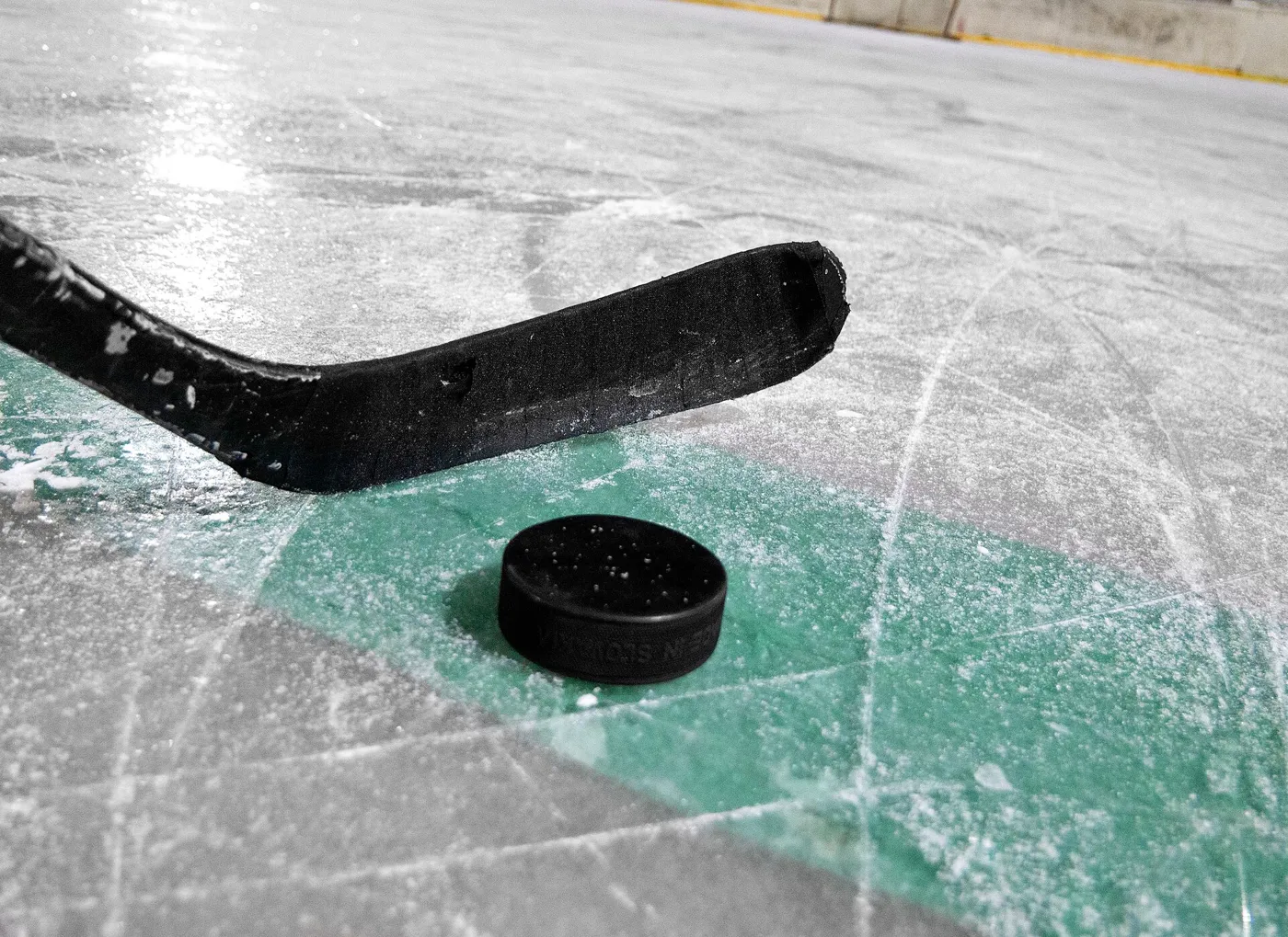
Anytime goalscorer is probably the most popular player bet in hockey. You pick a guy, he scores at any point in the game, you get paid. Simple. The problem is that most people bet it on vibes: favourite player, big name, hot streak. If you want an actual NHL anytime goalscorer betting strategy, you need three things: a way to turn stats into a fair price, a routine for checking lineups and goalies before puck drop, and the stomach to handle a bet that loses far more often than it wins. Let's build all three, step by step, like a buddy explaining it over wings on a Tuesday night.
Ground rules: 19+ in most provinces, 18+ in Manitoba and Quebec. This site doesn't serve Ontario or Alberta residents. Cloudbet, linked on this page, holds a Curaçao licence and is not authorized by any Canadian province. Every rate, price and stake below is an illustrative example, not a live line or a pick on a real player.
What an anytime goalscorer bet pays on
You're betting that a specific skater scores at least one goal in the game. Two goals or a hat trick doesn't pay extra on a standard anytime bet; one goal is all you need. That's different from first goalscorer (he has to score the game's first goal) and "2+ goals" markets (he needs at least two).
Before any strategy, know exactly what counts. House rules differ a bit, but this is the usual picture:
| Situation | Usually counts? |
|---|---|
| Goal in regulation | Yes |
| Goal in overtime (3-on-3 regular season, 5-on-5 playoffs) | Yes, on most books |
| Shootout goal | No |
| Empty-net goal | Yes |
| Own goal | No; credited to the last player of the scoring team who touched it, per official scoring |
| Player doesn't dress | Bet void, stake returned |
| Player takes one shift then leaves injured | Bet stands |
| Scoring change after the game | Depends on the book's cutoff; many settle on the official result at settlement time |
The overtime rule matters more than you'd think. If you want the full breakdown of regulation-only versus full-game markets, read our page on whether NHL bets include overtime.
Step 1: estimate the player's expected goals tonight
Everything starts with one number: how many goals you expect this player to score in this game. We'll call it lambda (λ). You build it from ice time and scoring rate, split into even strength and power play, because those are very different situations.
The basic recipe
λ = (even-strength goals per 60 × even-strength minutes ÷ 60) + (power-play goals per 60 × power-play minutes ÷ 60)
Illustrative example for a top-six winger:
- Even-strength scoring rate: 1.0 goals per 60 minutes
- Expected even-strength ice time: 15 minutes → 1.0 × 15 ÷ 60 = 0.250
- Power-play scoring rate: 3.0 goals per 60 minutes
- Expected power-play time: 2.5 minutes → 3.0 × 2.5 ÷ 60 = 0.125
- Base λ = 0.250 + 0.125 = 0.375
Use rates from a decent sample, ideally a season and a half or more, weighted toward recent games. A ten-game sample is mostly noise.
Step 2: adjust for the matchup
A league-average opponent doesn't exist on any given night. Adjust your base number with simple multipliers:
| Factor | Example adjustment |
|---|---|
| Opponent allows 10% more goals than league average | × 1.10 |
| Opponent's backup goalie starting, noticeably weaker save rate | × 1.05 to 1.10 |
| Opponent's penalty kill is poor (more PP chances) | Bump expected PP minutes |
| Player's team on second night of a back-to-back | × 0.95 |
| Top defensive pairing likely matched against his line | × 0.95 |
Continuing the example: 0.375 × 1.10 (weak defence) × 1.05 (backup goalie) = λ ≈ 0.433.
Don't stack ten tiny adjustments. Two or three meaningful ones are plenty, and each one you add is a chance to fool yourself.
Step 3: convert expected goals into a probability and a fair price
Goals in hockey are rare, random events, so a Poisson model works well as a first approximation. The chance of at least one goal is:
P(scores) = 1 − e−λ
Here's a quick lookup table so you don't need a calculator every time:
| λ (expected goals) | Chance to score | Fair decimal price | Fair American |
|---|---|---|---|
| 0.15 | 13.9% | 7.18 | +618 |
| 0.20 | 18.1% | 5.52 | +452 |
| 0.25 | 22.1% | 4.52 | +352 |
| 0.30 | 25.9% | 3.86 | +286 |
| 0.35 | 29.5% | 3.39 | +239 |
| 0.45 | 36.2% | 2.76 | +176 |
| 0.50 | 39.3% | 2.54 | +154 |
| 0.60 | 45.1% | 2.22 | +122 |
For our winger at λ 0.433: 1 − e−0.433 ≈ 1 − 0.649 = 35.1%, so a fair price is about 2.85 (+185).
Step 4: compare with the book and decide
Say the book offers this winger at 3.10 (+210). The implied probability is 1 ÷ 3.10 = 32.3%. Your estimate is 35.1%. That's a gap of almost three points.
Expected value of a C$10 bet:
0.351 × C$21 profit − 0.649 × C$10 = C$7.37 − C$6.49 = +C$0.88
If the book offered 2.60 (38.5% implied) instead, your 35.1% falls short and the bet is negative. Pass, even if you love the player.
A simple filter many bettors use: only bet when your estimated probability beats the implied probability by a few points. Your model has error in it, and that buffer protects you from betting on noise. Our odds calculator handles the conversions.
The shooting-percentage trap
This is the number one mistake in goalscorer betting. A player scores eight goals in ten games and everyone piles on. But look closer:
- 8 goals on 25 shots = a 32% shooting percentage.
- Most NHL forwards shoot somewhere around 9% to 14% over a career.
- That hot streak is mostly luck on a small number of shots, and it will cool off.
A better approach: estimate goals from shots (or shot attempts and quality chances, if you follow advanced stats), then apply the player's long-term shooting percentage.
Example: a player averages 2.6 shots per game this season and has a career shooting percentage of 11%. His expected goals per game are about 2.6 × 0.11 = 0.29, no matter how many have gone in lately. If the book is pricing him like a 0.45 player because of a hot streak, the price is probably too short. The reverse is just as useful: a high-volume shooter on a cold streak can be priced too long.
Ice time and power play units are everything
The single biggest driver of a goalscorer price is opportunity. Two players with the same talent can have very different chances based on deployment.
Top-six vs bottom-six
A first-line winger might play 17 to 20 minutes; a fourth-liner might play 9 to 11. Same scoring rate, almost double the opportunity.
Power play unit 1 vs unit 2
Power-play goals come at a much higher rate than even-strength goals. Being on the first unit, which typically gets most of the power-play time, adds a lot to λ. Being bumped to the second unit can quietly cut a player's chances.
Line changes
Coaches shuffle lines. A depth forward who gets promoted to play with a top centre can see his chances jump, and books don't always catch up right away. The opposite happens too.
Your pre-game routine
Most of the edge in this market comes from information that shows up in the hours before puck drop. Here's a simple routine:
- Morning: check projected lines and power-play units from team reports and morning skate notes.
- Afternoon: confirm starting goalies. A late switch to a backup changes every price in the game.
- Warm-ups: line rushes in warm-ups often confirm who's playing where and whether a player is in or out.
- Before betting: rerun your λ with confirmed info and only bet the gaps that survive.
Betting the night before can get you better prices, but you risk a scratched player (void) or, worse, a player who dresses but drops to the fourth line.
Defencemen and long shots
Defencemen usually have a λ in the 0.08 to 0.20 range, which means prices from about 6.00 to 13.00 or more. An offensive defenceman on the first power-play unit can sit higher. Long shots are fun, but they're hard to price well: a small error in your estimate makes a big difference at long odds. Treat defencemen bets as very small stakes, and only when your numbers clearly support them.
First goalscorer and 2+ goals: quick maths
These related markets use the same λ but need different formulas.
First goalscorer
A rough estimate: divide the player's λ by the total goals expected in the game (both teams). If our winger has λ 0.40 and the game total is expected around 5.8 goals, his share is about 0.40 ÷ 5.8 ≈ 6.9%, a fair price around 14.5. Books often price first goalscorer with a hefty margin, so be picky.
2+ goals
P(2 or more) = 1 − e−λ × (1 + λ). At λ 0.40: 1 − 0.670 × 1.40 ≈ 6.2%, fair price about 16.2. These are lottery-ticket bets; size them like it.
19+ (18+ in AB, MB, QC). Crypto deposits. Cloudbet is licensed in Curaçao, not by any Canadian province. Not for Ontario or Alberta residents. Ad: we may earn a commission. Bet only what you can afford to lose.
Variance: why this market tests your patience
Here's the honest truth: even a good anytime goalscorer bettor loses most bets. If your average hit rate is about 33%, you lose two out of three.
- Chance of losing 10 bets in a row at a 33% hit rate: 0.6710 ≈ 1.8% for any given run of ten. Over a full season of bets, at least one cold run like that is pretty normal.
- Over 100 bets at about 3.10 with a real edge of +C$0.88 per C$10 bet, your expected profit is about +C$88.
- But the normal swing in wins over 100 bets is roughly ±4.7 wins, and each win or loss moves you about C$31. That's a swing of around ±C$146.
In plain English: after 100 bets, you could easily be down even if your strategy is good. You need hundreds of bets before results tell you much. That's why flat, small stakes matter so much.
Staking plan
| Bankroll | Per bet (0.5%) | Per bet (1%) | Max per night (suggested) |
|---|---|---|---|
| C$300 | C$1.50 | C$3 | C$9 |
| C$600 | C$3 | C$6 | C$18 |
| C$1,200 | C$6 | C$12 | C$36 |
Cap the number of goalscorer bets per night. Three solid edges beat ten "sort of" picks every time.
Same-game combos and correlation
Linking goalscorers in a parlay is tempting: "Two teammates both score" pays big. But those events are connected. If a team scores five goals, it's more likely that both score; if they're shut out, neither does. Books know this and price same-game parlays with extra margin or limits. A standard parlay of two players from different games multiplies the margin twice. Our parlay calculator shows how fast the payout grows and how fast your real chances shrink. For the bigger picture on player markets, see our explainer on what a prop bet is.
Live anytime goalscorer bets
Many books keep goalscorer markets open during the game. Your λ shrinks as time runs out. A simple way: multiply the player's full-game λ by the fraction of the game left. Halfway through, a 0.40 player has about 0.20 left, so roughly an 18% chance, fair price about 5.50. Adjust for score effects: a team that's trailing late pushes more players forward and often pulls the goalie, which can boost its top forwards' chances; a team that's leading may sit back. Never bet live just to chase an earlier loss.
Keep a record
Write down every bet: player, your λ, your probability, the price you took, and the result. After a few hundred bets, check whether players you rated at 30% scored about 30% of the time. If they scored much less, your numbers are too optimistic. Also check whether the prices you took were better than where the market closed. Beating the closing price regularly is one of the best signs your process works.
Common mistakes
- Chasing hot streaks. Shooting percentage regresses. Price on shots and long-term finishing.
- Ignoring the goalie. A starter-to-backup switch changes the whole game.
- Not checking power-play units. PP1 vs PP2 is a big deal.
- Betting your favourite team's star every night. Popular players are often priced short.
- Oversizing long shots. Defencemen and depth forwards at 8.00+ are fun, not a retirement plan.
- Forgetting shootout rules. Shootout goals don't count.
Teams and markets to explore
Canadian teams draw big betting interest, which can shade prices on their stars. If you follow a specific club, our team guides are a good place to start, such as Canucks prop bets and Jets prop bets. For broader hockey markets, see how to bet the NHL puck line and our page on NHL betting trends.
Where to bet and staying legit
Provincial sites (PlayNow in BC, Manitoba and Saskatchewan, Loto-Québec, and Atlantic Canada's products) are the regulated option where available. Offshore books like Cloudbet aren't authorized by any province. If you use one, you're dealing with a Curaçao-licensed company, often in crypto, so think about stakes in Canadian dollars. Cloudbet typically asks for stronger ID checks around US$2,200 in cumulative deposits, and any book can request documents before a withdrawal. Our page on whether online betting is legal in Canada covers the details honestly.
Keep it fun
Goalscorer bets are a fun way to watch a game, but losing streaks are part of the deal. Set a nightly limit and stick to it. If it stops being fun, help is free and confidential: Gambling Support BC at 1-888-795-6111 and Jeu : aide et référence in Quebec at 1-800-461-0140. More numbers are on our responsible gambling page.
My take
A real NHL anytime goalscorer betting strategy is simple to describe and hard to stick with: build a fair price from ice time and scoring rates, adjust for goalies and power-play roles, ignore hot streaks driven by lucky shooting, confirm lineups before betting, and only play when the price beats your number by a clear margin. Bet small, expect to lose most nights, and keep records. Do that for a season and you'll know more than almost everyone betting this market.
Questions players ask
What is an anytime goalscorer bet in the NHL?
It's a bet that a specific player scores at least one goal at any point in the game. One goal is enough to win; extra goals don't pay more on a standard anytime bet.
Do overtime goals count for anytime goalscorer bets?
On most books, yes. Shootout goals usually don't count. Always check your sportsbook's house rules.
How do I calculate a fair price for an anytime goalscorer?
Estimate the player's expected goals (lambda) from scoring rates and ice time, then use 1 minus e to the power of minus lambda to get his chance of scoring. Divide 1 by that probability for the fair decimal price.
What happens if my player doesn't play?
If he doesn't dress, the bet is usually void and your stake is returned. If he plays even one shift and then gets hurt, the bet usually stands.
Why shouldn't I bet players on hot streaks?
Hot streaks are often driven by an unusually high shooting percentage on a small number of shots, which tends to come back down. Pricing from shots and long-term finishing is more reliable.
How much should I bet on goalscorer props?
Small, flat stakes, around 0.5% to 1% of your bankroll per bet. You'll lose most bets even with a good strategy, so protecting your bankroll from long losing runs matters.
Is Cloudbet legal in Canada?
Cloudbet holds a Curaçao licence and is not authorized by any Canadian province. This site does not serve Ontario or Alberta residents.
19+ (18+ in AB, MB, QC). Crypto deposits. Cloudbet is licensed in Curaçao, not by any Canadian province. Not for Ontario or Alberta residents. Ad: we may earn a commission. Bet only what you can afford to lose.
If betting is costing you more than money, free 24/7 help is a phone call away. British Columbia: Gambling Support BC 1-888-795-6111. Alberta: Addiction & Mental Health Helpline 1-866-332-2322. Manitoba: Problem Gambling Helpline 1-800-463-1554. Saskatchewan: Problem Gambling Helpline 1-800-306-6789. Quebec: Jeu : aide et référence 1-800-461-0140. Elsewhere, call 211 to find your provincial service.