Best Odds for Keno Online in Canada: How Many Spots to Pick, How to Read a Pay Table, and Where the House Edge Hides
Welcome bonus for new players + fast crypto payouts. Just helping a brother out.
19+ (18+ in AB, MB, QC). Crypto deposits. Cloudbet is licensed in Curaçao, not by any Canadian province. Not for Ontario or Alberta residents. Ad: we may earn a commission. Bet only what you can afford to lose.
Updated ·  Written by Aisha Noor ·
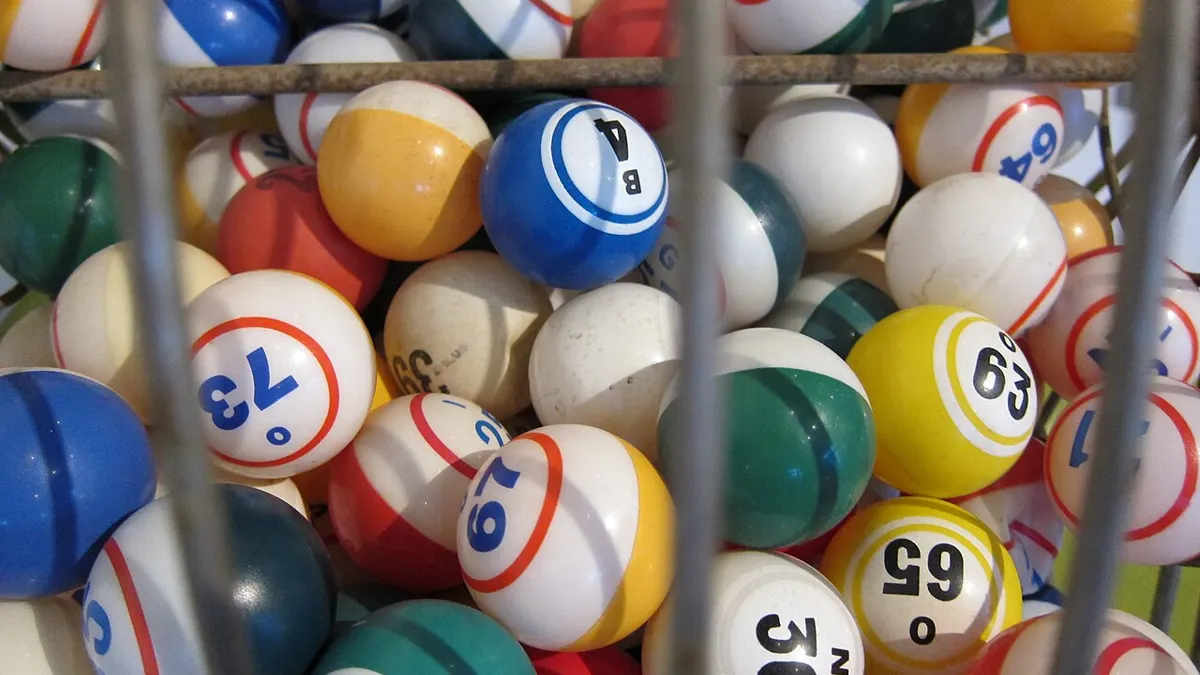
Keno looks like the simplest game in the casino. You pick some numbers, twenty balls get drawn out of eighty, and you get paid for how many you caught. But here's the thing most people never hear: the drawing is the same everywhere, and the odds of catching your numbers never change. What changes is the pay table, and that's where one keno game hands back more than 90 cents of every dollar while another keeps half of it. If you're looking for the best odds in online keno from Canada, the pay table is the whole story, so let me walk you through it like I would for a buddy who just asked me about it.
Quick ground rules before we start. You need to be 19 or older in most provinces (18 in Manitoba and Quebec). This site does not serve Ontario or Alberta residents. The casinos linked here are offshore crypto casinos: they are not licensed or authorized by any Canadian province. The licensed options are your provincial sites, such as PlayNow in BC, Manitoba and Saskatchewan, or Loto-Québec. Every pay table and dollar figure below is a made-up example to show the maths, not any real casino's numbers.
The short answer
The best odds in online keno come from three things, in this order:
- A generous pay table. Two keno games with the same 80-ball, 20-draw format can have a house edge of about 7% or about 50%, purely because of what they pay. Always find the pay table or the stated RTP before you play.
- A spot count where the table is strongest. Inside one game, the return often differs by how many numbers you pick. On our made-up table below, 4, 6 and 8 spots return about 93%, while 10 spots returns under 89%.
- Fewer games per hour. Keno's edge is charged on every draw. Online keno can run a game every few seconds, so speed matters more than people think.
What does not help: "hot" or "cold" numbers, picking birthdays, or switching numbers after a near miss. Every draw is independent, and the random number generator has no memory.
How keno works in thirty seconds
Standard keno uses 80 numbers. You choose from 1 up to 10 numbers (some games allow 15 or 20). These are your "spots". The game draws 20 numbers. The numbers you picked that come up are your "catches". The pay table tells you what each number of catches pays, for each number of spots. That's it. There's no skill in the drawing, so every bit of skill in keno is about choosing what to play, how much and how fast.
The real odds of catching your numbers
These odds come straight from the maths of drawing 20 balls from 80. They are the same at every fair keno game, online or on paper, provincial or offshore. We computed them with the standard counting formula (hypergeometric probability) and rounded:
| Spots picked | Catch 0 | Catch 1 | Catch 2 | Catch 3 | Catch 4 | Catch all |
|---|---|---|---|---|---|---|
| 1 spot | 75.0% | 25.0% | - | - | - | 25.0% (1 in 4) |
| 2 spots | 56.0% | 38.0% | 6.0% | - | - | 6.0% (1 in 16.6) |
| 3 spots | 41.7% | 43.1% | 13.9% | 1.39% | - | 1 in 72 |
| 4 spots | 30.8% | 43.3% | 21.3% | 4.32% | 0.31% | 1 in 326 |
| 5 spots | 22.7% | 40.6% | 27.0% | 8.39% | 1.21% | 1 in 1,551 |
| 6 spots | 16.7% | 36.3% | 30.8% | 13.0% | 2.85% | 1 in 7,753 |
| 8 spots | 8.8% | 26.6% | 32.8% | 21.5% | 8.15% | 1 in 230,115 |
| 10 spots | 4.6% | 18.0% | 29.5% | 26.7% | 14.7% | 1 in 8.9 million |
Two things jump out. First, catching all 10 on a 10-spot ticket is about 1 in 8.9 million, which is lottery territory. Second, catching zero on a 10-spot ticket happens about 4.6% of the time, which is why some pay tables actually pay you for catching nothing. Neither of those facts makes one spot count "better" by itself. Odds only become good or bad once you put the pay table next to them.
Same game, two pay tables: 93% vs under 50%
Here's the part that matters most. Below are two made-up pay tables for the exact same keno game. The odds of every catch are identical. The only thing that differs is what each one pays per $1 bet.
| Spots | Pay table A (per $1) | Return to player A | Pay table B (per $1) | Return to player B |
|---|---|---|---|---|
| 4 spots | 2 catches pay 1, 3 pay 6, 4 pay 150 | about 93.2% | 2 pay 1, 3 pay 3, 4 pay 60 | about 52.6% |
| 6 spots | 3 pay 1, 4 pay 10, 5 pay 100, 6 pay 1,600 | about 93.1% | 3 pay 1, 4 pay 4, 5 pay 60, 6 pay 1,000 | about 55.9% |
| 8 spots | 4 pay 2, 5 pay 18, 6 pay 100, 7 pay 1,000, 8 pay 10,000 | about 93.3% | 5 pay 8, 6 pay 60, 7 pay 800, 8 pay 8,000 | about 45.2% |
| 10 spots | 0 pays 3, 5 pay 2, 6 pay 20, 7 pay 150, 8 pay 1,000, 9 pay 5,000, 10 pay 100,000 | about 88.9% | 5 pay 1, 6 pay 15, 7 pay 100, 8 pay 500, 9 pay 2,500, 10 pay 10,000 | about 46.9% |
Look at the 8-spot row. Table B looks fine at a glance: a $8,000 top prize, payouts from 5 catches up. But it skips the 4-catch prize, trims the middle prizes, and the return drops to about 45%. That means on average you lose about 55 cents of every dollar, versus under 7 cents on table A. Same balls, same odds, ten times the cost.
Real keno games sit anywhere along that range. Lottery-style keno draws tend to keep a large share for the operator, while many online "video keno" and crypto keno games publish a much higher RTP. You don't need to guess: most online casinos show the RTP in the game's info screen, and the pay table is usually one tap away.
How to work out a keno game's RTP yourself
If a game doesn't show its RTP, you can estimate it from the pay table in about five minutes. For your spot count, multiply each prize by the chance of that catch, then add them up. Using the 4-spot line from table A:
- 2 catches: 21.26% chance × 1 = 0.213
- 3 catches: 4.32% chance × 6 = 0.259
- 4 catches: 0.306% chance × 150 = 0.459
- Total: about 0.932, so the game returns about 93.2 cents per dollar on average, and the house edge is about 6.8%.
Take the catch percentages from the odds table above. If the pay table says "pays 1" for a catch, check whether that means you get your $1 back (a push) or $1 profit plus your stake. Most keno tables quote the total returned for a $1 bet, which is what we used here. If the result comes out under about 85%, I'd walk away. There are casino games with far smaller edges.
Which spot count gives the "best odds"?
People ask this a lot, and the honest answer is: it depends entirely on the table. But a few patterns hold on most games:
| Spot count | What it feels like | Where the money goes (table A) | Good for |
|---|---|---|---|
| 1-2 spots | Small, frequent results; tables are often stingy here | - | Checking how a game feels with tiny bets |
| 4 spots | Any prize about 1 time in 3.9 | About 49% of the return comes from the 4-of-4 prize | Steady play with occasional bigger hits |
| 6 spots | Any prize about 1 time in 6.2 | About 22% from catching all 6 | A middle path |
| 8 spots | Any prize about 1 time in 9.8 | Most of the return from 4-6 catches; top prize only 4.7% | Players who like a chance at a big multiplier |
| 10 spots | Any prize about 1 time in 9.1 (including the 0-catch prize) | Top prize only 1.3% of the return | Jackpot hunters who accept long dry spells |
The lesson in that third column: on high spot counts, the big headline prize is worth almost nothing in average terms because you'll basically never hit it. If you play 10 spots for the $100,000 prize, you're really playing for the 5-, 6- and 7-catch prizes and buying a lottery ticket on top.
What 300 games of keno actually looks like
Averages are abstract, so we ran a simulation: 20,000 players each play 300 games at $1 a game. That's roughly half an hour to an hour of fast online keno. Here's how it came out (all made-up tables from above):
| Setup | Average result | Middle player | Share who finished ahead | Bad night (worst 5%) | Good night (best 5%) |
|---|---|---|---|---|---|
| 4 spots, table A (93%) | -$20.50 | -$22 | 35.7% | -$182 or worse | +$279 or better |
| 4 spots, table B (53%) | -$142 | -$145 | 1.9% | -$211 or worse | -$25 or better |
| 10 spots, table A (89%) | -$27 | -$120 | 23.0% | -$209 or worse | +$274 or better |
| 10 spots, table B (47%) | -$160 | -$205 | 6.1% | -$270 or worse | +$46 or better |
On the good table, about one player in three walks away up after 300 games. On the bad table, it's about one in fifty. Notice the 10-spot rows too: the middle player loses a lot more than the average, because a few big hits pull the average up while most people lose most of their stake. That's what high-variance keno feels like in real life.
Speed is a hidden cost
Keno's house edge is charged per game. A paper keno draw might happen every few minutes. Online keno, especially with auto-play, can run a new game every few seconds. Here's what $1 a game costs you per hour on average:
| Game RTP | 20 games an hour | 100 games an hour | 300 games an hour |
|---|---|---|---|
| 95% | $1 | $5 | $15 |
| 92% | $1.60 | $8 | $24 |
| 90% | $2 | $10 | $30 |
| 75% | $5 | $25 | $75 |
A 92% game at 300 games an hour costs more than a 75% game at 20 games an hour. If you want your budget to last, turn auto-play off, or set it to a fixed number of games with a loss limit.
19+ (18+ in Alberta, Manitoba and Quebec). VegasAces is an offshore casino, not licensed by any Canadian province. Not for Ontario or Alberta residents. Ad: we may earn a commission. Bet only what you can afford to lose.
Five-minute check before you play keno for real money
- Open the game info. Look for the RTP. If there are several RTP versions of the same game, casinos sometimes run a lower one, so check the number in the lobby you're actually playing in.
- Read the pay table for your spot count. Is there a prize for the middle catches? Gaps there are the usual sign of a stingy table.
- Do the quick RTP sum above if no RTP is shown.
- Check the maximum win. Some games cap total payouts per game or per day. A cap can cut into the top prizes you're paying for.
- Check bonus rules. If you're playing with bonus money, find out whether keno counts toward wagering and at what percentage.
Keno and bonuses: read the contribution rules
Bonus terms matter a lot for keno because many casinos treat it as a "specialty" game. For example, Cloudbet's terms (section 8.5) set bonus wagering contribution by game type: slots and arcade games with RTP above 99.5% contribute 10%, live and virtual table games 10%, and other slots by RTP. Keno isn't named there, so ask support how a keno game counts before you use bonus funds on it. VegasAces' codes like ACES250 are limited to slots without bonus-buy plus listed blackjack games, according to its promotions page, so keno play wouldn't clear that bonus.
Cloudbet's Welcome Package works differently from a classic deposit match: it's a 30-day program worth up to $2,500, paid through casino rakeback of 10% of the house edge plus daily casino cash drops, according to its terms (8.4). Rakeback is a share of the house edge, so on a high-edge game you'd get more back per dollar, but you'd also lose more per dollar. Rakeback never turns a bad keno table into a good one.
Where to play keno online from Canada
Your options fall into two groups:
- Provincial lottery sites. Some provincial and regional lotteries run their own keno draws. They're the licensed option where you live, and the money supports provincial programs. Check your province's lottery site for which keno games it offers and their prize structure.
- Offshore crypto casinos. Sites like Cloudbet have large casino lobbies with instant games, and VegasAces lists a specialty games category alongside slots, table games, video poker and live dealer. We haven't confirmed which keno titles either lobby carries today, so check the lobby and the game's info screen for the RTP before you deposit. These sites aren't licensed by any Canadian province, and this site doesn't serve Ontario or Alberta.
If you go offshore, the practical points are the same as for any crypto casino. Cloudbet takes a long list of coins (Bitcoin, Ethereum, USDT on several networks, Litecoin and more) with a minimum around US$1 shown on the deposit screen, and says withdrawals are typically processed within 24 hours. It asks for ID once cumulative deposits reach about US$2,200 (terms 18.1.5). VegasAces lists crypto deposits from $10 and card deposits from $20, with payouts in Bitcoin.
Keno myths that cost Canadians money
- "These numbers are due." The draw has no memory. A number that hasn't come up in 50 games has exactly the same chance as any other in the next game.
- "Playing the same numbers every time improves my odds." It doesn't change anything. It's fine if you enjoy it, it just isn't a strategy.
- "More spots means better odds." More spots means bigger possible prizes and rarer wins. Whether the odds are "better" depends only on the pay table for that spot count.
- "Keno patterns or software can predict draws." Anything selling a keno predictor is a scam. Online keno uses a random number generator; real games can't be predicted.
- "A big top prize means a good game." On 8 and 10 spots, the top prize is a tiny share of the return. The middle prizes decide whether the game is fair.
A made-up example: Dave in Regina
Dave has $100 for a keno night. He finds two games. One shows an RTP of 93% on 6 spots; the other doesn't list an RTP, and when he does the quick sum on its 6-spot table it comes to about 56%. He picks the first game, sets 6 spots at $1 a game, and turns off auto-play so he plays about 100 games over the evening. On average that costs him about $7 instead of about $44 on the other game. He also sets a stop: if he's down $60, he's done. Nothing about that plan guarantees a win, but it makes his $100 last, and that's the best "odds" anyone can get in keno.
Keno vs other casino games
Even a good keno table usually carries a bigger house edge than many table games. A 93% keno game has an edge around 7%, while European roulette is about 2.7% and blackjack with basic strategy is often under 1% on good rules. If you like keno for its relaxed, lottery-ticket feel, that's a perfectly good reason to play. Just know you're paying for that feel, and keep the bets small.
Responsible play
Keno is fast and it's easy to lose track of how many games you've played. Decide your budget and your number of games before you start, and stop when either runs out. If gambling stops being fun, free and confidential help is available 24/7: Gambling Support BC 1-888-795-6111, Manitoba Problem Gambling Helpline 1-800-463-1554, Saskatchewan Problem Gambling Helpline 1-800-306-6789, and in Quebec, Jeu : aide et référence 1-800-461-0140.
Legal and tax notes
Under the Criminal Code, provinces conduct and manage gambling in Canada. Offshore casinos like Cloudbet (licensed in Curaçao) and VegasAces aren't licensed by any province, so a provincial regulator can't help you in a dispute with them. For most recreational players, gambling winnings aren't taxed in Canada, but selling or swapping crypto can create a capital gain or loss with the CRA, so keep a simple record of deposits and withdrawals.
My take
Forget lucky numbers. The best odds in online keno are found in the pay table, and the gap between a good one and a bad one is enormous. Check the RTP, do the five-minute sum if there isn't one, pick the spot count where the table is strongest, and slow the game down. Do that and keno can be a cheap, chilled-out way to play. Skip it and the same game can quietly keep half your money.
Questions players ask
What is the best number of spots to play in keno?
It depends on the pay table. Work out the return for each spot count using the catch odds and the prizes, and play the one that returns the most. On many tables 4 to 8 spots are strongest and 1, 2 or 10 spots are weaker.
What are the odds of catching all 10 numbers in keno?
About 1 in 8.9 million in standard 80-ball, 20-draw keno.
What is a good RTP for online keno?
Anything around 90% or more is good for keno. Lottery-style keno can be far lower. If a game returns under about 85%, other games are a better use of your budget.
Is online keno rigged?
Fair online keno uses a random number generator, and the catch odds follow simple maths. The house makes its money through the pay table, not by changing the draw. Stick to games that show their RTP and pay table.
Can I use a bonus on keno?
Sometimes. Many casinos limit or reduce keno's contribution to wagering, and some bonuses (like VegasAces' ACES250) only count specific slots and blackjack games. Check the terms or ask support first.
Is it legal to play keno online in Canada?
Provincial lottery and gaming sites are the licensed option. Offshore casinos aren't licensed by any province, and this site doesn't serve Ontario or Alberta.
19+ (18+ in AB, MB, QC). Crypto deposits. Cloudbet is licensed in Curaçao, not by any Canadian province. Not for Ontario or Alberta residents. Ad: we may earn a commission. Bet only what you can afford to lose.
If betting is costing you more than money, free 24/7 help is a phone call away. British Columbia: Gambling Support BC 1-888-795-6111. Alberta: Addiction & Mental Health Helpline 1-866-332-2322. Manitoba: Problem Gambling Helpline 1-800-463-1554. Saskatchewan: Problem Gambling Helpline 1-800-306-6789. Quebec: Jeu : aide et référence 1-800-461-0140. Elsewhere, call 211 to find your provincial service.