Dice Games at Crypto Casinos in Canada: Range Dice, Craps, Sic Bo and Live Dice Compared by House Edge, Swings and What a Session Costs
Welcome bonus for new players + fast crypto payouts. Just helping a brother out.
19+ (18+ in AB, MB, QC). Crypto deposits. Cloudbet is licensed in Curaçao, not by any Canadian province. Not for Ontario or Alberta residents. Ad: we may earn a commission. Bet only what you can afford to lose.
Updated ·  Written by Ethan McLeod ·
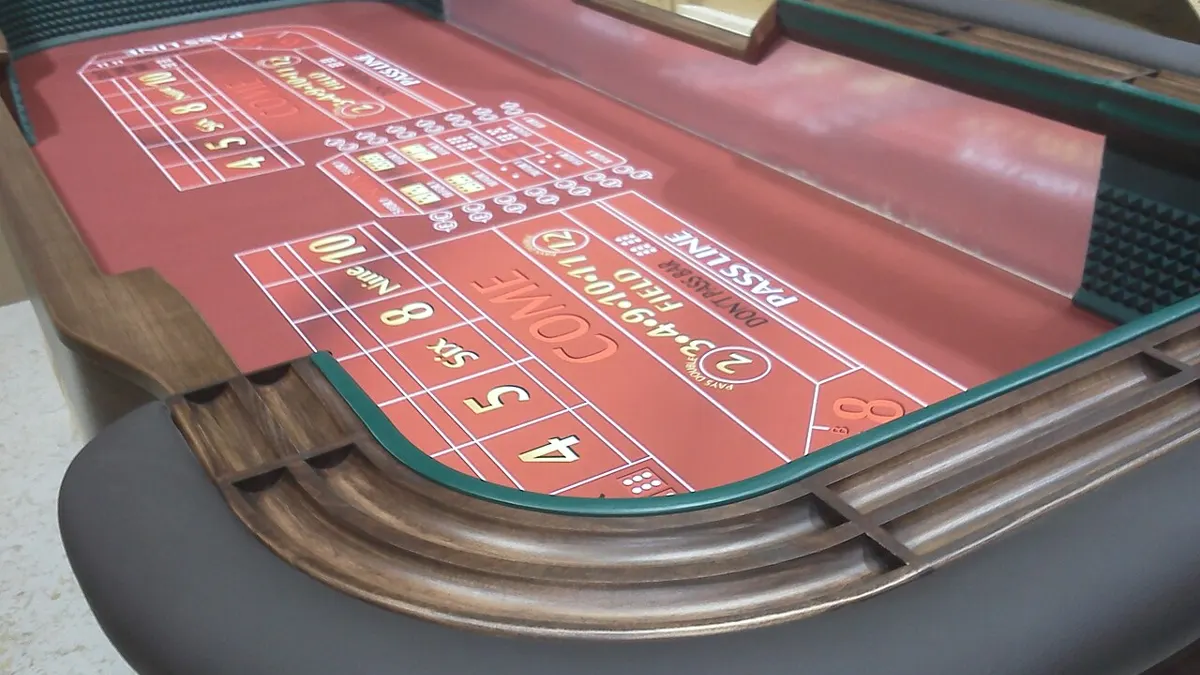
"Dice" at a crypto casino can mean four very different games. There's range dice, the simple number-picker where you choose your own odds. There's craps, the classic table game with a bet for every mood. There's sic bo, the three-dice game from Asia. And there are live dice shows with a host and random multipliers. They all involve dice, but they don't cost the same, they don't swing the same, and some bets inside them are ten times pricier than others. So let me break them down the way I would for a buddy who just opened the dice tab: what each game is, which bets are cheap, which ones quietly drain your balance, and what an evening really costs in dollars.
First, the ground rules. You need to be 19 or older in most provinces, and 18 in Manitoba and Quebec. This site does not serve Ontario or Alberta residents. Cloudbet holds a Curaçao licence and is not licensed or authorized by any Canadian province. The legal online options where you live are the provincial sites, such as PlayNow in BC, Manitoba and Saskatchewan, or Loto-Québec in Quebec. Every roll, bet and result below is a made-up example to show the maths.

The four kinds of dice game, side by side
| Game | How it works | Typical cheapest bet | Typical house edge on that bet | Pace |
|---|---|---|---|---|
| Range dice (crypto "originals") | A number from 0 to 100 is rolled; you pick "over" or "under" a target and the payout adjusts | Any target (edge is the same across targets) | Often around 1%, but it varies by game; check the info panel | Very fast, auto-bet possible |
| Craps (RNG or live) | Two dice; bets on the shooter's roll sequence | Pass line / don't pass, plus odds | About 1.41% (pass), 1.36% (don't pass), 0% on the odds bet | Medium |
| Sic bo | Three dice; bets on totals, combinations and triples | Big or small | About 2.78% | Medium |
| Live dice shows | A host rolls dice; random multipliers are added to some results | Varies by show | Usually a few percent; check the RTP in the game help | Slow, entertainment-heavy |
If you only want the cheapest dice game, the honest ranking is usually: craps pass or don't pass with the odds bet, then range dice at a low edge, then sic bo big/small. The shows are more about the fun of watching than about the price.
Range dice: how the multiplier is built
Range dice is the simplest game in any crypto casino. A random number between 0 and 100 is rolled (some games use 0 to 99.99). You choose a target and whether the roll must be over or under it. The lower your chance of winning, the higher your payout.
The payout is set by a simple formula: multiplier = (100 − house edge) ÷ win chance. That means the house edge is the same no matter which target you pick. Here's what that looks like at a 1% edge and at a 3% edge:
| Win chance | Multiplier at 1% edge | Multiplier at 3% edge | What it feels like |
|---|---|---|---|
| 90% | 1.10× | 1.078× | Win almost always, tiny profit each time |
| 75% | 1.32× | 1.293× | Steady |
| 50% | 1.98× | 1.94× | Coin flip |
| 25% | 3.96× | 3.88× | Streaky |
| 10% | 9.90× | 9.70× | Long dry spells |
| 2% | 49.5× | 48.5× | Lottery-style |
| 1% | 99× | 97× | Mostly losing, rare big hit |
So the target you pick doesn't change how much the game costs on average. It changes how bumpy the ride is. At a 90% win chance you'll win nine rolls out of ten, but each loss wipes out about nine wins. At a 2% win chance you'll win once in 50 rolls on average, but there's about a 13% chance you go 100 rolls without a single win (0.98 to the power of 100). Same edge, very different feelings.
The one number that does matter is the house edge, and it isn't the same everywhere. Before you play, open the game's info or fairness panel and look for the RTP. An RTP of 99% means a 1% edge; 97% means 3%, three times as expensive.
What a range dice session costs, in dollars
Range dice is fast, especially with auto-bet. That speed is the real cost. Here's a made-up example at 50 cents a roll:
| Made-up pace | Rolls | Total wagered | Expected cost at 1% edge | Expected cost at 3% edge |
|---|---|---|---|---|
| Clicking by hand, relaxed | 300 per hour | $150 | about $1.50 | about $4.50 |
| Clicking fast | 900 per hour | $450 | about $4.50 | about $13.50 |
| Auto-bet, max speed | 3,600 per hour | $1,800 | about $18 | about $54 |
The same 50-cent bet can cost 36 times more per hour depending on speed and the game's edge. If you use auto-bet, set a stop-loss and a number of rolls, and slow it down if the game lets you.
Why doubling up (Martingale) doesn't save you
The most popular dice "strategy" is Martingale: bet at about 50% win chance, double after every loss, and go back to your base bet after a win. It wins small amounts often, which feels great. The problem is the losing streak. Here's what it looks like starting from $1, with a made-up 49.5% win chance (1.98× payout at a 1% edge):
| Losses in a row | Next bet | Total lost so far | Chance of that many losses in a row from any start |
|---|---|---|---|
| 5 | $32 | $31 | about 3.3% |
| 7 | $128 | $127 | about 0.84% |
| 8 | $256 | $255 | about 0.42% |
| 10 | $1,024 | $1,023 | about 0.11% |
Those single-sequence chances look tiny, but you play hundreds of sequences. Our own calculation shows that in 500 rolls at 50.5% loss chance, the chance of hitting at least one run of 8 losses is about 65%, and at least one run of 10 losses is about 23%. In 1,000 rolls, it's about 88% for 8 losses. A $255 bankroll used for $1 Martingale doesn't usually last an evening. And with a 1.98× payout, each winning sequence nets only about $1 minus a little. Martingale doesn't change the edge; it just trades many small wins for one big loss.
Craps: lots of bets, a few good ones
Craps looks intimidating because the table has so many boxes. You can ignore almost all of them. Here are the main bets ranked by house edge:
| Craps bet | House edge (approx.) | Verdict |
|---|---|---|
| Odds behind pass / don't pass | 0% | The only bet with no edge; take it if you can afford it |
| Don't pass / don't come | 1.36% | Cheapest base bet |
| Pass line / come | 1.41% | Nearly as good, and more social |
| Place 6 or 8 | 1.52% | Fine |
| Field (2 and 12 pay double) | 5.56% | Costly |
| Any 7 | 16.67% | Avoid |
| Hardways, proposition bets | 9% to 16%+ | Avoid unless it's a tiny fun bet |
The simple plan: bet the pass line (or don't pass), and when a point is set, add the odds bet behind it. That keeps the overall edge on your money below 1.41%. Online craps lets you play at your own pace, which is a nice way to learn the table without holding anyone up.
Sic bo: stick to big or small
Sic bo uses three dice. "Small" wins on a total of 4 to 10, "big" on 11 to 17, and both lose on any triple. That triple rule gives big and small a house edge of about 2.78%. Most other sic bo bets, like specific triples or exact totals, have much bigger edges, often in the double digits, even though the payouts look exciting. If you like sic bo, keep most of your money on big or small and treat the rest as a small fun budget.
Live dice shows
Live dice games with a host and random multipliers are built for entertainment: a few rounds a minute, lots of build-up, and the occasional big multiplier. Their RTP varies by bet and is listed in the game's help screen. Because they're slow, they can actually be cheaper per hour than auto-bet range dice even when the edge is higher. Just check the help screen and pick the bets with the highest RTP.
Is the dice game fair?
Many crypto range-dice games are "provably fair", which means you can check each roll with the server seed, client seed and nonce after the fact. That proves the result wasn't changed after your bet; it doesn't remove the house edge. We cover how that verification works in our provably fair guide. Live craps and sic bo use real dice and cameras; RNG versions are tested by the game provider.
19+ (18+ in AB, MB, QC). Crypto deposits. Cloudbet is licensed in Curaçao, not by any Canadian province. Not for Ontario or Alberta residents. Ad: we may earn a commission. Bet only what you can afford to lose.
Crypto: coins, networks and fees
At a 1% house edge, fees can easily cost you more than the game. A few habits keep them down:
- Use a low-fee coin or network. Cloudbet accepts a long list, including Litecoin, Tron, Solana, Stellar, XRP and USDT on several networks. Fees on those are usually far lower than Bitcoin or Ethereum mainnet.
- Consider a stablecoin so your bankroll doesn't move with the market while you roll.
- Match the network exactly on both sides, and copy any memo or tag.
- Make fewer, larger deposits. A fixed $3 fee is 6% of a $50 deposit, which is six times a 1% dice edge.
Cloudbet's minimum deposit is about US$1 or less depending on the coin, shown on the deposit screen. Deposits under the minimum aren't credited.
Bonuses, rakeback and dice
Most deposit bonuses limit low-edge games, because dice and similar games make wagering easy to clear. Cloudbet's terms (8.5) set bonus contribution by game type and RTP; games with an RTP above 99.5% count only 10%. Read the contribution list before you use bonus money on dice.
Rakeback works better for dice players. Cloudbet's Rewards program pays casino rakeback as a share of the house edge on your bets, as real cash with no rollover: 5% of the edge at most levels, 10% from Diamond up, and 10% during the 30-day welcome package (capped with the rest of the package at US$2,500). With a 1% edge, $1,800 of wagering means about $18 of edge and $0.90 to $1.80 back. Small, but with no strings.
Before you play, check which dice titles are in Cloudbet's casino lobby for your account and their RTP, since lobbies change.
The range dice settings you'll see, and how to set them
Range dice screens look busy, but there are only a handful of controls, and each one matters for your budget:
- Bet amount. Keep it to a small slice of your session money, for example 1% or less, so a normal losing streak doesn't end your night in five minutes.
- Roll over / roll under. Purely cosmetic. Over 50.5 and under 49.5 give the same chance and the same payout.
- Win chance or multiplier. Two ways of setting the same thing. Change one and the other updates.
- Auto-bet "on win" and "on loss". These let the game raise or reset your bet automatically. "Increase by 100% on loss" is Martingale under another name. Leave both on "reset" unless you understand exactly what the streak table above means for you.
- Stop on profit / stop on loss. The most useful buttons on the screen. Set a loss limit you'd genuinely be fine losing, and a profit target that ends the session while you're ahead.
- Number of bets. Cap auto-bet at a few hundred rolls instead of "infinite".
Red flags at a dice lobby
- No RTP or house edge shown anywhere in the game info. If they won't tell you the price, assume it's high.
- "Guaranteed" strategies or bots sold in chats or on social media. None of them change the edge.
- Bonus terms that forbid low-risk dice betting but don't say so clearly until you try to withdraw. Read the contribution and "irregular play" rules first.
- Pressure to deposit more to "unlock" a withdrawal. A legitimate casino doesn't ask you to pay to get your own money out.
Cashing out
Cloudbet says withdrawals are typically processed within 24 hours and shows the network fee before you confirm. Minimums vary by coin. Its terms require ID, proof of address and a face check when cumulative deposits reach about US$2,200, so verify early if you plan to play more than that.
A made-up evening, start to finish
Alex in Victoria puts $60 in USDT aside for the week. Alex starts with online craps, $2 on the pass line plus $2 odds when a point is set, and plays 40 rolls at a slow pace. Expected cost: well under $1. Then Alex switches to range dice at a 50% win chance, 25 cents a roll, by hand, for 200 rolls ($50 wagered), with a stop-loss of $15. Expected cost at a 1% edge: about 50 cents. Alex skips the Martingale button, logs off after an hour and a half, and keeps the rest of the bankroll for another night. The real result might be $20 up or $15 down; the average cost is about a dollar and a bit.
Quick checklist
- Check the RTP or house edge in the game's info panel.
- In craps, stick to pass/don't pass plus odds. In sic bo, stick to big or small.
- Pick a range-dice win chance for how bumpy you want the ride, not for "better odds".
- Slow down auto-bet and set a stop-loss.
- Read bonus contribution rules, or skip the bonus.
- Use a cheap network and fewer, bigger deposits.
Taxes and records
For most casual players in Canada, gambling winnings aren't taxed. Selling or swapping crypto can create a gain or loss for the CRA, so keep a simple log of deposits and withdrawals with dates.
Play it safe
Fast dice games make it easy to lose track of time and money. Set limits before you start and never chase losses. If gambling stops being fun, free confidential help is available 24/7: Gambling Support BC 1-888-795-6111, Manitoba 1-800-463-1554, Saskatchewan 1-800-306-6789, and in Quebec, Jeu : aide et référence 1-800-461-0140.
Questions players ask
What is the cheapest dice game at a crypto casino?
Craps pass or don't pass with the odds bet (about 1.4% or less overall), then range dice at a low house edge (often around 1%, check the RTP), then sic bo big or small at about 2.78%.
Does picking a lower win chance in dice change the house edge?
No. The multiplier is set so the edge is the same at every target. A lower win chance only makes results swingier.
Does Martingale work in crypto dice?
No. It produces many small wins and occasional large losses. In 500 rolls at 50.5% loss chance, there's about a 65% chance of at least one run of 8 losses.
Are crypto dice games fair?
Many range-dice games are provably fair, so each roll can be verified. That proves the roll wasn't changed; it doesn't remove the house edge.
Do dice games count toward casino bonuses?
Often only partly. Cloudbet's terms count games with RTP above 99.5% at 10%. Check the contribution rules.
Is playing crypto dice legal in Canada?
Provinces run the licensed online casinos, like PlayNow and Loto-Québec. Cloudbet is licensed in Curaçao and not by any province. This site does not serve Ontario or Alberta.
19+ (18+ in AB, MB, QC). Crypto deposits. Cloudbet is licensed in Curaçao, not by any Canadian province. Not for Ontario or Alberta residents. Ad: we may earn a commission. Bet only what you can afford to lose.
If betting is costing you more than money, free 24/7 help is a phone call away. British Columbia: Gambling Support BC 1-888-795-6111. Alberta: Addiction & Mental Health Helpline 1-866-332-2322. Manitoba: Problem Gambling Helpline 1-800-463-1554. Saskatchewan: Problem Gambling Helpline 1-800-306-6789. Quebec: Jeu : aide et référence 1-800-461-0140. Elsewhere, call 211 to find your provincial service.