Litecoin Betting Sites in Canada: How LTC Deposits Work, Confirmation Times, Fees, Volatility and How to Judge a Site
Welcome bonus for new players + fast crypto payouts. Just helping a brother out.
19+ (18+ in AB, MB, QC). Crypto deposits. Cloudbet is licensed in Curaçao, not by any Canadian province. Not for Ontario or Alberta residents. Ad: we may earn a commission. Bet only what you can afford to lose.
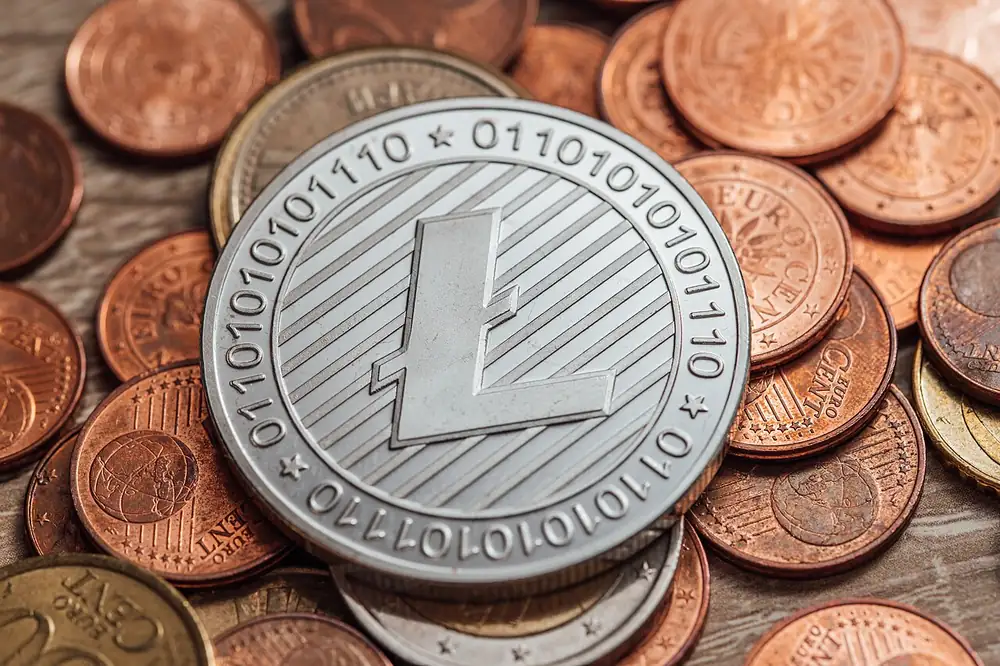
Litecoin doesn't get the headlines bitcoin does, but at the cashier it's one of the most practical coins you can use. Blocks come roughly every two and a half minutes, fees are usually small, and most crypto betting sites that take bitcoin take LTC too. If you're in Canada and thinking about funding a sportsbook or casino account with Litecoin, this is the no-fluff walkthrough: how deposits actually move, what they cost, what can go wrong, and how to tell a decent LTC betting site from one you should close the tab on.
Before anything else: you need to be 19+ in most provinces, 18+ in Manitoba and Quebec. This site does not serve Ontario or Alberta residents. Cloudbet, linked on this page, holds a Curaçao licence and is not authorized by any Canadian province, and it is not authorized in Quebec. Fees, prices and timings below are illustrative examples — networks and cashiers change, so always check the live numbers.
Why bettors like Litecoin
- Faster blocks than bitcoin. Litecoin targets a new block about every 2.5 minutes versus about 10 minutes on bitcoin, so confirmations stack up quicker.
- Usually low network fees. On normal days an LTC transfer costs a small fraction of what a busy bitcoin transfer can.
- Widely supported. It's been around since 2011 and is on most Canadian crypto platforms and most crypto cashiers.
- Simple to use. One main network, so there's less of the "which chain is this USDT on?" confusion you get with stablecoins.
The trade-off: Litecoin is a volatile coin, not a stablecoin. Its price can move a lot in a day, and that affects your betting balance whether you're betting or not.
Confirmation times: LTC vs BTC
When you send coins to a betting site, the site usually waits for a certain number of block confirmations before crediting you. The exact number is set by each cashier. Here's the expected waiting time using average block intervals:
| Confirmations required | Litecoin (≈2.5 min blocks) | Bitcoin (≈10 min blocks) |
|---|---|---|
| 1 | ≈2.5 min | ≈10 min |
| 3 | ≈7.5 min | ≈30 min |
| 6 | ≈15 min | ≈60 min |
| 12 | ≈30 min | ≈120 min |
Block times are averages, not timers, so one deposit can land a bit faster and another a bit slower. Still, if you like to fund an account an hour before puck drop and not sweat it, LTC usually gets there with time to spare.
What an LTC deposit really costs
There are usually three layers of cost: the spread or trading fee when you buy LTC with Canadian dollars, the platform's withdrawal fee when you send it out, and the blockchain network fee. The network part is often tiny on Litecoin; the platform withdrawal fee is the one that bites on small deposits. Here's what a flat fee looks like as a percentage of different deposit sizes:
| Deposit | C$0.05 fee | C$0.50 fee | C$2.00 fee |
|---|---|---|---|
| C$25 | 0.20% | 2.00% | 8.00% |
| C$50 | 0.10% | 1.00% | 4.00% |
| C$100 | 0.05% | 0.50% | 2.00% |
| C$250 | 0.02% | 0.20% | 0.80% |
See how an 8% hit on a C$25 deposit is bigger than the house edge on a lot of bets? If your platform charges a chunky flat withdrawal fee, fewer and larger deposits make more sense than lots of tiny ones. And compare the CAD price you're paying for LTC with the market price — the spread is a fee too, even when the platform says "zero commission".
Buying Litecoin in Canada
- Use a registered platform. The Canadian Securities Administrators publish a list of crypto trading platforms registered or operating under undertakings in Canada. Checking it takes two minutes and filters out most fakes.
- Fund with Interac e-Transfer or bank transfer, which most Canadian platforms support. Some banks restrict card purchases of crypto.
- Buy LTC and note the price, quantity and fees in your records right away.
- Check withdrawal limits. New accounts often have holds or limits before you can send coins out.
If you've never moved crypto before, our crypto deposit walkthrough covers wallets, addresses and test sends in more detail.
Sending LTC to a betting site, step by step
- In the betting site's cashier, pick Litecoin (LTC) and copy the deposit address. Many cashiers also show a QR code.
- Check the first and last few characters of the address after pasting. Clipboard-hijacking malware exists; a quick eyeball check is free.
- Make sure you're sending on the Litecoin network itself, not a wrapped or bridged version of LTC on another chain, unless the cashier explicitly supports it.
- Send a small test amount first. When it's credited, send the rest.
- Note the transaction ID (hash). If anything goes sideways, support will ask for it.
Sends on a blockchain are irreversible. Wrong address or unsupported network and there's often nobody who can bring the coins back.
Volatility: the cost nobody puts on the cashier screen
Say you keep C$200 worth of LTC in your betting account for the season. A 5% price drop knocks it to C$190; 10% to C$180; 20% to C$160 — without you placing a single bet. Of course it can go up too, but that's speculation on top of betting, and it makes it much harder to know whether your betting is actually working. A few ways bettors handle it:
- Deposit only what you plan to bet soon, not a season's worth.
- Withdraw winnings back to your own wallet or platform promptly.
- Track results in Canadian dollars, not in LTC units.
- Consider a stablecoin if you want a steadier balance — our USDC betting guide covers that route.
How to judge a Litecoin betting site
Lots of sites list LTC in the cashier. That alone tells you nothing about whether they're worth your money. A checklist I'd run through:
- Licence and operator. Who runs it and where is it licensed? Is that info easy to find in the footer?
- LTC minimums. What's the minimum deposit and minimum withdrawal in LTC? Some sites set withdrawal minimums higher than deposit minimums.
- Withdrawal fees and processing time. Is the network fee passed on? Is there a manual review period?
- Identity checks. When do they kick in? Know the threshold before you need to withdraw a big win.
- Odds quality. A coin-friendly cashier means nothing if the margins are fat. Compare a few two-way markets and work out the overround with our odds calculator.
- Bonus terms. Does depositing in LTC qualify for promos? What are the wagering rules?
- Support. Ask a pre-deposit question and see how quickly and clearly they answer.
- Responsible gambling tools. Deposit limits, time-outs and self-exclusion should be easy to find.
Cloudbet, the site we link to, lists Litecoin among the coins in its cashier at the time of writing; its terms describe identity checks at set deposit thresholds and withdrawals that are typically processed quickly once approved. Coin lists and terms change, so check the cashier and current terms yourself before you deposit.
Betting with LTC: sports or casino?
Litecoin works the same for both, but the usage pattern differs. For sports, you're usually depositing ahead of a slate and withdrawing after settlement, so confirmation speed matters around game times. For casino play, rounds are fast and balances swing quickly, so the volatility of the coin and the speed of play stack up. Whatever you play, the coin doesn't change the edge — a bad price is a bad price in any currency. Our casino deposit guide and the Stanley Cup playoffs crypto page show how this plays out in each world.
19+ (18+ in AB, MB, QC). Crypto deposits. Cloudbet is licensed in Curaçao, not by any Canadian province. Not for Ontario or Alberta residents. Ad: we may earn a commission. Bet only what you can afford to lose.
Withdrawals back to Canadian dollars
- Request the LTC withdrawal to an address you control (your platform account or your own wallet).
- Wait for the site's processing time plus network confirmations.
- On your Canadian platform, sell LTC for CAD and withdraw to your bank.
- Record the CAD value at each step.
Every hop can have a fee or a delay. Our withdrawal times guide breaks down where the wait usually comes from.
LTC next to the other common cashier coins
| Coin | Price stability | Typical confirmation pace | Network confusion risk |
|---|---|---|---|
| Litecoin (LTC) | Volatile | Quick (≈2.5 min blocks) | Low — one main network |
| Bitcoin (BTC) | Volatile | Slower (≈10 min blocks) | Low on-chain; Lightning only if supported |
| USDT / USDC | Pegged to US dollar | Depends on the chain | Higher — same token on several networks |
No coin wins on everything. LTC's sweet spot is bettors who want quick, cheap transfers and don't mind holding a volatile coin for a short time.
If your LTC deposit doesn't show up
- Look up the transaction ID on a public Litecoin block explorer. Is it confirmed, and how many times?
- Check that the receiving address matches the one in the cashier exactly.
- Wait for the cashier's required confirmations — the count is often shown on the deposit page.
- Still nothing? Contact support through the site itself with the transaction ID, amount and time. Ignore anyone who messages you first offering help.
Taxes and record-keeping
Recreational betting wins are generally not taxed in Canada — see our betting tax page. Crypto is different. The CRA treats crypto like a commodity, and selling, trading or spending it is a disposition that can create a capital gain or loss. Example: you buy LTC for C$200, the price rises, and when you send it to a betting site it's worth C$230. That's a C$30 gain; with the current 50% inclusion rate, C$15 would be added to income, which at a 30% marginal rate is about C$4.50 of tax (C$6.00 at 40%). It's small, but it adds up over a season of deposits. This is not tax advice — keep a simple log (date, amount, CAD value, fees, transaction ID) and check CRA guidance or a tax professional.
Security basics
- Turn on two-factor authentication on your exchange and betting accounts, using an app rather than SMS when you can.
- Never share your seed phrase. No support agent ever needs it.
- Watch out for fake "support" accounts on social media offering to "fix" stuck deposits.
- Bookmark the real site and log in from the bookmark, not from search ads or links in messages.
Common Litecoin betting mistakes
- Sending LTC to a bitcoin address (or vice versa). Different coins, different addresses.
- Making five C$20 deposits with a flat fee each time instead of one C$100 deposit.
- Leaving a big balance on the betting site and treating price swings as betting results.
- Skipping the test send because "it worked last time".
- Forgetting to log CAD values, then trying to rebuild a year of records in April.
Is betting with Litecoin legal in Canada?
Using Litecoin isn't the legal question; where you bet is. Gambling is run and regulated by each province — PlayNow in BC, Manitoba and Saskatchewan, Mise-o-jeu and Loto-Québec in Quebec — and those provincial sites don't take crypto. This site does not serve Ontario or Alberta. Offshore crypto sites such as Cloudbet are not authorized by any Canadian province and are not authorized in Quebec. Read is online betting legal in Canada for the full rundown.
Keep it fun
Fast deposits are convenient, and convenience makes it easy to top up one more time than you planned. Set a monthly deposit cap and stick to it. If betting stops being fun, reach out: Jeu : aide et référence at 1-800-461-0140 (Montreal 514-527-0140), Gambling Support BC at 1-888-795-6111, the Manitoba helpline at 1-800-463-1554, the Saskatchewan helpline at 1-800-306-6789, or 211 anywhere in Canada. Our responsible gambling page has more tools.
My take
Litecoin is one of the most practical coins for funding a betting account: quick confirmations, usually low network fees and wide support. Buy it on a registered Canadian platform, send a test first, mind the flat fees on small deposits, don't park a big balance in a volatile coin, and keep your CAD records tidy. Then judge the betting site on what really matters — licence, payouts, odds and support — not just the LTC logo in the cashier.
Questions players ask
How long does a Litecoin deposit take?
Litecoin aims for a block about every 2.5 minutes. If a cashier needs 6 confirmations, that's about 15 minutes on average, versus about an hour for bitcoin at the same count.
Are Litecoin fees low?
The network fee is usually small, but your exchange's withdrawal fee and the buy spread can matter more. A C$2 flat fee is 8% of a C$25 deposit but under 1% of C$250.
Can I send LTC from a bitcoin wallet address?
No. Litecoin and bitcoin are separate networks with separate addresses. Always copy the LTC deposit address from the cashier and send a small test first.
Do I pay tax when I bet with Litecoin in Canada?
Recreational betting wins are generally not taxed, but spending or selling LTC is a disposition that can create a capital gain or loss. Keep CAD records and check CRA guidance.
Does Cloudbet accept Litecoin?
Cloudbet lists Litecoin in its cashier at the time of writing, but coin lists change. Check the cashier before depositing. Cloudbet is Curaçao-licensed and not authorized by any Canadian province.
Is Litecoin better than USDT for betting?
LTC usually moves faster and is simpler network-wise, but its price swings. USDT and USDC hold a steady US-dollar value. Pick based on whether you want speed or a stable balance.
19+ (18+ in AB, MB, QC). Crypto deposits. Cloudbet is licensed in Curaçao, not by any Canadian province. Not for Ontario or Alberta residents. Ad: we may earn a commission. Bet only what you can afford to lose.
If betting is costing you more than money, free 24/7 help is a phone call away. British Columbia: Gambling Support BC 1-888-795-6111. Alberta: Addiction & Mental Health Helpline 1-866-332-2322. Manitoba: Problem Gambling Helpline 1-800-463-1554. Saskatchewan: Problem Gambling Helpline 1-800-306-6789. Quebec: Jeu : aide et référence 1-800-461-0140. Elsewhere, call 211 to find your provincial service.