Best Odds for Craps Online in Canada: Every Bet Ranked by House Edge, the Free Odds Bet, Live vs RNG Tables and What an Hour Really Costs
Welcome bonus for new players + fast crypto payouts. Just helping a brother out.
19+ (18+ in AB, MB, QC). Crypto deposits. Cloudbet is licensed in Curaçao, not by any Canadian province. Not for Ontario or Alberta residents. Ad: we may earn a commission. Bet only what you can afford to lose.
Updated ·  Written by Aisha Noor ·
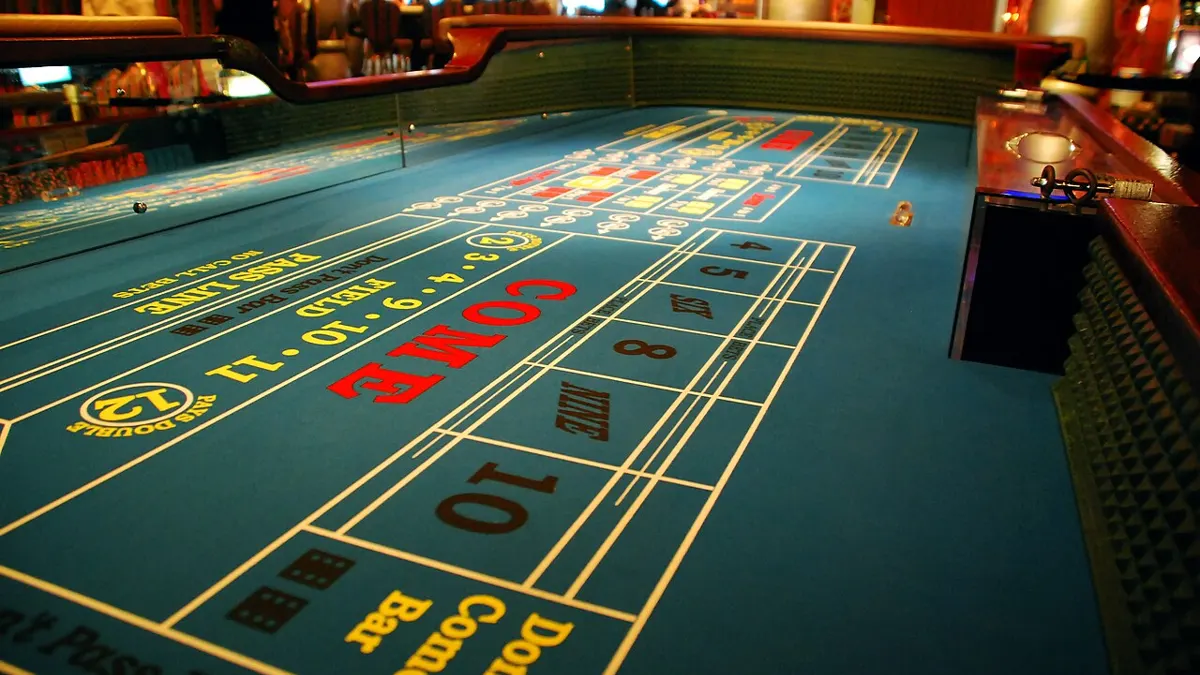
Craps has a reputation for being loud, confusing and fast. The table is covered in boxes, the dealers talk in slang, and the people yelling the loudest are usually the ones making the worst bets. Here's the secret: craps has some of the best odds anywhere in the casino, and a few of the worst, sitting right next to each other on the same layout. Your results depend almost entirely on which boxes you put your chips in. In this guide I'll rank every common bet by house edge, explain the one bet in the casino that has no edge at all, show you what an hour of play actually costs with different betting habits, and walk you through playing craps online from Canada with crypto. Think of it as the talk I'd give a buddy before his first trip to a craps table.
The fine print first. You need to be 19 or older in most provinces (18 in Manitoba and Quebec). This site does not serve Ontario or Alberta residents. Cloudbet, the casino we link to on this page, holds a Curaçao licence and is not licensed or authorized by any Canadian province or by Loto-Québec. Cloudbet's casino lobby has a Craps category, but the exact titles, providers and table limits change, so check the lobby and each game's rules panel before you deposit. Dollar amounts in the examples are made up to show the math.
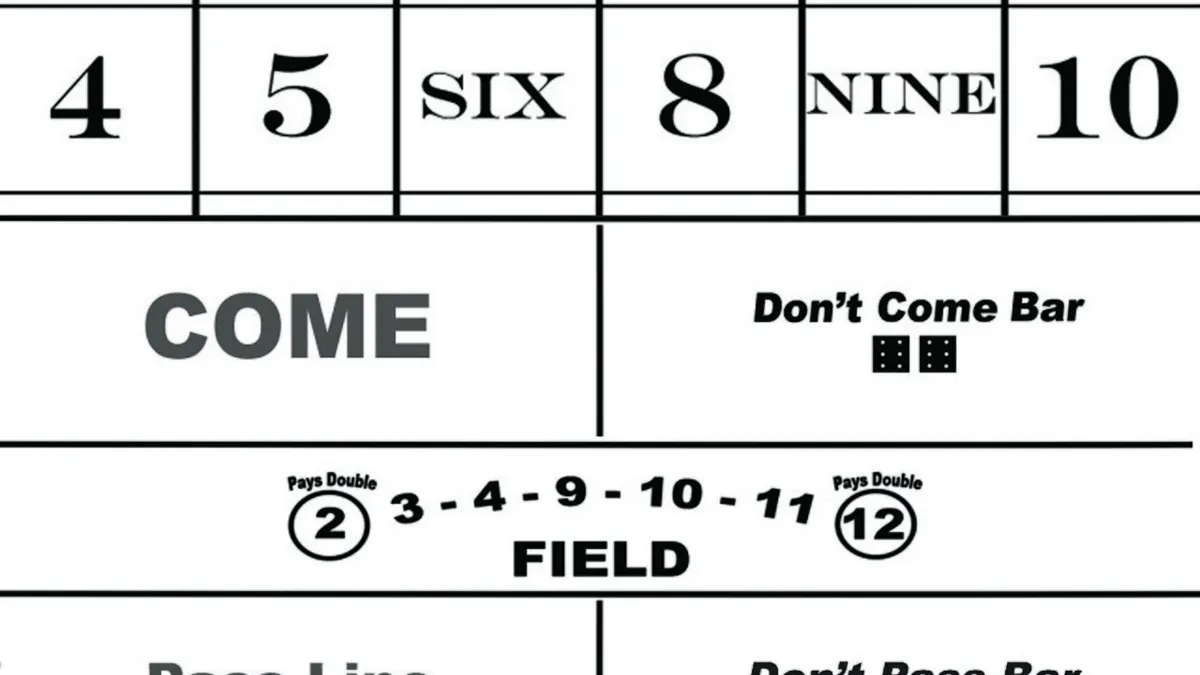
The quick answer: the best craps bets
If you only read one section, read this one. These are the bets worth making, from cheapest to slightly less cheap:
- Odds bets behind a Pass, Don't Pass, Come or Don't Come bet: 0% house edge. The only fair bet in the casino.
- Don't Pass / Don't Come: about 1.36%.
- Pass Line / Come: about 1.41%.
- Place 6 or 8 (to win): about 1.52%.
- Lay or Place to Lose on 4 or 10 and Buy 4 or 10 when the commission is only charged on wins: around 1.67% on the classic rules (check the table, more on this below).
Everything else on the table costs more, often a lot more. The one-roll bets in the middle of the table run from about 11% to almost 17%. That's ten times the price of a Pass Line bet for the same dice.
How craps works in two minutes
Craps is played with two six-sided dice. Each roll gives a total from 2 to 12. A round has two phases.
The come-out roll
- 7 or 11: Pass Line wins, Don't Pass loses.
- 2, 3 or 12 ("craps"): Pass Line loses. Don't Pass wins on 2 or 3 and pushes (ties) on 12.
- 4, 5, 6, 8, 9 or 10: that number becomes the "point".
The point phase
Once there's a point, the dice keep rolling until either the point comes up again (Pass wins, Don't Pass loses) or a 7 shows up (Don't Pass wins, Pass loses). Every other total in between doesn't affect the line bets at all.
That's it for the core game. All the other boxes on the table are optional side bets on top of that loop.
The dice math everything is built on
Two dice give 36 equally likely combinations. Here's how often each total comes up:
| Total | Ways to roll it | Chance per roll |
|---|---|---|
| 2 | 1 | 2.78% |
| 3 | 2 | 5.56% |
| 4 | 3 | 8.33% |
| 5 | 4 | 11.11% |
| 6 | 5 | 13.89% |
| 7 | 6 | 16.67% |
| 8 | 5 | 13.89% |
| 9 | 4 | 11.11% |
| 10 | 3 | 8.33% |
| 11 | 2 | 5.56% |
| 12 | 1 | 2.78% |
Seven is the most common total, which is why it's the number that ends most rounds. Every payout in craps is set a little below what these odds would justify, and that gap is the house edge. The odds bet is the one exception, which is why it's so valuable.
Every common craps bet ranked by house edge
These figures are the standard craps math for the usual payouts, as tabulated by the Wizard of Odds and matching the payouts in Evolution's published Live Craps rules. Online tables can vary, so always open the rules or paytable on the game you're playing.
| Bet | Pays | House edge | Verdict |
|---|---|---|---|
| Odds (take or lay) | True odds | 0% | Best bet in the casino |
| Don't Pass / Don't Come | 1:1 (12 pushes) | 1.36% | Excellent |
| Pass Line / Come | 1:1 | 1.41% | Excellent |
| Place 6 or 8 (to win) | 7:6 | 1.52% | Very good |
| Place to Lose 6 or 8 | 4:5 | 1.82% | Good |
| Place to Lose 5 or 9 | 5:8 | 2.50% | Fair |
| Place to Lose 4 or 10 | 5:11 | 3.03% | Fair |
| Place 5 or 9 (to win) | 7:5 | 4.00% | Mediocre |
| Field (2 and 12 pay 2:1) | 1:1 / 2:1 | 5.56% | Poor |
| Place 4 or 10 (to win) | 9:5 | 6.67% | Poor |
| Big 6 / Big 8 | 1:1 | 9.09% | Bad |
| Hard 6 / Hard 8 | 9:1 | 9.09% | Bad |
| Hard 4 / Hard 10 | 7:1 | 11.11% | Bad |
| Any Craps (2, 3 or 12) | 7:1 | 11.11% | Bad |
| Yo (11) or Ace-Deuce (3) | 15:1 | 11.11% | Bad |
| C & E | 3:1 / 7:1 | 11.11% | Bad |
| Aces (2) or Boxcars (12) | 30:1 | 13.89% | Very bad |
| Any Seven | 4:1 | 16.67% | Worst on the table |
Evolution says the RTP across its Live Craps bets ranges from 83.33% (the Any Seven bet) to 99.17%, the top end being a line bet backed with odds. That spread tells you everything: same table, same dice, and one bet costs about twelve times what another does.
The free odds bet: the best bet in any casino
This is the bet most beginners don't know about, and it's the one that makes craps worth playing.
Once a point is set, you can put an extra bet behind your Pass Line (or Come) bet. That's "taking the odds". If the point comes before a 7, the odds bet pays at the true odds of that happening. There's no house cut built in at all.
| Point | Chance point comes before 7 | Take odds pays | Lay odds pays |
|---|---|---|---|
| 4 or 10 | 3 in 9 (33.3%) | 2:1 | 1:2 |
| 5 or 9 | 4 in 10 (40%) | 3:2 | 2:3 |
| 6 or 8 | 5 in 11 (45.5%) | 6:5 | 5:6 |
If you're betting Don't Pass, you "lay" the odds instead: you put more money up to win less, because you're now the favourite. Still 0% edge.
Why it matters (and the trap)
Here's the part that trips people up. Adding odds doesn't reduce how much you're expected to lose. It reduces how much you lose compared with the total amount you bet.
Example: $10 on the Pass Line costs you about 14 cents per round on average (1.41% of $10). Add $20 in odds after a point and you're still losing about 14 cents per round on average, because the odds bet is perfectly fair. But now more of your money is in play at no cost, so the house edge on your combined action falls a lot:
| Odds allowed | Combined house edge (Pass + odds) |
|---|---|
| No odds | 1.41% |
| 1x | About 0.85% |
| 2x | About 0.61% |
| 3x, 4x, 5x (on 4/10, 5/9, 6/8) | About 0.37% |
| 10x | About 0.18% |
The smart way to use this: if you'd normally bet $30 on the Pass Line, bet $10 on the Pass Line and $20 in odds instead. Same total exposure, about a third of the expected cost. That's the single biggest improvement any craps player can make.
The trap: odds make your swings bigger. If a table allows 10x odds and you take them all, a cold run of sevens can hit hard. Only take as much odds as your budget can handle.
Odds at online tables
This is where online craps varies most. Some games offer generous odds, some limit it to 1x or 2x, and some RNG games don't offer an odds bet at all. Before you play, open the game's rules or help panel and look for "odds", "free odds" or "take odds". If an online craps game doesn't offer odds, your best bet drops to Don't Pass at 1.36% or Pass at 1.41%, which is still very good by casino standards.
Pass or Don't Pass?
Mathematically, Don't Pass is a hair better: 1.36% against 1.41%. It's a tiny difference, about 5 cents per $100 bet.
At a real casino, betting Don't Pass ("wrong") means you win when everyone else loses, and some players find that awkward. Online, nobody cares, so it comes down to preference.
One practical difference: a Don't Pass bettor is the favourite once a point is set, but has to lay odds (risk more to win less). A Pass bettor is the underdog after the point but gets paid more on the odds. Both have the same 0% edge on the odds part. If you like a steady, grinding style with smaller swings, Don't Pass with laid odds suits you. If you like rooting for the shooter and bigger wins when it hits, Pass with odds is more fun.
Come and Don't Come
Come and Don't Come bets work exactly like Pass and Don't Pass, but you make them after the point is already set. The next roll acts like a new come-out roll for that bet. They have the same 1.41% and 1.36% edges, and you can take or lay odds on them too.
Using Come bets is a way to get more numbers working for you during a long roll without moving into the expensive place bets. Just remember each one adds more money on the table, which means more swing.
Place bets: which numbers are worth it
Place bets let you bet a specific point number will roll before a 7, without waiting for a come-out. The payout and edge depend on the number:
- Place 6 or 8: pays 7:6, edge 1.52%. Close to the line bets and a reasonable choice. Bet in multiples of $6 so the 7:6 payout works out cleanly.
- Place 5 or 9: pays 7:5, edge 4.00%. About three times the cost of the 6 or 8.
- Place 4 or 10: pays 9:5, edge 6.67%. Expensive. If you want these numbers, look at buy bets instead (below).
Place to Lose
The reverse: you're betting a 7 comes before the number. On Evolution's Live Craps, Place to Lose on 6 or 8 pays 4:5 (1.82% edge), on 5 or 9 pays 5:8 (2.50%), and on 4 or 10 pays 5:11 (3.03%). Not bad, but you're risking more to win less on every one of them.
Buy and lay bets
At many land-based casinos, and some online tables, you can "buy" a number, which pays true odds minus a 5% commission. How the commission is charged makes a big difference, especially on 4 and 10:
| Bet | Commission charged | House edge |
|---|---|---|
| Buy 4 or 10 | Up front (on every bet) | 4.76% |
| Buy 4 or 10 | Only when you win | 1.67% |
| Lay 4 or 10 | Only when you win | 1.67% |
| Lay 5 or 9 | Only when you win | 2.00% |
| Lay 6 or 8 | Only when you win | 2.27% |
Many online craps games don't have buy and lay bets at all, and use Place to Win and Place to Lose instead. If the game you're playing does offer them, check how the commission works in the rules panel. "Commission on win only" is the version you want.
The Field: looks good, isn't
The Field is a one-roll bet that wins on 2, 3, 4, 9, 10, 11 or 12. That's seven numbers out of eleven, which looks like a great deal. It isn't, because those numbers can only be rolled 16 ways out of 36, against 20 ways for 5, 6, 7 and 8.
When 2 and 12 both pay double, the edge is 5.56%. Some land-based tables pay triple on 12 (or on 2), which drops it to 2.78%. Online, double on both is most common, which is what Evolution's Live Craps pays. It's a one-roll bet, so you're exposed to that edge on every single roll, which makes it far more expensive per hour than it looks.
Hardways and the one-roll props
The centre of the table is where the fun-looking bets live. A hard 8 (two 4s) pays 9:1. Any Seven pays 4:1. Boxcars pays 30:1. They're exciting. They're also where casinos make a big chunk of their craps profit.
- Hard 6 and Hard 8 (9.09%) and Hard 4 and Hard 10 (11.11%) stay up until the hard number, an easy version of it, or a 7 rolls.
- One-roll bets like Any Craps, Yo, Aces, Boxcars, C&E and Any Seven are settled on the next roll. Their edges run from 11.11% to 16.67%.
- Horn and hop bets are combinations of the above. They don't magically fix the edge. Expect double-digit edges.
If you enjoy a small prop bet now and then, treat it like buying a scratch ticket. Just don't put a prop bet on every roll. Over an hour, that habit can cost more than everything else you bet combined.
One round, bet by bet
Numbers on a table are easier to understand when you watch them play out. Here's a made-up round with a low-edge setup: $10 on the Pass Line, odds when a point is set, and Place bets on 6 and 8 at $6 each.
- Come-out roll: 5. The point is 5. Your $10 Pass Line bet stays up. You add $20 in odds behind it (2x). You also place the 6 and 8 for $6 each. Money on the table: $42.
- Roll: 8. Your Place 8 wins at 7:6, so you get $7. Nothing else is affected. Many players leave the place bet up and pocket the win.
- Roll: 11. Nothing happens to any of your bets. An 11 only matters on a come-out roll or for one-roll bets you don't have.
- Roll: 6. Place 6 wins: another $7.
- Roll: 5. The point is made. Pass Line pays $10. The $20 odds bet pays at 3:2, so $30. That's $40 in winnings from the line bet plus odds, plus the $14 you already collected on the place bets.
- New come-out roll. Place bets are usually "off" on the come-out roll unless you turn them on, so they're safe from a 7 here.
Now picture the other ending. If a 7 had rolled at step 5 instead, you'd lose the $10 Pass Line, the $20 odds and both $6 place bets: $42 gone, minus the $14 you'd collected along the way. That's craps. The bets are cheap on average, but each round can swing quite a lot either way, which is why you size your bets to your budget and not to your mood.
Notice too which bet did the heavy lifting: the odds bet paid $30 on its own and carried zero house edge. That's the whole case for it in one roll.
What an hour of online craps really costs
House edge only tells you the cost per dollar. What you actually pay depends on how many bets you make. Here's a comparison with made-up numbers, assuming a live table that gets through about 100 rolls an hour.
A Pass Line bet takes about 3.4 rolls on average to settle, so 100 rolls an hour gives you roughly 30 Pass Line decisions.
| Habit | Bets per hour | Amount bet | House edge | Expected cost per hour |
|---|---|---|---|---|
| $10 Pass Line | About 30 | About $300 | 1.41% | About $4 |
| $10 Pass Line + 2x odds | About 30 | About $700 | 0.61% | About $4 |
| $12 Place 6 and 8 | Varies | Varies | 1.52% | About $5 to $6 |
| $10 Field every roll | 100 | $1,000 | 5.56% | About $56 |
| $5 Any Seven every roll | 100 | $500 | 16.67% | About $83 |
Look at that last column. The Pass Line player and the Field player might feel like they're playing the same game, but one is paying around $4 an hour and the other more than $50. And notice the odds bet: it more than doubles the money in play without adding anything to the hourly cost. That's why it's the best bet in the casino.
On RNG craps, where you roll as fast as you click, double or triple these hourly figures. The edge doesn't change. The number of bets does.
19+ (18+ in AB, MB, QC). Crypto deposits. Cloudbet is licensed in Curaçao, not by any Canadian province. Not for Ontario or Alberta residents. Ad: we may earn a commission. Bet only what you can afford to lose.
Live craps vs RNG craps online
There are two kinds of online craps.
Live dealer craps
Evolution launched its Live Craps in November 2020, billing it as the first online live craps game. A mechanical launcher throws real dice against the back wall of a studio table while a presenter calls the rolls. It has an Easy Mode that shows only the main bets, which is a great way to keep yourself away from the expensive ones. Rolls come at the presenter's pace.
RNG and "First Person" craps
Computer-generated craps games use a random number generator for the dice. Evolution also has an RNG version called First Person Craps, and many slot and table-game studios make their own. These let you play at your own speed, which is good for learning but bad for your wallet if you click too fast.
| What matters | Live craps | RNG craps |
|---|---|---|
| Dice | Real dice, on camera | Random number generator |
| Speed | Set by the studio | As fast as you click |
| Odds bet | Usually available | Varies, sometimes limited or missing |
| Minimum bet | Usually higher | Often lower |
| Good for | Atmosphere, steady pace | Learning the table, small budgets |
How to pick a craps game with the best odds
Before you play any online craps game, open the rules or paytable and check these five things:
- Is there an odds bet, and how much? More odds allowed means a lower combined edge. No odds bet at all is a minus.
- What does the Field pay on 2 and 12? Double on both is standard. Triple on one is better.
- Do Place 6 and 8 pay 7:6? Some games pay even money on place bets, which is a terrible deal.
- Are there buy and lay bets, and how is the commission charged? Commission only on wins is much better.
- What's the stated RTP? Most providers list RTP per bet in the help panel. Use it to confirm the numbers in this guide.
If a game's paytable doesn't match the standard payouts above, the edge will be different from what we've listed. Trust the game's own rules over any guide, including this one.
Betting systems at the craps table
Craps has more named systems than any other casino game: the Iron Cross, the 3-Point Molly, Martingale, the "5-count", and dozens more. Here's the honest truth about all of them.
- No system changes the house edge on any individual bet. A system is just a combination of bets. The overall edge is the weighted average of the bets in it.
- The Iron Cross covers the Field plus Place 5, 6 and 8, so you win on every roll except 7. It feels great until the 7 comes, and the average edge works out higher than simply playing the Pass Line with odds because the Field and Place 5 drag it up.
- The 3-Point Molly (a Pass Line bet plus two Come bets, all with odds) is actually a sensible structure, since it's built entirely from the best bets. It just puts more money on the table at once.
- Martingale (doubling after every loss) runs into table limits and empty wallets. A run of six or seven losses on even-money bets happens much more often than people expect.
- Dice control (trying to throw the dice to avoid 7s) doesn't apply online. Live studio dice are thrown by a machine, and RNG games use a random number generator.
The best "system" is the boring one: line bets, odds behind them, maybe Place 6 and 8, and nothing in the middle of the table.
How craps compares with other casino games
Craps gets overlooked online because the table looks complicated, but on price it's one of the best games in the lobby when you stick to the right bets. Here's a rough comparison using typical figures:
| Game and bet | Typical house edge |
|---|---|
| Craps, Pass Line with 2x odds | About 0.61% on total action |
| Blackjack with basic strategy and good rules | About 0.5% to 1% |
| Baccarat, Banker bet | About 1.06% |
| Craps, Pass Line alone | 1.41% |
| European roulette (single zero) | 2.70% |
| Sic bo, Big or Small | 2.78% |
| American roulette (double zero) | 5.26% |
| Typical online slot | Often 3% to 6% or more |
Blackjack can match craps on paper, but only if you play every hand correctly. In craps there are no decisions to get wrong once your chips are in the right boxes. That makes it one of the few casino games where a beginner who's read one guide can play at nearly the same edge as an expert.
A simple low-edge game plan
Here's a plan you can actually use, with made-up numbers.
- Budget: $200 for the session. Money you can afford to lose.
- Base bet: $5 on the Pass Line (or Don't Pass).
- When a point is set: take $10 in odds (2x) if the table allows it.
- Optional: one or two Come bets with odds during a hot roll, or $6 each on Place 6 and 8.
- Never: Field, Any Seven, hop bets, Big 6/8.
- Time: one hour on a timer.
- Stop: at the timer, if the budget's gone, or if you're up $100 (cash some out).
This kind of game plan keeps your edge on total action well under 1%. You'll still have losing nights, because craps swings hard, but you'll lose a lot slower on average than the player covering the middle of the table.
Playing craps online from Canada with crypto
Here's the basic process at a crypto casino such as Cloudbet. Screens change over time, so treat this as a rough map.
- Buy your crypto on a Canadian-registered exchange or trading app, or use the casino's card on-ramp if it offers one. Check whether your exchange allows transfers to gambling sites first.
- Sign up and secure your account with a strong password and two-factor authentication.
- Pick your coin and network carefully. Cloudbet's help pages say deposits of unsupported coins or on the wrong network are generally unrecoverable. Send a small test amount first.
- Find the Craps category in the casino lobby and open the game's rules before betting. Check the odds bet and the payouts against the checklist above.
- Withdraw to a wallet you control when you're done. Cloudbet says it adds no fee beyond the network fee, and your balance has to cover that fee.
Cloudbet rules worth knowing
From Cloudbet's help centre: the minimum deposit is around US$1 or less depending on the coin. Before withdrawing, unverified accounts need to have wagered 100% of their deposits, verified accounts 25%, and only settled bets count. Unverified (Level 1) accounts can withdraw up to US$2,200 a day, and identity checks start once total deposits reach about US$2,200. If you plan to play bigger, verify early.
Low fees matter more at low-edge games
When the game itself costs around 1%, network fees can cost more than the game does. A $3 network fee on a $50 deposit is 6%, which is more than four times the Pass Line edge. Use low-fee networks (USDT on Tron or another cheap chain, Litecoin, and similar) and make fewer, larger deposits rather than lots of small ones. A stablecoin also keeps your bankroll from moving with the crypto market while you play.
Bonuses and craps
Craps is one of the games casinos are most careful about in bonus terms. Because the line bets have such a low edge, many casinos either exclude craps from bonus wagering completely or count it at a small fraction. Cloudbet's terms count live and virtual table games at 10% toward bonus wagering requirements. Other offshore casinos simply list craps among the games that don't count at all.
Betting both Pass and Don't Pass at the same time to clear a bonus with almost no risk is banned almost everywhere. If you try it, expect bonus winnings to be removed.
For most craps players, the best approach is simple: skip the bonus and play with your own money. Cloudbet's rewards program pays cash with no rollover, but its casino rakeback is based on the house edge of what you play, so on a low-edge game like craps it'll be small. That's not a complaint. It just means your edge comes from bet selection, not from promos.
Is online craps legal in Canada?
In Canada, provinces run or license gambling within their borders. Ontario has its own regulated market. Other provinces run their own sites through their lottery corporations. Offshore casinos like Cloudbet aren't licensed by any province. Cloudbet's licence comes from Curaçao.
Canadian law has generally focused on those who run gambling operations rather than on individual players, and many Canadians outside Ontario do play at offshore casinos. But the trade-off is real: if there's a dispute, there's no provincial regulator to turn to. You'd go to the operator first, then to its licensing body abroad. Make your own call knowing that. And again, this site does not serve Ontario or Alberta residents.
Taxes on craps winnings
For recreational players in Canada, gambling winnings are generally not taxable income. If you win in crypto and the coin gains value before you sell or spend it, that gain can be a capital gain. Keep basic records. If your play ever starts to look like a business, talk to an accountant.
Craps terms you'll hear
- Point: the number (4, 5, 6, 8, 9 or 10) set on the come-out roll.
- Seven out: rolling a 7 after a point is set. Pass bets lose.
- Right and wrong bettors: Pass/Come players are "right", Don't players are "wrong". No judgement, just slang.
- Puck ON/OFF: shows whether a point is set.
- Hard way: rolling a 4, 6, 8 or 10 as a pair (2-2, 3-3, 4-4, 5-5).
- Yo: 11, said that way so it isn't confused with "seven".
- Working / off: whether a bet is active on the next roll. Some bets are "off" on the come-out roll by default.
Common mistakes to avoid
- Skipping the odds bet. It's free value. Use it if the game offers it.
- Making one-roll bets every roll. The centre of the table can cost more per hour than everything else combined.
- Placing the 4 and 10 at 9:5. At 6.67%, that's nearly five times the Pass Line edge.
- Chasing with bigger bets. A cold table doesn't owe you anything.
- Clicking too fast on RNG games. More rolls per hour means more cost per hour.
- Ignoring network fees. On a low-edge game, fees can be the biggest cost you pay.
Keep it fun
Craps is exciting, and a hot roll can make anyone want to keep going. Set your budget and time limits before you start, use the casino's deposit limits and cool-off tools, and walk away when you hit them. Watch for the warning signs: chasing losses, playing longer than you meant to, depositing again after hitting a limit, or hiding it from people close to you.
If gambling's stopped being fun, these lines are free, confidential and open 24/7:
- Gambling Support BC: 1-888-795-6111
- Manitoba: 1-800-463-1554
- Saskatchewan Problem Gambling Helpline: 1-800-306-6789
- Quebec, Jeu : aide et référence: 1-800-461-0140
Bottom line
The best odds in online craps are easy to find once you know where to look: Pass or Don't Pass, Come or Don't Come, as much odds behind them as your budget allows, and maybe Place 6 and 8. Stay out of the middle of the table, check each game's rules panel for the odds bet and the payouts, keep your pace sensible, and watch your crypto fees. Do that and you're playing one of the cheapest games in any casino, often well under 1% on your total action.
Questions players ask
What is the best bet in craps?
The odds bet behind a Pass, Don't Pass, Come or Don't Come bet. It pays true odds and has no house edge. Of the base bets, Don't Pass (1.36%) and Pass Line (1.41%) are the best.
What is the worst bet in craps?
Any Seven, which pays 4:1 and has a house edge of about 16.67%. Most one-roll bets in the middle of the table cost 11% or more.
Is Don't Pass better than Pass Line?
Slightly. Don't Pass has a house edge of about 1.36% against 1.41% for the Pass Line. The difference is about 5 cents per $100 bet.
Do online craps games offer the odds bet?
Many do, but not all. Some RNG games limit odds to 1x or 2x or don't offer them at all. Check the game's rules panel before you play.
Is the Field a good bet?
No. When 2 and 12 both pay double, the Field has a house edge of about 5.56%, and since it's a one-roll bet, it adds up fast.
Can I play craps online with crypto in Canada?
Yes, at crypto casinos like Cloudbet, which has a Craps category in its lobby. Cloudbet holds a Curaçao licence and isn't licensed by any province. This site doesn't serve Ontario or Alberta residents.
Does craps count toward casino bonus wagering?
Often not, or only partly. Cloudbet's terms count live and virtual table games at 10%, and many casinos exclude craps entirely.
Are craps winnings taxed in Canada?
Recreational gambling winnings generally aren't taxed in Canada. If you win in crypto and the coin rises in value before you sell, that gain can be a capital gain.
Where can I get help with gambling in Canada?
Gambling Support BC 1-888-795-6111, Manitoba 1-800-463-1554, Saskatchewan 1-800-306-6789, Quebec Jeu : aide et référence 1-800-461-0140. All free, confidential and 24/7.
19+ (18+ in AB, MB, QC). Crypto deposits. Cloudbet is licensed in Curaçao, not by any Canadian province. Not for Ontario or Alberta residents. Ad: we may earn a commission. Bet only what you can afford to lose.
If betting is costing you more than money, free 24/7 help is a phone call away. British Columbia: Gambling Support BC 1-888-795-6111. Alberta: Addiction & Mental Health Helpline 1-866-332-2322. Manitoba: Problem Gambling Helpline 1-800-463-1554. Saskatchewan: Problem Gambling Helpline 1-800-306-6789. Quebec: Jeu : aide et référence 1-800-461-0140. Elsewhere, call 211 to find your provincial service.