Olympic Hockey Betting Odds for Canadians: How the Tournament Is Priced, Regulation-Time Traps, and Gold-Medal Math
Welcome bonus for new players + fast crypto payouts. Just helping a brother out.
19+ (18+ in AB, MB, QC). Crypto deposits. Cloudbet is licensed in Curaçao, not by any Canadian province. Not for Ontario or Alberta residents. Ad: we may earn a commission. Bet only what you can afford to lose.
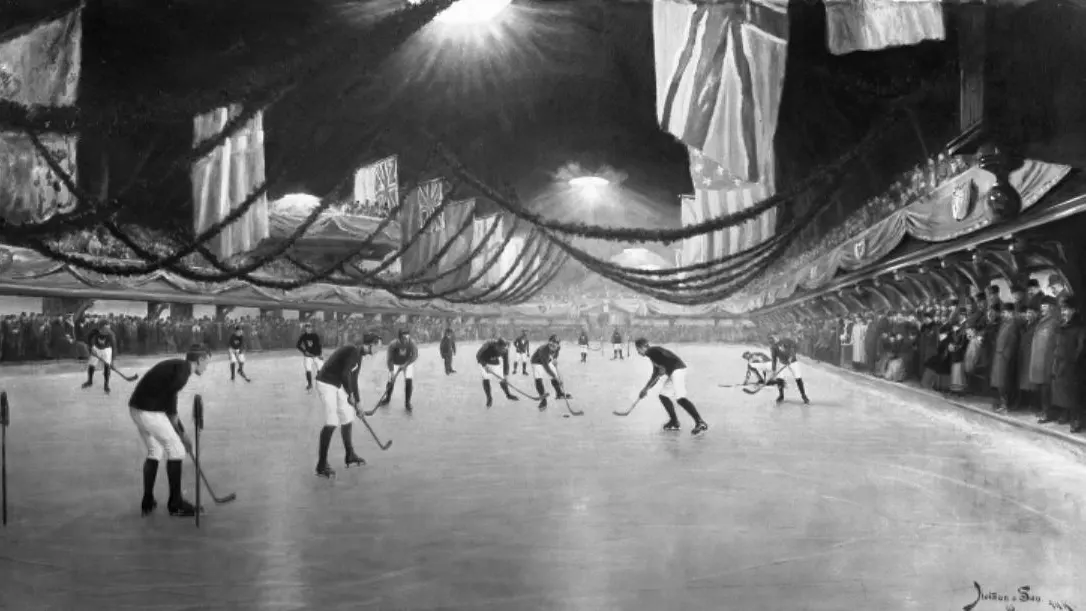
Every four years the whole country turns into a hockey country again, even the people who don't watch a single regular-season game. That's great for the sport and dangerous for your wallet. When Canada plays at the Olympics, prices on the Canadian side get squeezed by a flood of patriotic money, and the tournament has quirks that trip up people who only know NHL betting. So let's walk through Olympic hockey betting odds the way I'd explain it to a buddy at the rink: how the tournament is set up, how the lines are written, what "regulation time" really means on your ticket, and how to put a sensible number on a gold medal.
Ground rules first: 19+ in most provinces, 18+ in Manitoba and Quebec. This site doesn't serve Ontario or Alberta residents. Cloudbet, which we link to, holds a Curaçao licence and is not authorized by any Canadian province. Every price, team label and percentage below is an illustrative example worked out with simple math, not a live line and not a pick on any country.
How the Olympic hockey tournament works (and why bettors care)
Olympic hockey is a short tournament, not a long season. That single fact drives almost everything about the odds. The usual shape in recent Winter Games has been:
- A small field. The men's event has typically had twelve teams and the women's event fewer, though the exact numbers have changed between Games.
- A group stage first. Teams play a handful of round-robin games in small groups, mostly to sort out seeding.
- Single-elimination knockouts. After the groups, it's one game and done: qualification playoffs for some teams, then quarterfinals, semifinals, and the bronze and gold-medal games.
- International points. Group tables usually follow the international hockey system: 3 points for a regulation win, 2 for an overtime or shootout win, 1 for an overtime or shootout loss, 0 for a regulation loss.
Formats get tweaked from one Games to the next, so check the official schedule for the tournament you're betting on. The betting lesson doesn't change, though: a one-game knockout is far more random than an NHL playoff series.
One game vs. a best-of-seven
Here's how much luck a single game adds. If a team wins any given game against an opponent 60% of the time, it wins a best-of-seven series against that same opponent about 71% of the time. In a one-game Olympic quarterfinal, it's just 60%. A slightly better team at 55% per game would win a seven-game series about 61% of the time, but a one-off only 55%.
| Chance to win one game | Chance to win a best-of-seven | Olympic knockout (one game) |
|---|---|---|
| 55% | 60.8% | 55% |
| 60% | 71.0% | 60% |
| 65% | 80.0% | 65% |
So when somebody tells you the best team "should" win gold, remember that it has to win three or four sudden-death games in a row, often against strong opponents. That's where value in Olympic futures comes from, and also why favourites lose more often than fans expect.
The markets you'll see
| Market | What you're betting on | Watch out for |
|---|---|---|
| Gold medal (outright) | Which country wins the tournament | Big margins and patriotic pricing on popular teams |
| Medal / podium | A country finishes top three | Bronze game motivation can be unpredictable |
| Group winner | Who tops each round-robin group | Tiebreak rules and the 3-2-1 points system |
| Moneyline (incl. OT and shootout) | Who wins the game, however it ends | Lower payouts on the favourite |
| 60-minute 3-way | Win, tie or lose in regulation only | The tie is a real outcome that loses your favourite bet |
| Puck line / handicap | Win by more than a set number of goals | Mismatches get huge lines like −4.5 or −5.5 |
| Totals | Combined goals over or under a number | Check whether OT and shootout goals count |
| Player props | Goals, points, shots for one player | Thin markets and short tournaments |
Regulation time: the trap that catches NHL bettors
This is the single most important thing on the page. In many sportsbooks, Olympic and international hockey games are listed first as a three-way, 60-minute market: home win, tie, away win, settled after regulation. If the game goes to overtime, a bet on either team in that market loses and the "tie" ticket wins. A separate moneyline that includes overtime and the shootout is usually offered too, at a shorter price.
Our article on whether NHL bets include overtime covers how this works in the NHL. Internationally, the 3-way line is often the default, so read the market name every single time.
How big is the tie?
Let's model a close game with a simple goal model. Say country A is expected to score about 3.0 goals and country B about 2.6. Treating goals as random events (a Poisson model, which is a decent first guess for hockey), regulation shakes out roughly like this:
| Expected goals (A v B) | A wins in 60 min | Tie after 60 | B wins in 60 min | A wins incl. OT (50/50 OT) |
|---|---|---|---|---|
| 3.0 v 2.6 (close) | 48.0% | 17.1% | 34.9% | 56.6% |
| 3.4 v 2.2 (solid favourite) | 61.4% | 15.4% | 23.2% | 69.1% |
| 4.5 v 1.5 (big favourite) | 85.2% | 8.0% | 6.8% | 89.2% |
| 6.0 v 0.8 (mismatch) | 97.4% | 1.8% | 0.7% | 98.2% |
In a close game, roughly one in six ends tied after 60 minutes. That's why the regulation price on a team is always longer than its moneyline. Neither price is "better" by default. The question is whether the price matches the chance.
Worked example
Say your model gives the solid favourite a 61.4% chance to win in regulation. Fair decimal odds would be about 1.63. If the 3-way market offers 1.70, the expected return per C$10 is 0.614 × C$17.00 = C$10.44, about +4.4%. If it offers 1.55, you're at about −4.8%. Now take the close game: A at 48% in regulation needs better than 2.08 to be worth it. At 2.10 you'd be at roughly +0.8%, barely anything. Run the numbers through our odds calculator if you want to convert prices quickly.
Pricing a gold medal: the path method
A country doesn't win gold in one bet; it wins a chain of games. The easiest way to put a number on it is to multiply the chances of each knockout win. Group-stage results matter mostly for seeding, so for a quick estimate, start from the quarterfinal.
| Team type | Quarterfinal | Semifinal | Final | Gold chance | Fair decimal |
|---|---|---|---|---|---|
| Top favourite | 75% | 60% | 55% | 24.8% | 4.04 |
| Strong contender | 70% | 55% | 50% | 19.2% | 5.19 |
| Dark horse | 60% | 45% | 45% | 12.2% | 8.23 |
| Long shot | 40% | 30% | 30% | 3.6% | 27.78 |
Look at the top favourite. Even with a 75% chance in the quarterfinal and being at least a slight favourite in every game, it wins gold only about a quarter of the time. If a sportsbook prices that team at 2.40 (41.7% implied), you'd need to believe it's a far bigger favourite in each round than this example. Some years it might be. Most years, a short price on the gold medal favourite is the market charging you for its popularity.
Strip the margin from the outright board
An illustrative gold-medal board might look like this:
| Country | Decimal | Implied | Fair (÷ 1.233) | Fair decimal |
|---|---|---|---|---|
| Team A | 2.40 | 41.7% | 33.8% | 2.96 |
| Team B | 3.00 | 33.3% | 27.0% | 3.70 |
| Team C | 6.00 | 16.7% | 13.5% | 7.40 |
| Team D | 8.00 | 12.5% | 10.1% | 9.86 |
| Team E | 13.00 | 7.7% | 6.2% | 16.03 |
| Team F | 21.00 | 4.8% | 3.9% | 25.89 |
| Rest of the field | 15.00 | 6.7% | 5.4% | 18.49 |
The implied chances add up to about 123.3%. That extra 23.3% is the bookmaker's cut, which is normal for a tournament outright. Dividing each number by 1.233 gives a rough fair price. Then compare that fair price with your own path estimate. If your path math says team D is about 12.2% (fair 8.23) and the book offers 8.00, it's close to fair before margin, which really means it's slightly short. If team D were offered at 11.00, that starts to look interesting.
The patriotism tax
Here's the uncomfortable truth for Canadian bettors. When the whole country wants Canada to win, a lot of money lands on Canada no matter the price. Bookmakers know that. Prices on popular teams tend to be shorter than a neutral model would say, and the opposite side can drift a little longer.
What to do about it:
- Price the game before you look at the odds. Write down your own number first, then compare.
- Be willing to bet against your own team, or not at all. If you can't, just don't bet Canada games. Cheer for free.
- Look for value elsewhere. Games between two other countries get less public attention and can be priced more fairly.
- Use small fun stakes for the patriotic bet. If you want a Canada gold ticket for the memories, treat it like buying a jersey, not like an investment.
Canada has a proud Olympic hockey history. Counting only the Games since 2000 and before 2026, the men won gold in 2002, 2010 and 2014, and the women won in 2002, 2006, 2010, 2014 and 2022. That history is exactly why prices on Canada get squeezed. History is not a discount on the next tournament.
Big handicaps in mismatches
Olympic tournaments, especially group stages, sometimes put a powerhouse against a much weaker team. The moneyline becomes useless (think 1.01 or 1.02), so books offer big puck lines. Using the same goal model:
| Expected goals | −1.5 | −2.5 | −4.5 | −5.5 |
|---|---|---|---|---|
| 3.4 v 2.2 | 44.1% | 28.2% | 8.1% | 3.7% |
| 4.5 v 1.5 | 72.7% | 56.9% | 25.9% | 15.1% |
| 6.0 v 0.8 | 93.3% | 85.4% | 58.8% | 43.4% |
Two things are worth knowing. First, small changes in expected goals swing these lines a lot, so the market is hard to beat without good data. Second, blowouts aren't always played to the max. A team that's up by six in the third period may rest players, shorten benches or ease off, and coaches sometimes switch goalies. A simple model doesn't know that, so treat big handicaps carefully. Our guide to the NHL puck line explains the basics, and the same idea applies here.
Totals in international hockey
A total of 5.5 goals is common. With the same model, the chance of six or more goals is about:
- 38.4% if you expect 5.0 total goals,
- 48.8% at 5.6,
- 55.4% at 6.0,
- 67.3% at 6.8.
So the line usually sits close to the expected total, and small edges matter. Check whether the total includes overtime and the shootout. Some markets settle on regulation only, others count OT goals and add one goal for a shootout winner. The rules where you bet are what count.
19+ (18+ in AB, MB, QC). Crypto deposits. Cloudbet is licensed in Curaçao, not by any Canadian province. Not for Ontario or Alberta residents. Ad: we may earn a commission. Bet only what you can afford to lose.
What really moves Olympic hockey prices
- Roster news. Whether top professional leagues release their players changes everything. The NHL took part from 1998 to 2014, skipped the 2018 and 2022 Games, and agreed to return for 2026. Always confirm who's actually going for the tournament you're betting.
- Goaltending. In a one-game knockout, a hot goalie can carry a weaker team. Watch for confirmed starters.
- Ice size and travel. International rinks have historically been wider than NHL rinks, although some recent tournaments have used NHL-sized ice. Ask what the surface will be and whether it suits the faster teams.
- Short preparation. All-star rosters get only a few practices. Early group games can be sloppy, and chemistry improves as the tournament goes on.
- Seeding from the group stage. A team that tops its group may skip a qualification game and face an easier path. That matters a lot for the gold-medal math above.
The women's tournament
For decades, the women's event has been dominated by Canada and the United States, who have met in many gold-medal games. That shapes the betting: the outright market is usually a two-horse race, and group games against other countries often carry giant handicaps. The math is the same. Put a number on each knockout game, strip out the margin, and be honest about how much a single game can surprise you. Other countries have been improving, so don't assume the old pattern every time.
Live betting during the Olympics
Games are often played at odd hours for Canadian viewers, depending on where the Games are held. If you bet live:
- Know the score-state math: a team down one goal late is often pulling its goalie, which raises the chance of more goals both ways.
- Don't chase the patriotic comeback. If Canada is down two in the third, the live price on Canada is still mostly about the clock.
- Set a stake for the whole tournament before the first game, not one per game decided at 3 a.m.
A simple Olympic betting plan
- Pick a total budget for the whole tournament, say C$100, and split it before the first puck drop.
- Use about C$20 for futures (one or two outrights or medal bets you've priced with the path method).
- Keep about C$60 for single games, with no more than C$5 to C$10 on any one game.
- Save about C$20 for the knockout rounds, when you'll know more about form and goalies.
- Read every market name: regulation 3-way or moneyline including OT.
- When the budget is gone, you're done. Enjoy the rest of the games for free.
Mistakes to avoid
- Betting the 3-way line by accident. Your team wins in overtime, your ticket loses. Read the market.
- Treating the favourite as a lock. Three sudden-death wins in a row is hard, even for the best team.
- Letting patriotism set your price. Cheer with your heart, bet with a calculator.
- Stacking mismatches in a parlay. Several 1.05 favourites multiplied together still lose surprisingly often, and the margin compounds. Our parlay calculator shows how fast it adds up.
- Ignoring roster announcements. Who's on the plane matters more than last Games' result.
Crypto, legality and taxes
If you fund a betting account with crypto, remember the coin's value can move while your tickets are open, which matters for futures placed weeks ahead. Regulated provincial options like PlayNow (BC, Manitoba, Saskatchewan) and Loto-Québec's Mise-o-jeu are the authorized choices where available. Offshore sites like Cloudbet are not authorized by any province. Our page on whether online betting is legal in Canada explains the situation honestly, and our guide to taxes on betting winnings covers what usually happens for recreational bettors.
If you want to compare with the long NHL season, our Stanley Cup odds guide uses the same idea of turning a list of prices into honest probabilities, and the World Juniors betting guide covers another short international tournament Canadians love.
Keep it fun
The Olympics are a party. Keep your betting small enough that a bad night doesn't spoil it. If betting stops being fun, reach out: Gambling Support BC at 1-888-795-6111, Jeu : aide et référence in Quebec at 1-800-461-0140, or call 211 to find local help anywhere in Canada. More helplines are on our responsible gambling page.
My take
Olympic hockey odds look simple and aren't. The short format means more upsets than fans expect, the 60-minute 3-way line catches people who think they bet a moneyline, and Canadian games come with a patriotism tax built into the price. Do your own math first: multiply the knockout chances for futures, model regulation ties for single games, and treat big mismatch handicaps carefully. Then bet small, read the market name, and enjoy two weeks of the best hockey on the planet.
Questions players ask
How do Olympic hockey betting odds work?
Each country gets a price for a game or for the whole tournament. Decimal odds of 4.00 mean a C$10 bet returns C$40 if it wins, and 1 divided by the odds gives the implied probability, 25% here. Tournament boards also carry a bookmaker margin, often over 20%.
Do Olympic hockey bets include overtime?
It depends on the market. Many books list international hockey as a 60-minute three-way market (win, tie, loss in regulation), where overtime doesn't count. A separate moneyline usually includes overtime and the shootout. Always read the market name.
Why is the gold-medal favourite rarely a great bet?
Because winning gold usually means three or four one-game knockouts in a row. Even a team favoured 75%, 60% and 55% in its last three games only wins gold about 25% of the time.
Is it smart to bet on Canada at the Olympics?
Only if the price is fair. Patriotic money often shortens prices on Canada, so price the game yourself first. If you can't bet against your own team, it's fine to just watch.
How do big Olympic hockey handicaps work?
In mismatches, books offer lines like −4.5 or −5.5. The favourite has to win by at least five or six goals. Teams with big leads sometimes ease off, which simple models don't capture.
Is Cloudbet licensed in Canada?
No. Cloudbet holds a Curaçao licence and is not authorized by any Canadian province. This site does not serve Ontario or Alberta residents.
19+ (18+ in AB, MB, QC). Crypto deposits. Cloudbet is licensed in Curaçao, not by any Canadian province. Not for Ontario or Alberta residents. Ad: we may earn a commission. Bet only what you can afford to lose.
If betting is costing you more than money, free 24/7 help is a phone call away. British Columbia: Gambling Support BC 1-888-795-6111. Alberta: Addiction & Mental Health Helpline 1-866-332-2322. Manitoba: Problem Gambling Helpline 1-800-463-1554. Saskatchewan: Problem Gambling Helpline 1-800-306-6789. Quebec: Jeu : aide et référence 1-800-461-0140. Elsewhere, call 211 to find your provincial service.