Sic Bo at Online Casinos in Canada: Every Bet on the Table, the Real House Edge Behind Each One, and Where Canadians Can Play
Welcome bonus for new players + fast crypto payouts. Just helping a brother out.
19+ (18+ in AB, MB, QC). Crypto deposits. Cloudbet is licensed in Curaçao, not by any Canadian province. Not for Ontario or Alberta residents. Ad: we may earn a commission. Bet only what you can afford to lose.
Updated ·  Written by Ethan McLeod ·
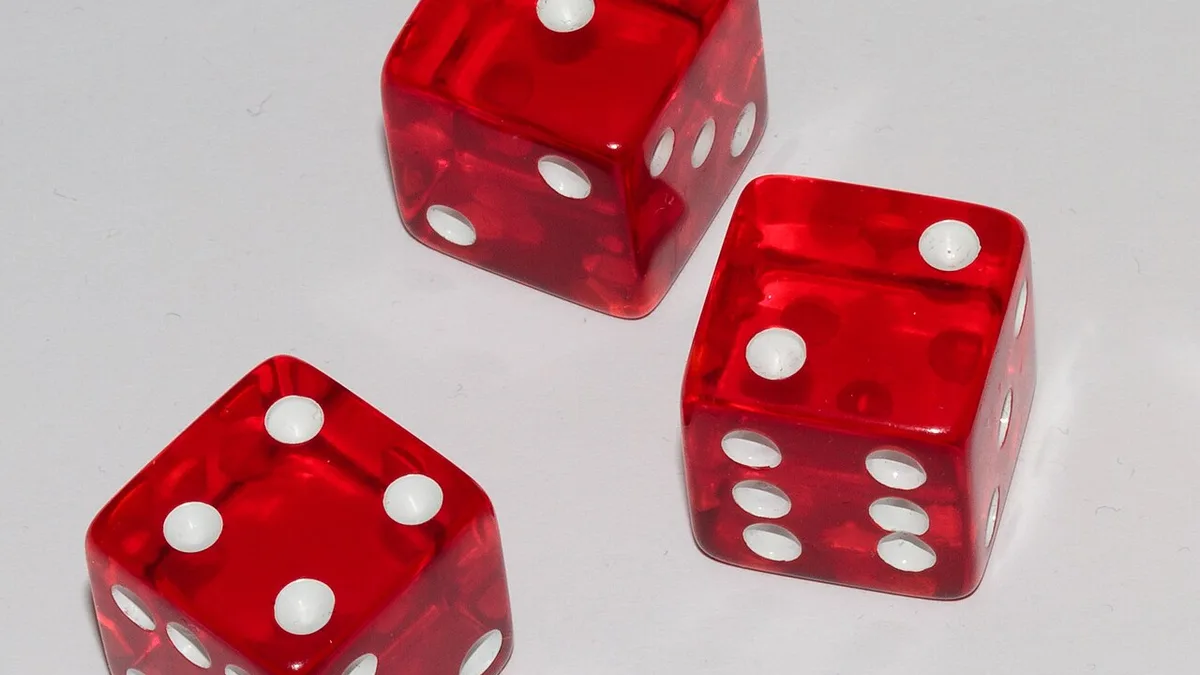
Sic bo is one of those games that looks like chaos the first time you see it. Three dice rattle in a little cage or a glass shaker, the table lights up like a pinball machine, and there are about fifty places to drop a chip. The good news is that it's actually one of the easiest casino games to learn, and once you know which bets are fair-ish and which ones are traps, you can enjoy it without handing the house a free lunch. So pull up a chair. I'll walk you through it like I would with my little brother before his first session: what every bet means, the real math, and the honest picture of where Canadians can play.
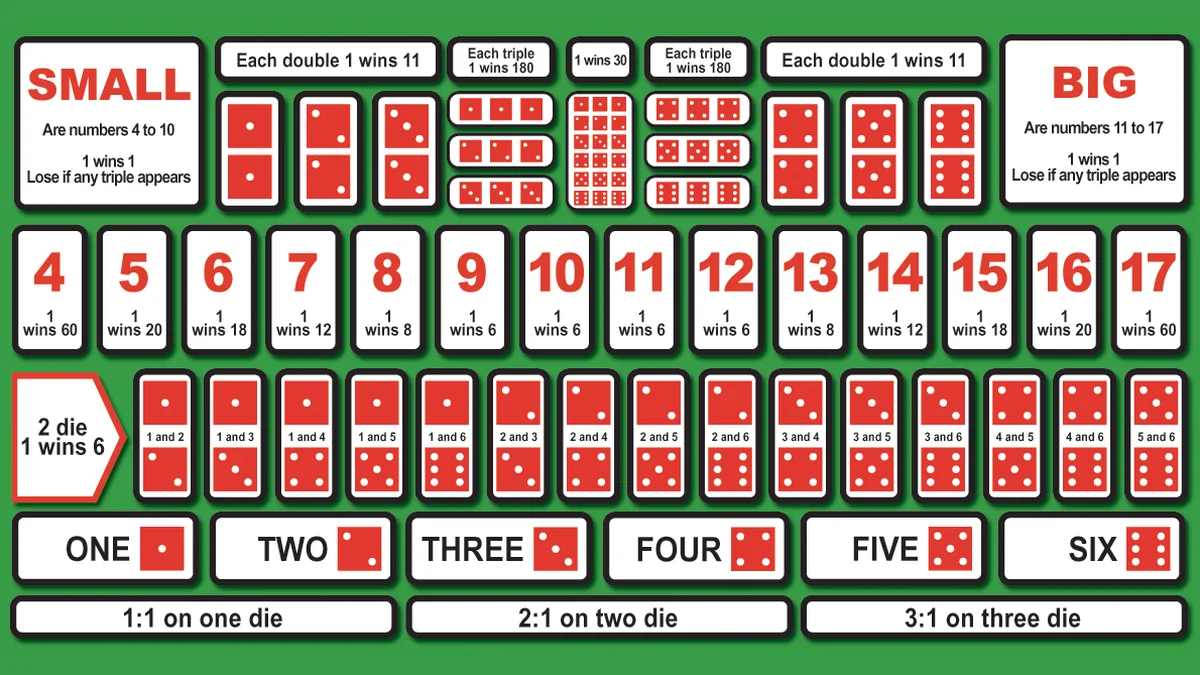
Quick housekeeping before the dice roll. Gambling age is 19 in most provinces and 18 in Manitoba, Quebec and Alberta. This site doesn't serve players in Ontario or Alberta. Cloudbet, the casino linked on this page, operates under a Curaçao licence and is not licensed by any Canadian province. If you want a provincially regulated option, that's PlayNow (BC, Manitoba, Saskatchewan) or Loto-Québec's online casino in Quebec. All the odds below come from straight dice arithmetic; any payout table I show is an example of a common layout, so always check the paytable inside the game you open.
Sic bo in thirty seconds
The name means roughly "precious dice" or "dice pair" in Cantonese, and the game has deep roots in China before it spread through Macau and into casinos worldwide. The idea couldn't be simpler: you bet on what three ordinary six-sided dice will show after they're shaken. Bet on a total, on a number appearing, on doubles or triples, or on a pair of specific numbers. The dealer (or the random number generator in a digital version) shakes, the result shows, winning spots light up, and you get paid according to the table.
Three dice give exactly 216 possible outcomes (6 × 6 × 6). Every probability on this page is just "how many of those 216 outcomes win my bet". Hold onto that number; it explains everything else.
The bets, from safest to wildest
Small and Big
These are the bread-and-butter bets. Small wins if the three dice total 4 to 10. Big wins on 11 to 17. Both pay even money (1 to 1). The catch: both lose if any triple appears (three 2s, three 5s, and so on), even when the total would otherwise be in range.
The arithmetic: 107 of the 216 outcomes total 4 to 10. Take out the two triples that land in Small's range (2-2-2 = 6 and 3-3-3 = 9) and you're left with 105 winning outcomes, against 111 losing ones. That gives a house edge of 2.78%. Big is the mirror image. That's the lowest edge on a standard sic bo table, and it's the bet I'd point a beginner to.
Odd and Even
Many layouts offer Odd and Even on the total, paying 1 to 1 and losing on any triple. Same idea as Small/Big, same 2.78% edge when triples lose. Not every game has it, so look for it on the layout.
Single number (the "one die" bet)
Pick a number from 1 to 6. If it shows on one die you get 1 to 1, on two dice 2 to 1, on all three 3 to 1. It feels generous because you can win on any of three dice, but it isn't. Out of 216 outcomes, your number shows exactly once in 75, twice in 15, three times in 1, and not at all in 125. Do the sums and the house keeps about 7.87%. That's nearly three times the edge on Small/Big for a bet that "feels" safer.
Specific double
You pick a number and need at least two dice showing it (for example two 4s). That happens in 16 of 216 outcomes. A common paytable gives 10 to 1, which works out to an edge of about 18.5%. Some tables pay only 8 to 1, which pushes the edge to about 33%.
Two-dice combination (the "domino")
Pick two different numbers, like a 2 and a 5, and win if both appear among the three dice. That's 30 of 216 outcomes. At a typical 5 to 1 payout the edge is about 16.7%.
Any triple
Win if all three dice match, any number. Six of 216 outcomes, a probability of about 2.8%. A common payout is 30 to 1 (edge about 13.9%); tables paying 24 to 1 take about 30%.
Specific triple
The lottery ticket of the table: you name the triple, say three 6s. One outcome in 216. Paytables commonly offer 150 to 1 or 180 to 1. At 180 to 1 the edge is about 16.2%; at 150 to 1 it's about 30.1%. Big number, big edge.
Totals 4 to 17
You can bet on an exact total. Payouts vary a lot between games, and so does the edge, because some totals are much likelier than others. Here's how many ways each total can roll:
| Total | Ways (of 216) | Chance | Example payout | House edge at that payout |
|---|---|---|---|---|
| 4 or 17 | 3 | 1.39% | 60 to 1 | 15.3% |
| 5 or 16 | 6 | 2.78% | 30 to 1 | 13.9% |
| 6 or 15 | 10 | 4.63% | 17 to 1 | 16.7% |
| 7 or 14 | 15 | 6.94% | 12 to 1 | 9.7% |
| 8 or 13 | 21 | 9.72% | 8 to 1 | 12.5% |
| 9 or 12 | 25 | 11.57% | 6 to 1 | 19.0% |
| 10 or 11 | 27 | 12.50% | 6 to 1 | 12.5% |
The "ways" and "chance" columns are pure math and never change. The payout column is an example based on a widely used layout; your game might pay a bit more or less, and the edge moves with it. If you like total bets, 7 and 14 at 12 to 1 tend to be the least bad of the bunch, but every one of them costs far more over time than Small or Big.
The cheat sheet
| Bet | Win chance | Typical edge | My verdict |
|---|---|---|---|
| Small / Big | 48.6% | 2.78% | Best value on the table |
| Odd / Even (triples lose) | 48.6% | 2.78% | Same value, if offered |
| Single number | 42.1% (any hit) | 7.87% | Feels safe, isn't |
| Total 7 or 14 | 6.9% | ~9.7% | Fun side bet, small stakes |
| Two-dice combo | 13.9% | ~16.7% | Pricey |
| Specific double | 7.4% | ~18.5% | Pricey |
| Any triple | 2.8% | ~13.9% (or worse) | Long shot |
| Specific triple | 0.46% | 16% to 30% | Pure lottery |
What "house edge" means for your actual wallet
The house edge is the average share of every dollar wagered that the casino keeps over a very long run. It doesn't tell you what happens in one session, but it tells you the price of entertainment. A made-up example to make it real: say you play 200 rounds at $5 a round, so $1,000 total wagered.
- All on Big: expected cost about $28.
- All on single numbers: about $79.
- All on a specific triple at 150 to 1: about $301.
Same table, same time spent, same $5 chips, but the expected bill is more than ten times higher on the flashy bet. In any single session you could win or lose much more than these averages; that's the variance. But the averages are where the numbers drift if you keep playing.
Live sic bo and the multiplier versions
Online, you'll usually see two flavours:
- RNG (digital) sic bo: software rolls the dice. Rounds are quick, stakes can start low, and you can play at your own pace. Always open the game's info or help screen to see its exact paytable and the RTP the provider publishes.
- Live dealer sic bo: a real shaker, real dice, a live video stream. Slower, more social, and the results come from physical dice. Some live studios run plain sic bo tables; others add twists.
The best-known twist is Evolution's Super Sic Bo, launched in 2019, which drops random multipliers on some bet spots before each roll, with payouts boosted by up to 1,000x. Other studios have their own multiplier versions too. Here's the honest bit: to fund those multipliers, the base payouts on many spots are lower than in classic sic bo. The headline 1,000x is rare, and the overall RTP can be similar to or lower than a plain table depending on the bet. Read the payout and RTP info in the game before deciding it's "better". For a calm session, a classic table with Small/Big is still the value play.
Where Canadians can play sic bo online
Here's how the options look, without the sales gloss:
| Option | Who it's for | Regulated by | Things to know |
|---|---|---|---|
| PlayNow | BC, Manitoba, Saskatchewan residents | Provincial lottery corporations | Licensed and local; check its lobby for dice games |
| Loto-Québec online casino | Quebec residents | Loto-Québec (provincial) | Licensed; game selection varies |
| Ontario's iGaming market | Ontario residents | AGCO / iGaming Ontario | Licensed operators only; this site doesn't serve Ontario |
| Cloudbet | Canadians outside Ontario and Alberta who are fine with crypto | Curaçao, not a Canadian province | Sic bo listed in its table and live games; crypto deposits and withdrawals |
Cloudbet lists sic bo among its casino and live dealer games. Lobbies change as studios add or remove tables, so search "sic bo" in the casino and check which versions are live the day you play. Because Cloudbet is offshore, no provincial regulator can step in if you have a dispute, so keep your records and read the terms.
Funding your play with crypto, step by step
At Cloudbet everything runs on crypto. If you're new to that, here's the smooth way to do it:
- Buy crypto on a Canadian platform registered with FINTRAC. Interac e-Transfer is usually the cheapest way to fund it.
- Pick a coin and network Cloudbet supports (Bitcoin, Ethereum, Litecoin and USDT on several networks are all options). Stablecoins like USDT keep your balance from swinging with the crypto market while you play.
- Copy the deposit address from the cashier, paste it into your crypto app, and double-check the first and last characters.
- Match the network on both sides. A mismatched network is the classic way people lose a deposit.
- Send a small test amount first, then the rest after it arrives.
Withdrawals go back out in crypto. Cloudbet asks for identity checks (ID, proof of address, a face check) once your deposits pass roughly US$2,200 in total, so it's smoother to have those documents ready before a big win rather than after.
How the welcome rakeback fits a sic bo player
Cloudbet's Welcome Package is a 30-day program worth up to $2,500. It starts with a first deposit of any size, and the 30 days count from your first bet after that. On casino play it pays rakeback of 10% of the house edge on your bets, plus daily casino cash drops; sports bets don't earn the rakeback part.
A made-up example of what that means for sic bo: wager $1,000 on Big over a month. The house edge on Big is 2.78%, so your expected loss is about $27.80, and 10% of that edge comes back as about $2.78 in rakeback. Wager the same $1,000 on specific triples at 30% edge and your expected loss is about $300, with about $30 coming back. More rakeback on the expensive bet, but you're still roughly $270 down on average. The rakeback softens costs; it doesn't turn a bad bet into a good one. Check the current terms in your account before you rely on any figure here, since promos change.
Myths you'll hear at the table (and in chat)
- "Small hit five times, Big is due." Dice have no memory. Every roll is independent; the odds reset every time.
- "Watch the trend board and follow the pattern." Live tables often show recent results. They're history, not a forecast. Patterns in random data are always visible and never predictive.
- "Cover lots of spots and you can't lose." Spreading chips around just mixes edges together. If anything, you're adding pricey bets to a cheap one.
- "Double after every loss on Big." The martingale needs a bankroll and table limits that never run out. A string of eight losses at $5 means your ninth bet is $1,280. Those streaks happen more than people expect, and triples make Big lose even when "Big" was close.
- "Multiplier tables have better odds." Sometimes the spots with multipliers pay more, but the base payouts are trimmed to pay for them. Read the RTP.
19+ (18+ in AB, MB, QC). Crypto deposits. Cloudbet is licensed in Curaçao, not by any Canadian province. Not for Ontario or Alberta residents. Ad: we may earn a commission. Bet only what you can afford to lose.
A bankroll plan that keeps it fun
Here's a simple, made-up plan for a $100 session budget:
- Pick your stake as 1% to 2% of the budget, so $1 to $2 per round. That gives you a long, relaxed session instead of a ten-minute blur.
- Put most of each round on Small or Big. If you want a bit of spice, add a small chip on a total like 7 or 14, no more than a quarter of your main stake.
- Set a stop-loss and a stop-win. For example, stop if you're down $50 or up $50. Write it down before you start.
- Use the casino's deposit limits in your account settings, and set a timer on your phone.
- Never top up mid-session to "win it back". That's the moment a fun night turns into a bad week.
A made-up evening: Marc in Laval
Marc has $80 for a Friday night. He opens a classic RNG sic bo table and reads the paytable first: Small/Big at 1 to 1, totals 7/14 at 12 to 1. He plays $2 on Big each round and adds a 50-cent chip on 14 every so often. After about an hour he's had the usual ups and downs, a triple wiped out a few Big bets, and one 14 paid $6. He's at $71 when his phone timer goes off and he logs out. He spent nine dollars on a long evening of entertainment, roughly what the math suggested. Nothing dramatic, and that's the point.
Sic bo vs other dice and table games
| Game | Best common bet | Edge on that bet | Pace |
|---|---|---|---|
| Sic bo | Small / Big | 2.78% | Fast |
| Craps | Pass line (with odds behind it) | 1.41% on the pass line, lower with odds | Medium |
| European roulette | Any even-money bet | 2.70% | Medium |
| Baccarat | Banker | About 1.06% | Fast |
So sic bo's best bet sits right around European roulette's. It's not the cheapest game in the casino, but it isn't a rip-off either, as long as you stay away from the shiny spots.
Reading a sic bo paytable before you play
Every version can differ, so take thirty seconds with the info screen. Check:
- Do Small/Big and Odd/Even lose on triples? (Almost always yes.)
- What does the specific triple pay: 150 or 180 to 1?
- What does any triple pay: 24 or 30 to 1?
- What do the double and combo spots pay?
- What are the minimum and maximum stakes per spot?
- If it's a multiplier version, what's the published RTP per bet?
If one game pays 180 and another pays 150 on the same specific triple, that's a 14-point difference in edge on that bet. Small details, big difference over time.
A quick sic bo glossary
Different games label the same spots differently, which confuses a lot of first-timers. Here's a translation guide:
- Small / Big are sometimes written in Chinese characters on Macau-style layouts, or shown as "4-10" and "11-17".
- Single dice bet is also called a "number bet" or "one dice". The six spots along the bottom of most layouts, each showing one die face.
- Domino or combination is the two-number bet, drawn as two dice side by side.
- Double or specific double shows two matching dice.
- Triple, specific triple or alone triple shows three matching dice; any triple or all triples is the spot covering all six.
Playing on your phone
Most sic bo games run fine in a mobile browser, and live tables usually switch to a compact betting grid in portrait mode. A few practical tips from the "learned it the hard way" file:
- Use a steady Wi-Fi connection for live tables. If the stream freezes during the betting window, your chips may not be placed in time. Check the game history afterward if you're unsure whether a bet counted.
- Turn off "repeat bet" auto-features unless you really mean to rebet the same chips every round. They make it very easy to play faster than you planned.
- Zoom in on the layout before your first bet to make sure your finger hit the spot you meant. On a small screen, the specific double and the combo spots sit close together.
- Check the round history panel. It's handy for confirming results, but remember it's history, not a hint.
Legal and tax notes for Canadians
Under the Criminal Code, gambling in Canada is run and licensed by the provinces. Cloudbet is licensed in Curaçao and isn't authorized by any Canadian province, and this site doesn't serve Ontario or Alberta. Casual gambling winnings generally aren't taxable in Canada, but selling or swapping crypto can be a taxable event, so keep records of what you bought, deposited and cashed out.
If it stops being fun
Fast games like sic bo can make time and money disappear. If that's happening, free, confidential help is a phone call away: Gambling Support BC 1-888-795-6111, Manitoba's problem gambling helpline 1-800-463-1554, Saskatchewan's Problem Gambling Helpline 1-800-306-6789, and in Quebec, Jeu : aide et référence 1-800-461-0140. Most casinos, including Cloudbet, also let you set limits or self-exclude from your account.
My take
Sic bo is a great little game if you treat it like a night out rather than a money plan. Learn the 216, stick mostly to Small or Big at 2.78%, use the flashy spots as tiny side bets if at all, read the paytable, and set your limits before the first shake. Do that and you'll get a lot of fun out of three dice without the table eating you alive.
Questions players ask
What is the best bet in sic bo?
Small or Big. Each wins on 48.6% of rolls, pays 1 to 1 and carries a 2.78% house edge, the lowest on a standard table.
Why do Small and Big lose on triples?
That's how the house gets its edge. Without the triple rule, Small and Big would be close to a coin flip with no edge for the casino.
How many outcomes are there in sic bo?
Three six-sided dice give 216 equally likely outcomes. Every sic bo probability is a count out of those 216.
Can I play sic bo online in Canada?
Provincial sites like PlayNow and Loto-Québec are the licensed options in their provinces. Offshore casinos such as Cloudbet also list sic bo, but they aren't licensed by any province, and this site doesn't serve Ontario or Alberta.
Is live Super Sic Bo better than classic sic bo?
Not automatically. Its random multipliers can boost wins up to 1,000x, but base payouts are trimmed to fund them. Compare the published RTP for the bets you plan to make.
Is there a winning sic bo strategy?
No strategy beats the house edge. You can only choose bets with lower edges, size your stakes sensibly and set limits.
19+ (18+ in AB, MB, QC). Crypto deposits. Cloudbet is licensed in Curaçao, not by any Canadian province. Not for Ontario or Alberta residents. Ad: we may earn a commission. Bet only what you can afford to lose.
If betting is costing you more than money, free 24/7 help is a phone call away. British Columbia: Gambling Support BC 1-888-795-6111. Alberta: Addiction & Mental Health Helpline 1-866-332-2322. Manitoba: Problem Gambling Helpline 1-800-463-1554. Saskatchewan: Problem Gambling Helpline 1-800-306-6789. Quebec: Jeu : aide et référence 1-800-461-0140. Elsewhere, call 211 to find your provincial service.