Crypto Roulette in Canada: European vs American Wheels, Payouts, House Edge, Live vs Provably Fair and Crypto Pitfalls
Welcome bonus for new players + fast crypto payouts. Just helping a brother out.
19+ (18+ in AB, MB, QC). Crypto deposits. Cloudbet is licensed in Curaçao, not by any Canadian province. Not for Ontario or Alberta residents. Ad: we may earn a commission. Bet only what you can afford to lose.
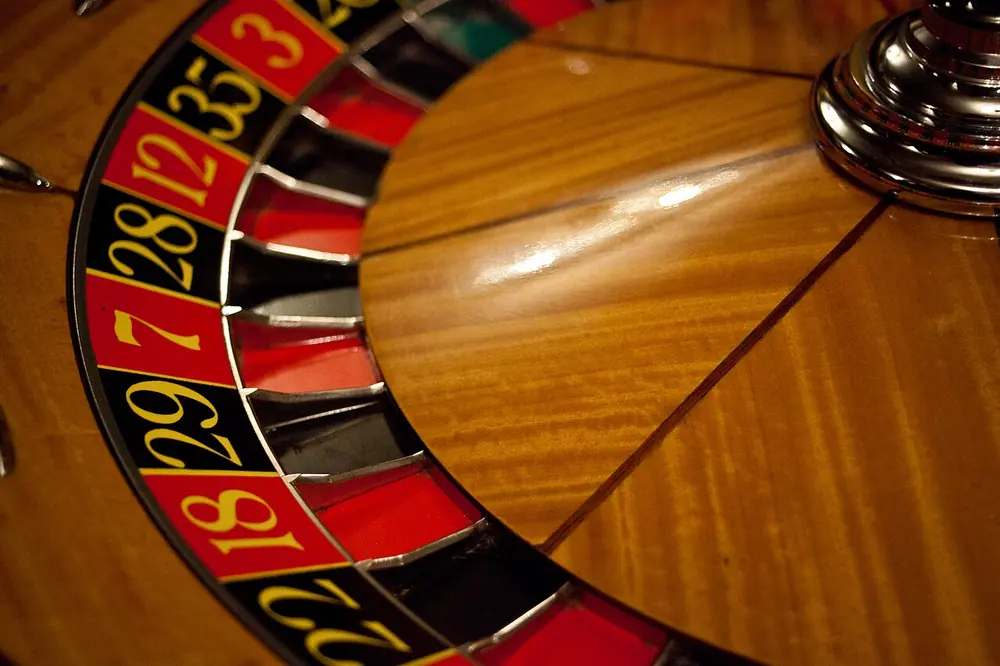
Roulette is the game everybody understands in ten seconds. Pick a number or a colour, the ball spins, and you either win or you don't. Playing it with crypto adds a few new wrinkles, like coin prices moving while you play, network fees, and games that let you check the result yourself. I'll be honest up front: roulette is a game you pay to play. No system beats it. But if you know which wheel to pick, what each bet really pays and how crypto changes the picture, you'll get more fun for your money and avoid the classic traps. Let's go through it the way I'd explain it to a friend before their first spin.
Quick ground rules first. The legal gambling age is 19 in most provinces and 18 in Manitoba and Quebec, and this site isn't for residents of Ontario or Alberta. Cloudbet, the casino linked on this page, holds a Curaçao licence and is not authorized by any Canadian province. For the legal picture, read is online betting legal in Canada. Every amount and coin price on this page is an illustrative example, not a prediction.
The three wheels and why it matters which one you pick
Not all roulette is the same. The single most important choice you make is the wheel, because it sets the house edge on almost every bet.
| Wheel | Pockets | Zeros | House edge (most bets) |
|---|---|---|---|
| European | 37 (0–36) | Single 0 | 2.70% |
| French (with La Partage or En Prison) | 37 | Single 0 | 1.35% on even-money bets, 2.70% on the rest |
| American | 38 (0, 00, 1–36) | Double 0 and 00 | 5.26% |
Where does the edge come from? On a European wheel, a straight-up bet on one number pays 35 to 1, but there are 37 pockets. If payouts were fair, it would pay 36 to 1. That one missing unit, spread across 37 spins, is the 2.70% edge (1 ÷ 37). The American wheel adds a second zero, so the same 35-to-1 payout now has 38 pockets against it, and the edge nearly doubles to 5.26% (2 ÷ 38).
French rules add a nice twist. With La Partage, if you're on an even-money bet like red and the ball lands on zero, you get half your stake back. En Prison is similar: your stake is held for the next spin. Either way, the edge on even-money bets drops to about 1.35%.
The takeaway is simple: pick European or French roulette whenever you can. Playing American roulette when a European table is right next to it is like paying double for the same thing.
Every bet, its payout and its real chance
Here's the full menu on a European wheel. The payouts are standard, and the probability column shows the real chance of winning each bet.
| Bet | Numbers covered | Payout | Chance (European) |
|---|---|---|---|
| Straight up | 1 | 35 to 1 | 2.70% |
| Split | 2 | 17 to 1 | 5.41% |
| Street | 3 | 11 to 1 | 8.11% |
| Corner | 4 | 8 to 1 | 10.81% |
| Six line | 6 | 5 to 1 | 16.22% |
| Dozen or column | 12 | 2 to 1 | 32.43% |
| Red/black, odd/even, 1–18/19–36 | 18 | 1 to 1 | 48.65% |
Notice something: whatever bet you choose, the house edge on a European wheel is the same 2.70%. A straight-up bet just has more swing. You'll lose more often and win bigger when you hit. Red or black wins almost half the time but pays even money. Over the long run, the cost per dollar bet is identical.
There's one exception worth knowing on American wheels: the five-number bet (0, 00, 1, 2, 3). It pays 6 to 1 and carries a house edge of about 7.89%, the worst bet on the table. Skip it.
What the house edge means in real dollars
Percentages are easy to ignore. Dollars aren't. The expected cost of playing is roughly:
Total amount wagered × house edge
| Bet size | Spins | Total wagered | Expected cost, European (2.70%) | Expected cost, American (5.26%) |
|---|---|---|---|---|
| $1 | 200 | $200 | $5.40 | $10.52 |
| $2 | 300 | $600 | $16.20 | $31.56 |
| $5 | 200 | $1,000 | $27.00 | $52.60 |
| $10 | 500 | $5,000 | $135.00 | $263.00 |
That's the average. In any one session you might be up $80 or down $150. But the more you spin, the closer your results tend to drift toward that expected cost. One thing that sneaks up on people with online roulette: automated games can be very fast. A few hundred spins in an evening is easy, so your total wagered can grow much bigger than your deposit. Slowing down is one of the best ways to make a budget last.
Live dealer, RNG and provably fair roulette
When you play roulette at a crypto casino, you'll usually see three kinds of games.
- Live dealer roulette: a real wheel and a real croupier streamed from a studio. It's slower and more social. The result comes from the physical wheel.
- RNG roulette: a digital game where a random number generator picks the result. It's fast and usually allows smaller bets.
- Provably fair roulette: a digital game where you can check the result yourself using cryptography.
Provably fair deserves a quick explanation, because it's the one thing crypto casinos do that traditional ones generally don't. Before you play, the casino commits to a secret "server seed" by showing you a scrambled version of it, called a hash. You can add your own "client seed." Each spin's result is calculated from both seeds plus a counter. Later, the casino reveals the server seed, and you can check that it matches the hash it showed earlier and that it produces the results you got. If anything was changed, the maths wouldn't line up.
Two honest caveats. Provably fair proves the casino didn't change a result after the fact. It doesn't change the house edge. A provably fair European wheel still costs 2.70% per spin. And live dealer games use physical wheels, so they're checked in other ways, not with seeds and hashes. For more on this, our guide to depositing crypto at a casino covers the practical side of getting set up.
What crypto changes about roulette
The game itself is the same. The money side is where crypto adds new things to think about.
Coin prices move while you play
If your balance is held in Bitcoin or Ethereum, its value in Canadian dollars moves with the market. Say you deposit 0.01 BTC when that's worth $1,000, and you finish the night with exactly 0.01 BTC, no wins, no losses. If Bitcoin fell 10% overnight, your balance is now worth about $900. If it rose 10%, it's worth about $1,100. That swing has nothing to do with roulette, but it affects what you walk away with. Many players use a stablecoin like USDT, whose value is designed to track the US dollar, to take coin price swings out of the picture. Even then you're exposed to the US-to-Canadian exchange rate.
Network fees and confirmations
Moving crypto in and out costs network fees, and they vary with the coin and how busy the network is. Deposits also need a certain number of network confirmations before they show up. Read the casino's deposit page so you know which networks it supports. Sending a coin on the wrong network can mean losing it.
Bet sizes and decimals
Some crypto tables show bets in coin units like mBTC rather than dollars. A bet of 1 mBTC is 0.001 BTC. Convert to dollars before you start so you know what you're risking per spin. Getting a decimal wrong is a surprisingly common way to bet ten times more than you meant to.
Withdrawals and verification
Crypto withdrawals can be quick, but casinos still have rules: minimum amounts, possible fees, and identity checks in some situations, especially for large withdrawals. Read the terms before you deposit, not when you want to cash out.
Why betting systems don't work
Every roulette player meets a "system" sooner or later. The most famous is the Martingale: double your bet after every loss, so one win gets everything back plus a small profit. It feels bulletproof. Here's why it isn't.
| Spin | Bet on red | Total lost so far if it loses |
|---|---|---|
| 1 | $5 | $5 |
| 2 | $10 | $15 |
| 3 | $20 | $35 |
| 4 | $40 | $75 |
| 5 | $80 | $155 |
| 6 | $160 | $315 |
| 7 | $320 | $635 |
| 8 | $640 | $1,275 |
All that risk is to win $5. On a European wheel, red loses about 51.35% of the time (18 black plus the zero out of 37). The chance of seven losses in a row is about 0.5135 to the seventh power, roughly 0.94%. That sounds tiny, but if you run the system for a few hundred sequences, a long losing streak becomes likely. Then you either can't afford the next bet or you hit the table maximum. The small wins never make up for the big crash, and the house edge stays at 2.70% the whole time.
The same goes for the Fibonacci, the D'Alembert, the Labouchere, "hot numbers," "due" colours and pattern charts. Each spin is independent. The wheel has no memory. A run of ten reds doesn't make black any more likely on the next spin.
19+ (18+ in AB, MB, QC). Crypto deposits. Cloudbet is licensed in Curaçao, not by any Canadian province. Not for Ontario or Alberta residents. Ad: we may earn a commission. Bet only what you can afford to lose.
Smart ways to play
- Choose European or French wheels. It's the easiest way to cut your cost.
- Look for La Partage or En Prison if you like even-money bets.
- Set a session budget in dollars, not coins, and a time limit.
- Pick a bet size that gives you enough spins to enjoy the session. A $100 budget at $5 a spin lasts very differently from $100 at $1 a spin.
- Slow down. Avoid auto-spin on fast games.
- Decide in advance when you'll stop, both after a loss and after a win.
- Read bonus terms carefully. Roulette often counts for little or nothing toward wagering requirements, and some bonuses restrict betting both red and black.
A sample session plan
Let's say you set aside $100 for an evening. You choose a European wheel and $2 bets.
- That's 50 bets if you lost every spin, which won't happen. Realistically, $100 at $2 a spin will usually give you well over 100 spins.
- Expected cost for 150 spins: 150 × $2 × 2.70% ≈ $8.10.
- You decide to stop if you're down $100 or up $60, or after an hour, whichever comes first.
- You hold your balance in a stablecoin so a coin price swing doesn't change the picture.
That plan doesn't make you a winner. It just makes sure you know the price of your entertainment and that you walk away on your own terms.
Roulette versus other casino games
How does roulette compare? A European wheel at 2.70% is cheaper than many slots, which are often well above that. Blackjack played with good basic strategy can have a lower edge than roulette, but it takes more skill. If you want to compare game costs more broadly, our page on the best RTP online casino games explains return to player, which is just 100% minus the house edge. European roulette's RTP is 97.30%.
Is online roulette legal in Canada?
Online casino games are regulated provincially. Several provinces run their own online casinos through their lottery corporations, such as PlayNow in British Columbia and Manitoba and Loto-Québec's online casino in Quebec. Cloudbet is licensed in Curaçao and isn't authorized by any province. If you'd like to compare casinos on safety, see our guide to the safest online casinos in Canada. Recreational gambling winnings are generally not taxed in Canada, but crypto can have its own tax consequences when you sell or swap it, so speak to an accountant if you're unsure. None of this is legal or tax advice.
Common mistakes
- Playing American roulette when European is available.
- Believing a colour or number is "due."
- Using the Martingale or any other doubling system.
- Forgetting that coin prices move your balance's dollar value.
- Mixing up coin units and betting far more than intended.
- Auto-spinning for hours on a fast digital wheel.
Keep it fun
Roulette is a great game when you treat it as paid entertainment with a fixed budget. It turns bad quickly when you treat it as a way to make money. If gambling stops feeling like fun, free and confidential help is available: Gambling Support BC at 1-888-795-6111, and Jeu : aide et référence in Quebec at 1-800-461-0140. You'll find more options on our responsible gambling page.
My take
Crypto roulette is still roulette. Choose a single-zero wheel, ideally with La Partage, know that every bet carries the same edge, and ignore anyone selling a system. On the crypto side, think in dollars, consider a stablecoin, watch fees and networks, and read the withdrawal terms before you deposit. Play slowly, set your stop points ahead of time, and enjoy the spin for what it is.
Questions players ask
What is crypto roulette?
It's ordinary roulette played with a cryptocurrency balance, such as Bitcoin, Ethereum or USDT. The rules and payouts are the same as regular roulette; only the money side changes.
Which roulette wheel has the lowest house edge?
French roulette with La Partage or En Prison, at about 1.35% on even-money bets. European roulette is 2.70% on all bets, and American roulette with 0 and 00 is 5.26%.
What does provably fair roulette mean?
The casino commits to a hidden server seed before you play and reveals it afterward, so you can check each result wasn't changed. It doesn't lower the house edge.
Does the Martingale system work at roulette?
No. Doubling after losses wins small amounts most of the time but eventually runs into a long losing streak or the table limit, causing a large loss. The house edge never changes.
Can coin prices affect my roulette balance?
Yes. If your balance is in Bitcoin or another volatile coin, its value in Canadian dollars moves with the market even if you don't play. Stablecoins reduce that swing.
Is Cloudbet legal in Canada?
Cloudbet holds a Curaçao licence and is not authorized by any Canadian province. This site is not for residents of Ontario or Alberta.
19+ (18+ in AB, MB, QC). Crypto deposits. Cloudbet is licensed in Curaçao, not by any Canadian province. Not for Ontario or Alberta residents. Ad: we may earn a commission. Bet only what you can afford to lose.
If betting is costing you more than money, free 24/7 help is a phone call away. British Columbia: Gambling Support BC 1-888-795-6111. Alberta: Addiction & Mental Health Helpline 1-866-332-2322. Manitoba: Problem Gambling Helpline 1-800-463-1554. Saskatchewan: Problem Gambling Helpline 1-800-306-6789. Quebec: Jeu : aide et référence 1-800-461-0140. Elsewhere, call 211 to find your provincial service.