Betting Sites That Accept Mastercard in Canada: Credit, Debit or Prepaid, the Six Checkpoints Where Deposits Fail, and How to Get Your Winnings Out
Welcome bonus for new players + fast crypto payouts. Just helping a brother out.
19+ (18+ in AB, MB, QC). Crypto deposits. Cloudbet is licensed in Curaçao, not by any Canadian province. Not for Ontario or Alberta residents. Ad: we may earn a commission. Bet only what you can afford to lose.
Updated ·  Written by Aisha Noor ·
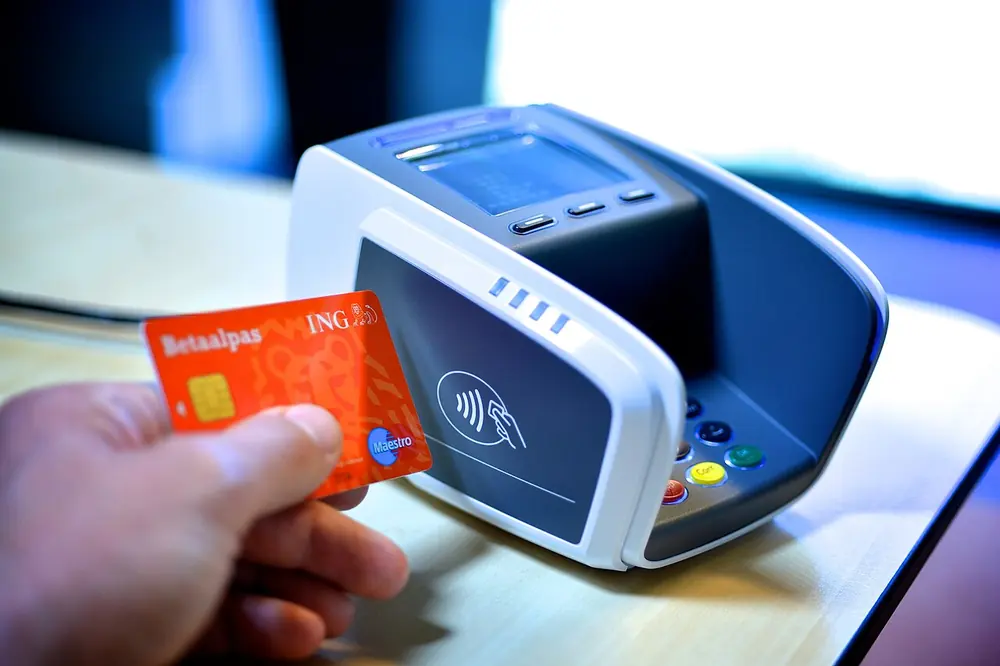
Mastercard is in almost every Canadian wallet, so it feels like it should be the easiest way to fund a betting account. Sometimes it is. Other times you type in the numbers, hit deposit and get a flat "transaction declined" with no explanation. And even when it works, a lot of people only find out at withdrawal time that the money can't go back to the card. Let me walk you through the whole trip a Mastercard deposit takes, where it tends to break, and how to plan the way out before you put a dollar in. Think of it as the chat I'd have with my cousin before he tries it.
The honest bits first. You need to be 19 or older in most provinces (18 in Manitoba and Quebec). This site does not serve Ontario or Alberta residents. The sites mentioned on this page are offshore and none is licensed or authorized by a Canadian province. If you want a provincially licensed option, that's PlayNow in BC, Manitoba and Saskatchewan, or Loto-Québec in Quebec. Any fee or percentage below that isn't from a site's own page is a made-up example to show the maths. Your own bank's terms are what count.

The short answer
Among the sites we cover, VegasAces and SlotsParadise list Mastercard (alongside Visa and Amex) on their banking pages, with card deposits from $20 to $1,500, and both pay winnings out in Bitcoin. They're casinos, though. For sports betting, BetUS takes crypto only from Canadian players and Cloudbet is crypto-first, with fiat options that depend on where you live. So for a sportsbook, a Mastercard usually ends up being how you buy crypto on a Canadian platform, which you then deposit. Whatever route you pick, your card issuer has the final word on whether a gambling payment goes through.
Step one: figure out which Mastercard you actually have
"Mastercard" covers three quite different products, and they behave differently at a betting cashier. Look at the card itself and your banking app:
- Mastercard credit card. The most common kind in Canada. You're spending borrowed money. Many issuers treat gambling purchases as a special category, and some treat them like a cash advance, which can mean a fee and interest from the day of the transaction with no grace period. Check your cardholder agreement for the words "quasi-cash" or "cash-like transactions".
- Debit Mastercard. Usually printed with the word "Debit" on the front. It pulls straight from your chequing account but runs on the Mastercard network, so it works online and at foreign merchants where plain Interac won't. No borrowing, no cash-advance interest, but your rent money is on the line.
- Prepaid Mastercard. Loaded in advance, often reloadable, sometimes bought at a store. These are frequently blocked for gambling by the program manager, and they almost never accept money coming back in.
If you're not sure, call the number on the back of the card and simply ask: "Is this a credit, debit or prepaid card, and do you allow gambling transactions?" It's a two-minute call that saves a lot of guesswork.
Five questions to ask your card issuer
When you call, have these ready. Write the answers down, because they rarely change and you'll only need to ask once.
- "Is this card credit, debit or prepaid?"
- "Do you allow online gambling transactions on it, and is there a separate limit for them?"
- "Do you treat gambling purchases as a cash advance or quasi-cash? If so, what's the fee and when does interest start?"
- "What's the foreign currency conversion fee on US-dollar transactions?"
- "Can I block gambling transactions on this card myself if I want to later?"
That last question is worth asking even if you don't plan to use it. Some banks let you switch off gambling or certain merchant types from the app; if yours does, knowing where that switch is gives you an emergency brake.
Why the cashier shows US dollars
The offshore sites we cover run their cashiers in US dollars. When you pay with a Canadian-dollar Mastercard, your issuer converts the amount at its exchange rate and usually adds a conversion fee on top. Two practical consequences:
- A $100 deposit is $100 US, which costs you more than $100 Canadian, and the exact amount depends on the day's rate.
- If a casino or processor offers to "pay in CAD" at its own rate (dynamic currency conversion), compare it with your bank's. That offered rate is often worse.
Keep this in mind when you set your budget. A $200 monthly cap in your head should be checked against your statement in Canadian dollars.
The six checkpoints a Mastercard deposit has to pass
When you press "deposit", your payment goes through a chain of systems. Any one of them can say no. Knowing the chain turns a mysterious decline into something you can actually fix.
- The site's cashier. Does the site offer Mastercard to players in your province at all? Methods shown can depend on your account's country and region. If Mastercard isn't in the list, that's the answer.
- The payment processor. Offshore casinos use third-party processors. Some processors don't handle certain card types, especially prepaid. The cashier might show Mastercard but still bounce a prepaid card.
- Mastercard Identity Check (3-D Secure). Many issuers now ask you to confirm online card payments in your banking app or by a code. If you miss or close that pop-up, the payment fails. Keep your phone handy.
- Your issuer's gambling policy. Every gambling merchant is tagged with a category code, and your bank can block that category outright, limit it, or treat it as a cash advance.
- Limits. Daily online spending limits, credit available, or a lower limit set for foreign transactions. A $500 deposit can fail on a card that happily allows a $200 one.
- The fraud system. A first-ever payment to an offshore merchant in US dollars, late at night, looks unusual. Many declines are just the fraud engine being careful. Your bank may text you to confirm.
Here's how to read what you see and what to do about it:
| What happens | Most likely checkpoint | What to try |
|---|---|---|
| Mastercard isn't offered in the cashier | 1. Cashier | Use a different method; don't look for a workaround site |
| Declined instantly, before any app prompt | 2 or 4. Processor or issuer policy | Ask your issuer if gambling is blocked on that card |
| App prompt appears, then times out | 3. Identity Check | Retry with your banking app open and approve it quickly |
| Small amount works, larger one fails | 5. Limits | Check daily and foreign-transaction limits in your banking app |
| Bank texts "did you make this purchase?" | 6. Fraud system | Confirm only if it was you, then retry once |
| Prepaid card always fails | 2 or 4 | Assume prepaid won't work for gambling and pick another route |
One rule of thumb: if your issuer says gambling is blocked, respect it. Some people try to get around the block with cards from other countries or third-party "top-up" services. That's how accounts get frozen and money gets lost.
What Mastercard can and can't do at each site we cover
VegasAces (casino). Its banking page lists Visa, Mastercard and Amex, with card deposits of $20 minimum and $1,500 maximum per transaction, and crypto from $10 to $50,000. Payouts are made in Bitcoin. ID may be requested "at times", and card ownership proof is one of the documents it can ask for if you deposited with a card.
SlotsParadise (casino). Same card range of $20 to $1,500 and the same crypto range, Bitcoin payouts, and the banking page says it "encourages" crypto deposits. ID is required "in most cases" for payouts.
BetUS (sportsbook and casino). Crypto only for Canadian players, so no Mastercard deposits. Minimum deposit is $10 under its terms.
Cloudbet (sportsbook and casino). A crypto-first site. It supports a long list of coins, and its fiat options depend on jurisdiction, so don't count on a direct Mastercard deposit from Canada. The minimum crypto deposit is about US$1 or less, shown on the deposit screen.
Bottom line: if you want to use a Mastercard directly, you're looking at casino play on VegasAces or SlotsParadise. If you want sports, the card's job is to get you crypto.
The exit plan: where your winnings actually go
This is the part people skip, and it's the part that matters most. Card networks don't let most gambling merchants push winnings back to a card the way a store refund works, and the sites we cover pay out in crypto anyway. So before you deposit, set up the way out:
- Open an account on a Canadian crypto platform that's registered with FINTRAC, and finish its ID check.
- Note your Bitcoin receiving address there (and the network it uses).
- When you win, request a Bitcoin payout to that address.
- Sell the Bitcoin for Canadian dollars on the platform and withdraw to your bank by Interac or bank transfer.
Doing this up front means a win doesn't turn into a stressful weekend of learning crypto under pressure. It also means you can run a small test first: deposit, play a little, withdraw $20 worth of Bitcoin and walk it all the way to your bank account. If that loop works, you know the system works.
What it costs: a per-$100 breakdown (made-up rates)
Every bank and platform prices things differently, so here's one illustrative $100 deposit broken into line items. Swap in your own numbers.
| Line item | Debit Mastercard direct to a casino | Credit Mastercard direct to a casino | Interac to a crypto platform, then crypto to the site |
|---|---|---|---|
| Currency conversion (example 2.5%) | $2.50 | $2.50 | $0 (you buy in CAD) |
| Cash-advance fee (example 3.5%) | $0 | $3.50 if your issuer codes it as cash-like | $0 |
| Platform spread (example 1%) | $0 | $0 | $1.00 |
| Network fee to send (example) | $0 | $0 | About $1.00 |
| Interest | None | Possibly from day one | None |
| Example total | $2.50 | $6.00 + interest | About $2.00 |
Small numbers on one deposit, but they repeat every time. Ten $100 deposits a month at the credit-card rate is $60 in fees before interest. The main takeaway isn't which column is cheapest on paper, it's that a credit card can be by far the most expensive way to gamble if your issuer treats it as a cash advance. Check that one setting before anything else.
The one-card budget trick
Here's a habit a lot of careful players swear by: pick one card for gambling and nothing else, and set hard limits on it. With a Debit Mastercard you can often set a daily spending cap in your banking app. With a credit card, some issuers let you lower the card's limit or block categories. Then turn on instant purchase alerts so every deposit pings your phone.
Why it works: you see your gambling spend in one place, the cap stops a bad night from becoming a bad month, and an alert at 1 a.m. is a nice little reality check. Here's what four weeks might look like with a $200 monthly cap (made-up numbers):
| Week | Deposits | Withdrawn | Running net | Left under the cap |
|---|---|---|---|---|
| 1 | $50 | $0 | −$50 | $150 |
| 2 | $50 | $90 | −$10 | $100 |
| 3 | $50 | $0 | −$60 | $50 |
| 4 | $50 | $0 | −$110 | $0, done for the month |
The cap counts deposits, not net results, on purpose. A withdrawal in week 2 doesn't "refill" the budget. That keeps you from recycling winnings into a longer losing streak.
19+ (18+ in Alberta, Manitoba and Quebec). VegasAces is an offshore casino, not licensed by any Canadian province. Not for Ontario or Alberta residents. Ad: we may earn a commission. Bet only what you can afford to lose.
Chargebacks: when they're legit and when they backfire
Mastercard has a dispute process for unauthorized or fraudulent charges, and you should use it if someone else used your card. But disputing your own gambling deposits because you lost is a different story. Sites typically close the account and keep any balance, and issuers can refuse disputes for transactions you clearly authorized. If you think a deposit was charged twice or never credited, contact the site's support first with the transaction time and amount, and go to your issuer only if that fails.
Only use a card in your own name
It's tempting to use a partner's or parent's Mastercard "just this once". Don't. Casinos can ask for proof that the card belongs to the account holder, and VegasAces lists card ownership among the documents it may request. If the name on the card doesn't match the name on your account, expect the withdrawal to stall, the deposit to be reversed or the account to be closed. The same goes for a joint or authorized-user card: if you're not the named cardholder, call it someone else's card. Keep everything, the account, the card and the crypto wallet, in one name: yours. It also keeps the money trail clean if you ever need to show where a deposit came from.
Card safety at an offshore cashier
- Only enter card details inside the site's own cashier, on the real domain, with the padlock in the address bar.
- If your bank offers virtual card numbers or a card you can lock and unlock in the app, use it.
- If the site asks for a photo of your card for verification, upload it only through the site's verification page, and follow its instructions on covering digits.
- Never send card photos by email or chat to someone claiming to be "support" on social media.
- Lock the card in your app when you're not playing. It takes five seconds.
Using Mastercard to get crypto for a sportsbook
If sports is your thing, here's the route most Canadians end up with:
- Fund a FINTRAC-registered Canadian crypto platform, by Interac where possible, or with your card if the platform accepts it (card purchases usually carry a higher fee).
- Buy the coin you plan to use. Stablecoins like USDT or USDC keep your balance steady in US dollars between deposit and bet.
- In the sportsbook cashier, copy the deposit address and choose the exact same network on both sides. Cloudbet, for example, supports USDT on several networks, and bridged tokens like USDC.e aren't supported.
- Send a small test amount first, then the rest.
- Keep the transaction ID until the deposit shows up.
Card deposits and bonus codes
If you plan to take a bonus, check the code's minimum against the card range. VegasAces card deposits start at $20, which matches its VAWELCOME1 code minimum, while codes such as ACES250 and EXTRA50 need at least $50 and EXTRA100 needs $100. A bonus also adds a rollover, a game list and an expiry, and taking one while making your first card deposit means your money is tied up until the rollover is done. Read the terms in the cashier first. Cloudbet works differently: its Welcome Package starts with a first crypto deposit of any amount and has no deposit-match code at all.
Keeping records
For most people in Canada, winnings from recreational gambling aren't taxed as income, but crypto is a different matter: selling or swapping crypto is generally a disposition the CRA expects you to report, and it can create a capital gain or loss. Since the card route to a sportsbook and the Bitcoin payout route from a casino both involve crypto, keep a simple log: date, amount in dollars, coin, and transaction ID for every purchase, deposit, payout and sale. If you're unsure how it applies to you, ask an accountant.
A made-up example
Dylan in Kamloops tries his credit Mastercard at a casino on a Friday night. Declined, no explanation. He calls the number on the back: the card allows gambling, but his issuer treats it as a cash advance with a fee and immediate interest. He decides that's not worth it. On Saturday he tries his Debit Mastercard instead: the banking app pops up an approval, he taps yes, and $60 goes through. Before playing he sets up a crypto platform account so a Bitcoin payout has somewhere to land. Two weeks later he withdraws $95 in Bitcoin, sells it, and the money is in his chequing account by Monday. Same card brand, two very different experiences, and the difference was a phone call.
Myths worth dropping
- "If the logo is on the cashier, my card will work." The logo means the site accepts the network. Your issuer still decides.
- "Winnings come back to the same card." Not at the sites we cover. They pay out in crypto.
- "A decline means my account is in trouble." Usually it's a policy or fraud check, not a problem with you.
- "Prepaid cards are a clever way to stay anonymous." They usually just get declined, and you'll still need ID to withdraw.
- "Credit cards are safer because it's not my money." It is your money, with interest.
Quick decision guide
| You want... | Card to use | Route |
|---|---|---|
| Casino play with a card, simply | Debit Mastercard | Direct deposit at VegasAces or SlotsParadise, Bitcoin payout |
| Sports betting | Any, to fund a crypto platform | Crypto to Cloudbet or BetUS |
| Lowest cost over time | None, use Interac to buy crypto | Crypto deposit, crypto payout |
| To avoid debt | Not a credit card | Debit or crypto |
Play it safe
Set your deposit limit before your first deposit, not after a loss. Use the one-card trick, keep alerts on, and never borrow to gamble. If gambling stops being fun, free confidential help is available 24/7: Gambling Support BC 1-888-795-6111, Manitoba 1-800-463-1554, Saskatchewan 1-800-306-6789, and in Quebec, Jeu : aide et référence 1-800-461-0140.
Questions players ask
Which betting sites accept Mastercard in Canada?
Of the sites we cover, VegasAces and SlotsParadise list Mastercard for casino deposits from $20 to $1,500. BetUS is crypto only for Canadians and Cloudbet is crypto-first, so for sports betting a Mastercard is usually used to buy crypto first.
Why was my Mastercard declined at a betting site?
Usually your issuer blocks or limits gambling transactions, the Identity Check prompt timed out, you hit a daily or foreign limit, or the fraud system flagged it. Call the number on the back of the card to check.
Can I withdraw winnings to my Mastercard?
Not at the sites we cover. VegasAces and SlotsParadise pay out in Bitcoin, and BetUS and Cloudbet pay in crypto. Set up a Canadian crypto platform account before you deposit.
Is using a credit card for gambling a cash advance?
It can be. Some issuers treat gambling as a cash-like transaction with a fee and interest from day one. Check your cardholder agreement or ask your issuer.
Do prepaid Mastercards work at betting sites?
Often not. Many prepaid programs block gambling, and prepaid cards can't receive payouts. Assume they won't work and pick another route.
Are these sites legal in Canada?
They're offshore and not licensed by any Canadian province. This site doesn't serve Ontario or Alberta. PlayNow and Loto-Québec are the licensed provincial options.
19+ (18+ in AB, MB, QC). Crypto deposits. Cloudbet is licensed in Curaçao, not by any Canadian province. Not for Ontario or Alberta residents. Ad: we may earn a commission. Bet only what you can afford to lose.
If betting is costing you more than money, free 24/7 help is a phone call away. British Columbia: Gambling Support BC 1-888-795-6111. Alberta: Addiction & Mental Health Helpline 1-866-332-2322. Manitoba: Problem Gambling Helpline 1-800-463-1554. Saskatchewan: Problem Gambling Helpline 1-800-306-6789. Quebec: Jeu : aide et référence 1-800-461-0140. Elsewhere, call 211 to find your provincial service.